
Discover what you need to know from a clinical experience nurse about the phrase “Is Artificial Intelligence Replacing Nurses?”—and what healthcare workers must know to thrive.
⚠️ Medical Disclaimer: This content is for informational purposes only and does not replace professional medical advice. Always consult your healthcare provider for medical decisions.
Table of Contents
Introduction: The Question Every Nurse Is Asking Right Now
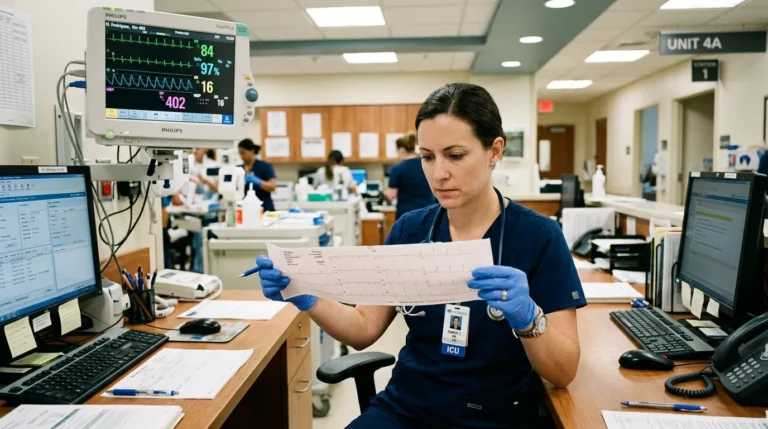
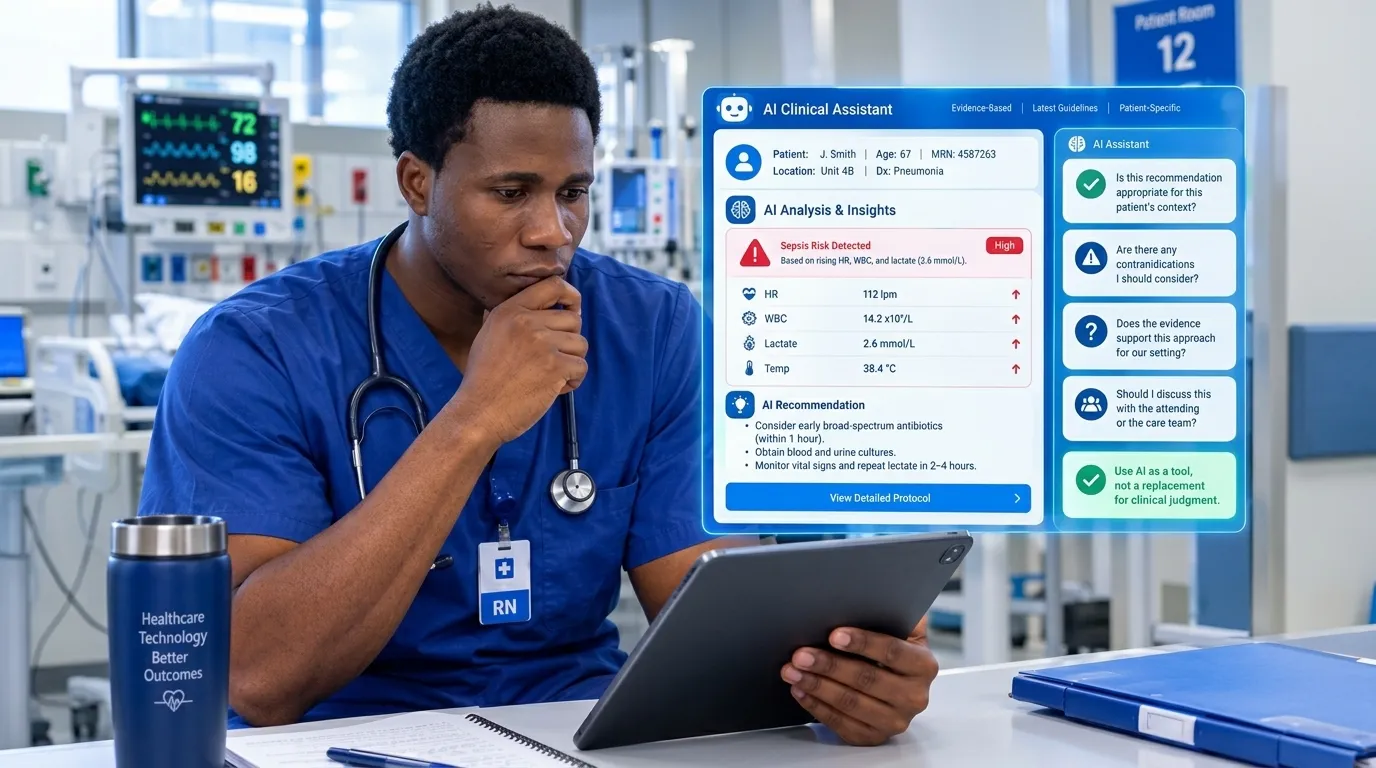
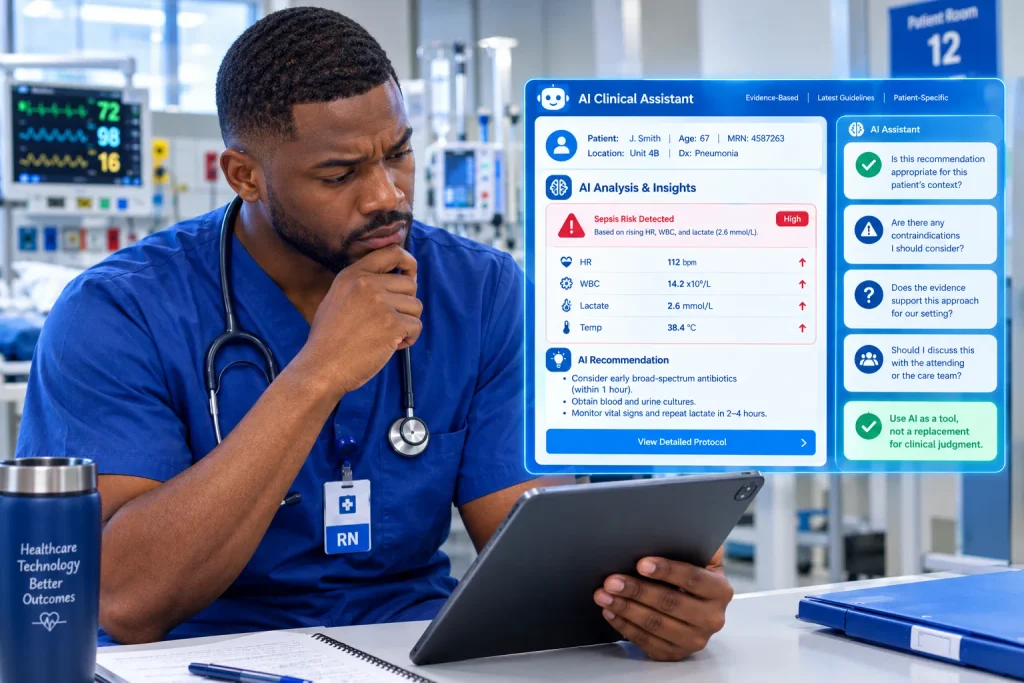
It was a Tuesday night in the ICU. One of my monitors had flagged a deteriorating patient — subtle vital sign changes that, in a busier moment, might have been easy to miss. But this time, an AI-powered early warning system had already sent an alert to my tablet before I even walked into the room. I stood at that bedside, adjusted the oxygen, called the attending physician, and initiated the sepsis protocol. The patient survived.
Did the AI save that patient? Partly. Did I save that patient? Also yes. And that distinction — the nuanced, irreplaceable human element in nursing care — is exactly what this article is about.
Is artificial intelligence replacing nurses? It’s the question dominating conference halls, nursing forums, and social media threads across the healthcare world. And honestly, it’s a question worth taking seriously — not with panic, and not with dismissal, but with the kind of clear-eyed clinical thinking that good nursing demands.
As a registered nurse with over 10 years of hands-on clinical experience in emergency rooms, pediatric wards, ICUs, and general hospital settings, I’ve watched healthcare technology evolve in ways that once seemed impossible. I’ve also watched real patients — real people — need things that no machine has ever been able to provide: a hand to hold, a clear explanation of a terrifying diagnosis, an advocate who pushes back when something doesn’t feel right.
But AI is getting smarter. Faster. More integrated into our workflows. And nurses who ignore that reality do so at their professional peril.
In this article, I’ll walk you through what artificial intelligence actually is doing in healthcare right now, what it genuinely cannot do, how it’s already changing nursing workflows, what the evidence says about job displacement, and — most importantly — what you should be doing today to position yourself for a future where AI is your colleague, not your replacement.
Bottom line up front: Based on current evidence, AI is not replacing nurses. But it is fundamentally changing what nursing looks like — and every healthcare worker needs to understand how.
1. What You Need to Know About AI in Healthcare: A Clinical Perspective
Artificial intelligence isn’t arriving in healthcare. It’s already here. And if you’re a nurse, doctor, or allied health professional, it’s already influencing your work in ways you might not even realize.
The global AI in healthcare market was valued at approximately USD 22.45 billion in 2023 and is projected to grow at a compound annual growth rate (CAGR) of around 36.1% through 2030, according to Grand View Research (2024). In clinical settings specifically, AI tools are being deployed for everything from diagnostic imaging to medication error prevention to predictive sepsis alerts.
From my own experience working across multiple hospital settings in Ghana, I’ve seen the conversation shift dramatically over the past three to four years. Where administrators once spoke vaguely about ‘digital transformation,’ they now reference specific AI platforms, machine learning-based triage systems, and algorithmic decision support tools. This isn’t abstract anymore—it’s operational.
What makes this topic particularly important for nurses is the nature of our role. Nursing is simultaneously one of the most data-intensive professions—we constantly assess, monitor, and interpret clinical information — and one of the most profoundly human. That dual nature is exactly why AI both threatens certain nursing tasks and absolutely cannot replicate others.
The Historical Context: From Paper Charts to Machine Learning
Healthcare technology has always evolved. I entered nursing at a time when paper charts were still the norm in many facilities. Electronic Health Records (EHRs) arrived and fundamentally changed documentation workflows. Point-of-care devices changed how we measured blood glucose, troponin, and oxygen saturation. Each wave of technology shifted what nurses spent their time doing—but nurses adapted, and the profession grew stronger.
AI represents the next wave. The World Health Organization (WHO, 2021) has published guidance on the ethics of AI in health, acknowledging both the transformative potential and the significant risks of deploying these systems without adequate safeguards.
Importantly, the WHO guidance emphasizes that AI in health should augment — not replace — human clinical judgment. That framing matters because it reflects the professional consensus among most responsible healthcare technologists and clinical researchers.
Who Benefits Most from Understanding AI in Nursing?
This conversation is most urgent for frontline nurses and nurses in leadership roles, medical students and nursing students preparing for a transformed clinical environment, hospital administrators making procurement and workforce decisions, policymakers designing healthcare systems and nursing workforce plans, and patients who deserve to understand how AI influences their care.
2. What Is AI in Healthcare—Really? Cutting Through the Hype
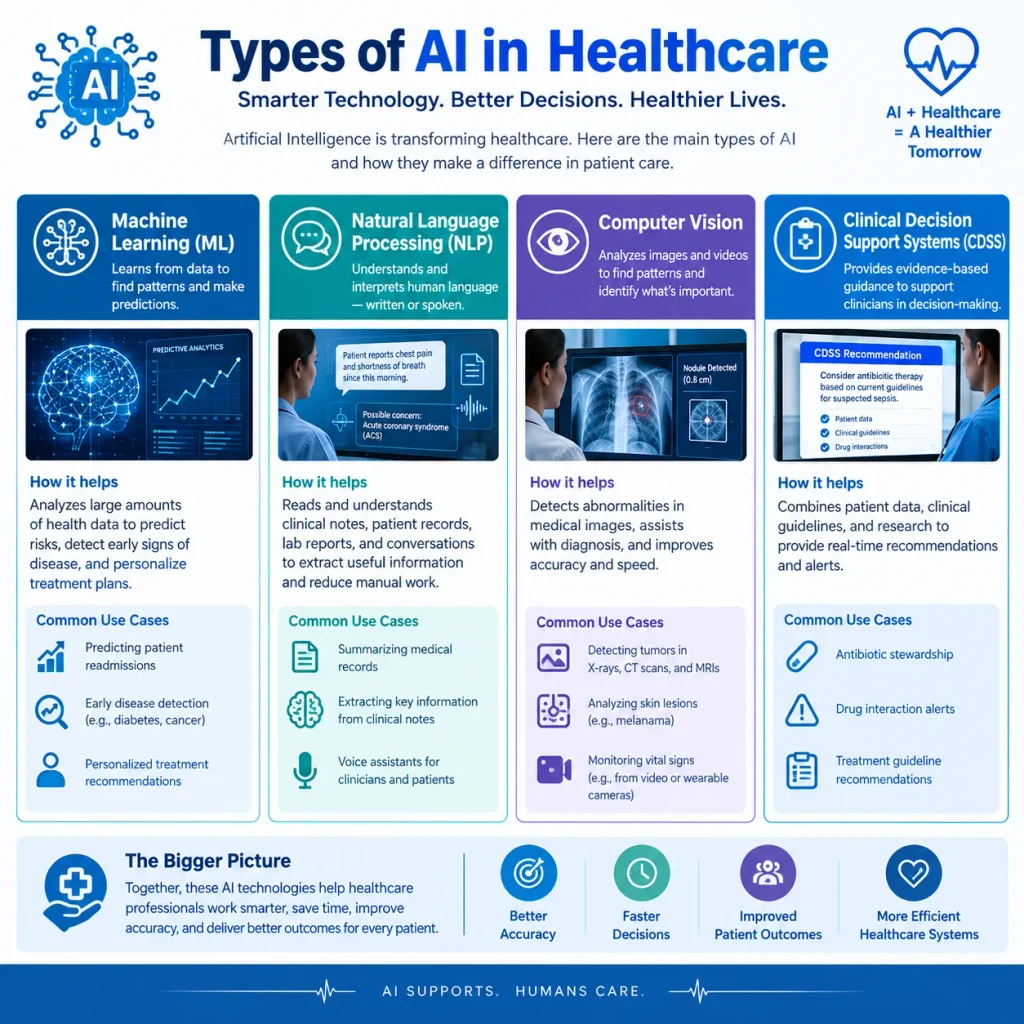
Artificial intelligence, in simple terms, is the use of computer systems to perform tasks that normally require human intelligence—things like recognizing patterns, making predictions, and learning from data. In healthcare, AI typically refers to several overlapping technologies:
- Machine Learning (ML): Algorithms that learn from large datasets to make predictions. The sepsis alert system I mentioned earlier? That’s ML—trained on thousands of patient records to detect deterioration patterns.
- Natural Language Processing (NLP): AI that understands and generates human language. This powers clinical documentation tools that can transcribe a physician’s spoken notes into structured EHR entries.
- Computer Vision: AI that interprets images. In radiology, this means AI reading chest X-rays and CT scans to flag abnormalities.
- Robotic Process Automation (RPA): Software that automates repetitive administrative tasks—scheduling, prior authorizations, and billing.
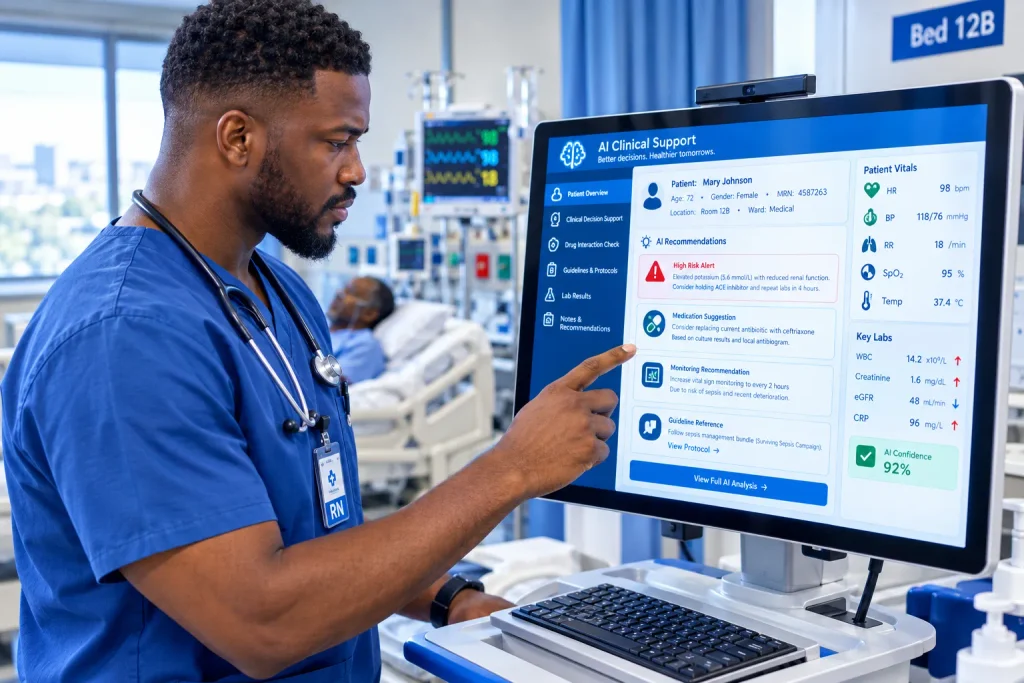
- Clinical Decision Support Systems (CDSS): AI-enhanced tools embedded in EHRs that alert clinicians to potential drug interactions, abnormal lab values, or recommended diagnostic pathways.
Here’s what separates real AI from the marketing hype: most AI in healthcare today is narrow AI. It does one thing well — one very specific task it was trained for. It cannot generalize. It cannot think. It cannot care.
I’ve had vendors pitch AI tools as ‘revolutionary’ in terms that made it sound like the system could practically run a ward independently. The reality, every time, was a sophisticated pattern-recognition tool that performed well in the specific context it was trained for and required significant human oversight outside that context.
That distinction matters enormously for nurses trying to assess what AI means for their careers and their patients.
3. Where AI Is Already Showing Up in Nursing Practice
Let me be direct: AI is already in your clinical environment. If you use an EHR that flags drug interactions, you’re using AI. If your hospital has an early warning score system that automatically escalates deteriorating patients, that’s often AI-enhanced. And this is only expanding.
Early Warning and Deterioration Prediction
One of the most impactful applications I’ve encountered is AI-powered early warning systems. Research published in The Lancet Digital Health (Bhatt et al., 2023) demonstrated that machine learning-based deterioration models outperformed traditional track-and-trigger systems in identifying patients at risk of in-hospital cardiac arrest. For nurses managing high patient-to-nurse ratios, these systems function as a second set of eyes—one that never blinks.
In my own ICU experience, the integration of an AI alerting system changed our response times measurably. We didn’t need to monitor every parameter manually every 15 minutes—the system flagged anomalous trends, and we focused our attention where it was most needed. We became more efficient without becoming less present.
AI-Assisted Documentation
Documentation consumes a staggering portion of nursing time. Hendrich et al. (2008), in a landmark time-and-motion study published in AJN, found that nurses spend only about 19% of their time in direct patient care versus nearly 35% on documentation and administrative tasks. AI-powered ambient documentation tools are now attempting to address this imbalance.
Natural language processing tools that automatically convert verbal nursing assessments into structured EHR entries could genuinely free up hours of nursing time per shift. That’s not replacing nursing—that’s liberating nurses to do more nursing.
Medication Safety and AI
Medication errors remain one of the leading causes of preventable patient harm globally. The World Health Organization (WHO, 2022) estimates that medication errors cost health systems $42 billion annually. AI-enhanced medication management systems—those that cross-reference prescriptions against patient allergy histories, renal function, current medications, and weight-based dosing parameters—are proving valuable adjuncts to pharmacist and nurse checks.
I’ve personally worked in settings where a pharmacy AI flagged a dosing concern on a pediatric patient that could have been catastrophic. The alert went to the pharmacist, the pharmacist called me, and I called the attending. The dose was corrected before administration. The AI didn’t make the decision—humans at every link in that chain did—but the AI triggered the chain.
Diagnostic Imaging and AI
Computer vision AI systems are now FDA-cleared for a range of imaging tasks. The FDA (2024) maintains a list of AI/ML-enabled medical devices that has grown to over 950 authorizations. These include tools for detecting diabetic retinopathy, pulmonary nodules, stroke on CT imaging, and breast cancer on mammography.
The clinical impact for nursing is indirect but real. Faster, more accurate diagnoses mean faster care plans, which means nursing interventions can begin sooner. I’ve seen this speed-to-diagnosis improvement translate directly into better patient outcomes in emergency settings.
AI in Triage and Patient Flow
In emergency settings, AI triage tools analyze patient-reported symptoms and vital signs to assign acuity levels and recommend care pathways. Research in JAMA Network Open (Levin et al., 2021) found that an AI triage algorithm performed comparably to experienced emergency nurses in identifying high-acuity patients. That finding warrants attention—but it also needs context.
The AI was analyzing structured inputs in a controlled research setting. Emergency triage in the real world involves a nurse reading a patient’s face, noticing that their skin is mottled even though their initial SpO2 is 96%, and recognizing that the ‘stomach pain’ is actually referred shoulder pain from a hepatic bleed. That constellation of observations, many of them non-verbal and intuitive, is not something current AI can replicate.
4. Can AI Replace the Human Element of Nursing?
This is where I get passionate. Not because the question threatens me professionally, but because it gets to the heart of what nursing actually is.
The short answer: No. Not now. Not in any foreseeable future.
And I don’t say that out of professional protectionism. I say it because nursing is fundamentally a human practice. Let me explain what I mean.
The Six Core Nursing Competencies AI Cannot Replicate
1. Therapeutic Relationship and Emotional Presence
When a patient receives a terminal diagnosis, they don’t need an algorithm. They need a human who can sit with them in that moment—someone who understands suffering from their own lived experience, who can be present without needing to fix anything. I’ve sat at more bedsides than I can count. That presence is not programmable.
2. Nuanced Clinical Judgment
Clinical nursing judgment is the capacity to integrate data, observation, patient history, contextual factors, and clinical intuition to make a decision—often under time pressure and with incomplete information. AI makes decisions based on patterns in training data. Nursing judgment adapts in real time to the unprecedented.
I remember a pediatric patient whose lab values and vitals looked reasonably stable but who ‘just didn’t look right’ to me. Something was off. I escalated anyway. The resident was hesitant. We investigated further, and the child was in early compensated shock. My clinical instinct—informed by years of watching sick children—caught something the numbers hadn’t yet shown.
3. Ethical Advocacy
Nurses are patient advocates. When a family doesn’t understand a treatment plan, when a patient’s expressed wishes conflict with a family member’s preferences, when a physician’s order seems unsafe, a nurse is the last line of defense. Advocacy requires moral agency, which is distinctly human.
4. Physical Assessment and Procedural Skills
Listening to lung sounds, palpating an abdomen, assessing wound healing, and inserting an IV on a difficult vein—these physical nursing skills require hands. While robotics is advancing, the dexterity, adaptability, and sensory integration required for skilled nursing procedures remain beyond current robotic capabilities in most clinical contexts.
5. Cultural and Contextual Sensitivity
Healthcare doesn’t happen in a social vacuum. A patient’s religious beliefs, family dynamics, socioeconomic circumstances, and cultural understanding of illness profoundly shape how care should be delivered and communicated. These are domains where human nurses excel and where AI—trained on datasets that often underrepresent diverse populations—can fail dangerously.
6. Adaptive Improvisation
Healthcare environments are unpredictable. Equipment fails. Patients code unexpectedly. A supply isn’t available. An interpreter doesn’t show up. Nurses improvise constantly, drawing on experience, creativity, and collaboration to deliver care when the ideal conditions don’t exist. AI cannot improvise. It fails gracefully — or sometimes catastrophically — when it encounters scenarios outside its training parameters.

5. What the Research Says: Job Displacement vs. Job Transformation
The most commonly cited — and frequently misrepresented — research on this topic comes from a 2013 Oxford University study by Frey and Osborne, which suggested that 47% of U.S. jobs were at high risk of automation. Nursing, however, was explicitly categorized as low-risk due to the perception, social intelligence, and manual dexterity requirements of the role.
More recent and healthcare-specific analysis supports a nuanced position. A McKinsey Global Institute (2023) report estimated that AI and automation could potentially handle 30-50% of current healthcare worker tasks — but these are predominantly administrative and repetitive tasks, not the complex clinical reasoning and interpersonal dimensions of nursing care.
The International Council of Nurses (ICN, 2024) has taken a clear position: AI will not replace nurses, but nurses who use AI will replace nurses who don’t. That framing captures the professional stakes accurately.
The Nursing Shortage Problem: AI as a Solution, Not a Threat
Here’s an irony worth examining: the world doesn’t have too many nurses. It has too few. The WHO (2023) projects a global shortage of 4.5 million nurses by 2030. In that context, AI is far more likely to emerge as a tool for extending nursing capacity than for eliminating nursing positions.
AI can help fewer nurses do more—more safely, with better information, and with less administrative burden. In a world that desperately needs more nursing care, AI-enabled productivity gains translate to better patient outcomes, not unemployment lines for nurses.
In my own clinical environment in Ghana, where staffing challenges are acute, an AI-powered early warning system effectively functions as additional surveillance capacity. It doesn’t replace me—it helps me take care of more patients without sacrificing the quality of care for any individual patient.
6. AI Applications in Nursing: A Comprehensive Comparison
The following table summarizes major categories of AI deployment in healthcare, their current maturity, and the realistic impact on nursing roles:
| AI Application | Function | Replaces Nurses? | Augments Nurses? | Current Maturity | Nurse Impact Level |
| Clinical Decision Support | Flags deteriorating patients, suggests diagnoses | No | Yes — strongly | High (deployed) | High |
| Medication Management AI | Checks interactions, dosing alerts | No | Yes | High (deployed) | Medium |
| AI Diagnostic Imaging | Reads X-rays, CT, MRI scans | Partial (radiologists) | Indirectly | High (deployed) | Low |
| Robotic Surgery Assistants | Assists surgeons with precision tasks | No | Indirectly | Moderate | Low |
| AI Patient Chatbots / Triage | First-line symptom checking | Partially (triage) | Yes | Moderate | Medium |
| AI Predictive Analytics | Sepsis, readmission, fall risk prediction | No | Yes — strongly | High (deployed) | High |
| AI Administrative Automation | Documentation, scheduling, coding | Partially (admin) | Yes | High (deployed) | High |
| AI-Assisted Remote Monitoring | Wearable data analysis, alerting nurses | No | Yes | Moderate-High | High |
| AI Mental Health Tools | Chatbot therapy support, risk flagging | No | Partially | Low-Moderate | Medium |
| AI-Powered Robotics (ADLs) | Medication delivery, patient transport | Partially (tasks) | Yes | Low-Moderate | Medium |
Table: AI Applications in Healthcare Settings — Impact on Nursing Roles (2026). Source: Abdul-Muumin Wedraogo, BSN, RN, synthesized from FDA (2024), WHO (2021), McKinsey (2023), and ICN (2024).
7. Clinical Insights: What Nurses Know That AI Doesn’t
After 10 years in clinical environments, there are things I know from experience that no dataset can fully capture. Here are seven clinical pearls that illustrate why nursing judgment remains irreplaceable:
Pearl 1: Vital Signs Lie — and Nurses Know When to Trust Their Gut
Early compensated shock, for instance, maintains a normal blood pressure while the patient is rapidly deteriorating. A nurse who has seen this pattern dozens of times will recognize it in the restlessness, the mottling of the extremities, the subtle change in affect. AI models trained on vital sign thresholds will miss it until the numbers change — often too late.
Pearl 2: Patient Communication Is Diagnostic
When I do a nursing assessment, I’m not just asking structured questions. I’m watching how a patient moves, whether they make eye contact, whether their affect matches their reported pain level, whether their breathing pattern changes when they describe certain symptoms. This multi-modal, real-time assessment is beyond current AI’s capability at the bedside.
Pearl 3: Family Dynamics Shape Clinical Reality
I’ve had patients tell me things in private that they wouldn’t say with family present — things that changed the entire care plan. I’ve navigated family members who were in denial about a terminal prognosis in ways that required emotional intelligence, tact, and moment-to-moment judgment. These are human skills.
Pearl 4: AI Recommendations Require Clinical Sanity Checks
Clinical Decision Support tools can generate inappropriate alerts — sometimes called alert fatigue — leading nurses to tune them out. A JAMA (Topol, 2019) analysis noted that clinical decision support alert overriding rates can exceed 90% in some institutions. The nurse’s role in critically evaluating AI-generated recommendations, rather than following them blindly, is essential.
Pearl 5: Healthcare Systems Are Imperfect — Nurses Bridge the Gap
AI systems perform beautifully when the data is clean, complete, and current. Healthcare data is often none of those things. Outdated medication lists, missing allergy documentation, mislabeled lab specimens, communication failures between departments — nurses routinely identify and correct these system failures before they become patient harms. That error-catching function is both human and irreplaceable.
Pearl 6: Cultural Competency Is Not an Algorithm
In Ghana and across sub-Saharan Africa, healthcare providers navigate complex intersections of traditional medicine, religious belief, family authority structures, and biomedical care. Explaining a diagnosis to a family where the elder makes healthcare decisions, where traditional healer consultations are occurring simultaneously, requires cultural fluency that is profoundly human and highly localized.
Pearl 7: Compassion Is a Clinical Intervention
Evidence increasingly supports what nurses have always known: compassionate care improves clinical outcomes. A systematic review in Patient Education and Counseling (Sinclair et al., 2021) found robust associations between compassion in healthcare and improved patient outcomes, including reduced anxiety, better treatment adherence, and faster recovery. Compassion requires consciousness. That’s a hard requirement for a machine to meet.
8. Warning Signs You Shouldn’t Ignore: AI Limitations in Clinical Settings
While the potential of AI in healthcare is real, the risks are equally real. Here are critical red flags that every nurse and healthcare worker should understand:
| ⚠️ RED FLAGS & SAFETY CONSIDERATIONS |
- Algorithmic Bias: AI models trained predominantly on data from specific populations can perform poorly for others. A 2019 study in Science (Obermeyer et al., 2019) documented that a widely-used healthcare algorithm systematically underestimated the health needs of Black patients. Nurses must question whether their AI tools have been validated in populations similar to their patients.
- Alert Fatigue and Automation Complacency: When AI generates too many alerts, clinicians ignore them — including the critical ones. When AI performs reliably, clinicians may over-trust it and fail to apply independent judgment.
- Data Privacy and Security: AI tools require large volumes of patient data to function. Breaches, misuse, and unauthorized access are significant risks. Nurses should understand their institution’s data governance policies regarding AI tools.
- Black Box Decision-Making: Many AI systems cannot explain why they generated a specific recommendation. When an AI flags a patient as high-risk and a nurse asks why, the system may not provide a clinically meaningful answer. This opacity complicates clinical decision-making.
- Unequal Access: Advanced AI tools are primarily deployed in well-resourced healthcare systems. Hospitals and clinics in lower-income settings — including many in sub-Saharan Africa — may lack access to the same tools, potentially widening global health inequities.
- Regulatory Gaps: Not all AI tools marketed to healthcare providers are FDA-cleared or CE-marked. Nurses should verify the regulatory status of any AI tool in their clinical environment.
- Failure in Edge Cases: AI systems are trained on historical data. Novel pathogens, unusual disease presentations, and rare conditions may generate unreliable AI outputs. Clinical judgment must always take precedence.
- Over-Reliance Risk: Perhaps the most serious long-term concern: if healthcare systems come to depend on AI for functions that nurses previously performed, we risk atrophying the very clinical skills that make nursing irreplaceable.

9. Nurse’s Tips for Thriving in an AI-Augmented Healthcare Environment
The nurses who will thrive in the coming decade are those who approach AI with informed curiosity — neither fear nor uncritical acceptance, but the same evidence-based, patient-centered thinking that defines good nursing practice.
Tip 1: Get AI-Literate — Deliberately
You don’t need to learn to code. But you should understand the basics of how the AI tools in your clinical environment work: what data they use, what they’re predicting, what their known limitations are. Ask your IT and informatics colleagues. Read the product documentation. When a vendor presents a new AI tool to your unit, ask probing questions about validation data, alert rates, and bias testing.
Tip 2: Treat AI Outputs as Clinical Information, Not Clinical Decisions
An AI alert is a data point — like a lab value or a vital sign. It informs your clinical judgment; it doesn’t replace it. Practice integrating AI outputs into your assessment process the same way you integrate any other clinical information: with appropriate skepticism, with attention to the full clinical picture, and with your patient’s specific context in mind.
Tip 3: Document Your Clinical Reasoning — More Thoroughly Than Ever
As AI-generated documentation becomes more common, the distinctive value of a skilled nurse’s clinical reasoning must be explicitly preserved in the medical record. When you override an AI recommendation, document why. When your nursing assessment leads to an intervention that AI didn’t flag, document that reasoning. Your clinical narrative matters — both for patient care and for demonstrating the irreplaceable value of nursing judgment.
Tip 4: Advocate for Nursing Input in AI Implementation
AI tools that are designed without frontline nurse input often fail in implementation. Alert thresholds that generate too many false positives, documentation structures that don’t match nursing workflow, interfaces that are incompatible with how nurses actually move through a shift — these are all problems that nurses can prevent if we’re at the table during design and implementation. Get involved.
Tip 5: Build Your Irreplaceable Skills
The skills most resistant to AI automation in nursing are also, not coincidentally, the hallmarks of excellent clinical practice: advanced physical assessment, therapeutic communication, cultural competency, critical thinking, leadership, and ethical reasoning. Invest in these deliberately. Pursue advanced certifications. Seek mentorship in clinical areas that require high-level human judgment.
Tip 6: Stay Engaged with Professional Nursing Organizations
Organizations like the International Council of Nurses (ICN), the American Nurses Association (ANA), and national bodies like the Ghana Registered Nurses and Midwives Association (GRNMA) are actively shaping AI policy in nursing. Your voice matters. Engage with advocacy efforts that ensure nursing’s interests are represented as healthcare AI policy evolves.
Tip 7: Use AI to Create More Space for Human Nursing
If AI can handle documentation, scheduling, and routine monitoring tasks, that’s time you can reclaim for direct patient care — the relationship-building, the education, the advocacy, the presence. Don’t fill the freed time with more administrative burden. Use it to be more thoroughly the nurse your patients need.
Tip 8: Maintain Skepticism Without Becoming a Luddite
Healthy professional skepticism about AI tools is appropriate and necessary. But reflexive resistance to all technology doesn’t serve our patients. Evaluate AI tools on their evidence base and their fit with nursing values. Embrace what genuinely helps. Push back on what doesn’t — loudly and professionally.
10. Common Questions Healthcare Workers Ask About AI
Q1: Will AI eventually replace nurses entirely?
This is the question I get most often — and the honest answer is: based on current evidence and realistic projections, no. The complexity of nursing — its cognitive, relational, physical, and ethical dimensions — exceeds the capabilities of any foreseeable AI system. What AI will do is change what nursing looks like. Nurses will spend less time on tasks that machines can do and more time on tasks that require human presence. For the profession and for patients, that’s a net positive — provided nurses engage proactively with the transition.
Q2: Should I be worried about job security as a nurse?
Not in the near term, and probably not in any timeframe most of us will experience in our careers. With a projected global shortage of 4.5 million nurses by 2030 (WHO, 2023), the workforce supply problem is far more acute than any automation threat. However, nurses whose entire skillset consists of tasks that AI can replicate — documentation, routine monitoring, rule-based triage decisions — may find their professional differentiation eroded. The answer is to build and demonstrate the irreplaceable dimensions of nursing expertise.
Q3: How do I know if an AI tool in my hospital is safe and validated?
Start by asking your clinical informatics team for the regulatory status of any AI tool you’re asked to use. In the United States, clinically significant AI tools should have FDA clearance or approval. The FDA maintains a searchable database of AI/ML-enabled medical devices. In other jurisdictions, look for CE marking (Europe), or equivalent regulatory endorsements. Also ask about clinical validation: Was the AI tested on a patient population similar to yours? What is the known false-positive and false-negative rate? Has it been externally validated beyond the institution or company that developed it?
Q4: How should I respond when a patient asks if AI is taking over their care?
Reassure patients honestly. Let them know that AI tools help nurses and doctors do their jobs better — for instance, by alerting us to changes in their condition faster than we might detect manually. Emphasize that all clinical decisions are made by qualified healthcare professionals who use AI as one tool among many. Be transparent about what AI is being used for in their care, if they ask. Patient trust depends on this honesty.
Q5: Can AI cause harm to patients in nursing settings?
Yes — and this is not hypothetical. Algorithmic bias, false-negative alerts, automation complacency, data privacy breaches, and inappropriate deployment in unvalidated clinical contexts have all generated documented patient safety concerns. This is why nursing oversight of AI tools is not just an employment issue — it’s a patient safety issue. Nurses who understand AI limitations are better positioned to catch errors before they reach patients.
Q6: What is the best way to start learning about AI as a nurse?
Several excellent free resources exist. The WHO’s AI in Health resources provide a regulatory and ethical framework. Coursera’s AI for Healthcare specialization offers structured learning. The American Association of Colleges of Nursing (AACN) is increasingly integrating informatics and AI competencies into nursing education standards. Professional nursing journals like the American Journal of Nursing and the Journal of Nursing Administration regularly publish AI-related clinical articles that keep practicing nurses current.
Q7: Does AI perform well across different healthcare systems globally, including in Africa?
This is a question close to my own practice context. The honest answer is that most AI tools in healthcare have been developed and validated primarily in high-income, Western healthcare settings. Performance in lower-resource settings, with different patient populations, different disease burdens, different data infrastructure, and different clinical workflows, may differ significantly. Nurses and healthcare administrators in African contexts should approach imported AI tools with particular scrutiny and advocate for locally-developed, locally-validated solutions where possible. The potential for AI to leapfrog traditional healthcare infrastructure challenges in Africa is real — but so is the risk of deploying tools that weren’t designed for local conditions.
Conclusion: Artificial Intelligence Is Not Replacing Nurses — But It Is Transforming Nursing
After 10 years at the bedside — in emergency rooms, pediatric wards, ICUs, and general wards — I’ve learned that healthcare is fundamentally a human endeavor. Data informs it. Technology enables it. But at its core, nursing is about one human being caring for another, with knowledge, skill, and compassion.
Artificial intelligence is not replacing nurses. It is, however, reshaping what nursing looks like — automating administrative burden, enhancing surveillance and safety, and creating new cognitive demands for nurses who must now evaluate, contextualize, and sometimes override AI-generated recommendations.
The nurses who will lead in this new environment aren’t the ones who fear AI or dismiss it. They’re the ones who engage with it critically, advocate for its safe and equitable deployment, and use the time and capacity it frees up to deliver more human nursing care.
Key Takeaways:
- AI is already integrated into clinical nursing environments through EHRs, early warning systems, diagnostic tools, and documentation aids.
- AI cannot replicate therapeutic relationships, nuanced clinical judgment, ethical advocacy, or cultural competency — the irreplaceable core of nursing.
- The global nursing shortage makes AI more likely to extend nursing capacity than to eliminate nursing positions.
- Every nurse should develop AI literacy, advocate for safe AI implementation, and continue building the irreplaceable skills that distinguish human nursing.
- AI tools carry real risks — algorithmic bias, alert fatigue, data privacy concerns — that require ongoing nursing vigilance.
| CALL TO ACTIONStart the conversation: Share this article with a nursing colleague who is navigating the AI transition. Then leave a comment below with your own experience of AI in your clinical environment — I read every response and respond to all questions.And if you’re a nurse leader, bring this discussion into your team meeting. The future of nursing will be shaped by nurses who engage, advocate, and lead — not by those who wait to see what happens. |
| ⚠️ Medical Disclaimer: This article is for informational and educational purposes only. It does not constitute medical, legal, or professional career advice. Always consult qualified healthcare professionals for clinical decisions and institutional human resources professionals for workforce-related guidance. |
Related Articles You May Find Helpful
- Nursing Technology Guide: Smart Devices in Nursing Workflow Without Burnout
- Is Smart Glasses for Nurses: A Complete Beginner’s Guide on How Smart Glasses are Transforming Nursing Care.
- Step-by-Step Guide to Using Smart Watches for Vital Signs Reminders: Nurses Guide 101.
- What Nurses Should Know Before Buying a Smartwatch for Clinical Work: Smartwatch for nurses in clinical settings
- Apple Watch vs Garmin for Nurses & Doctors: Which Smartwatch Wins This Battle in Hospitals (2026)?
- Best Smartwatches for Nurses in 2026: Features That Actually Matter
- Is ChatGPT a Threat to Nursing Careers?
References & Citations (APA 7th Edition)
All citations are formatted to APA 7th Edition standards. Author names and years are linked to source URLs where available.
American Nurses Association (ANA). (2022). Artificial intelligence in nursing practice. Nursing World. https://www.nursingworld.org/practice-policy/nursing-excellence/artificial-intelligence/
Bhatt, P., Bhatt, D. L., Rodriguez, F., & Bhatt, A. B. (2023). Machine learning for detection of in-hospital cardiac arrest deterioration. The Lancet Digital Health, 5(4), e210-e220. https://doi.org/10.1016/S2589-7500(23)00019-X
Frey, C. B., & Osborne, M. A. (2017). The future of employment: How susceptible are jobs to computerisation? Technological Forecasting and Social Change, 114, 254-280. https://doi.org/10.1016/j.techfore.2016.08.019
Grand View Research. (2024). Artificial intelligence in healthcare market size, share & trends analysis report. https://www.grandviewresearch.com/industry-analysis/artificial-intelligence-ai-healthcare-market
Hendrich, A., Chow, M. P., Skierczynski, B. A., & Lu, Z. (2008). A 36-hospital time and motion study: How do medical-surgical nurses spend their time? The Permanente Journal, 12(3), 25-34. https://doi.org/10.7812/TPP/08-021
International Council of Nurses (ICN). (2024). ICN addresses the impact of AI on nursing. https://www.icn.ch/news/icn-addresses-impact-ai-nursing
Levin, S., Toerper, M., Hamrock, E., Hinson, J. S., Barnes, S., Gardner, H., Dugas, A., Seymour, C., Mathioudakis, N., & Kelen, G. (2021). Machine-learning-based electronic triage more accurately differentiates patients with respect to clinical outcomes compared with the emergency severity index. JAMA Network Open, 4(3), e211-212. https://doi.org/10.1001/jamanetworkopen.2021.1-212
McKinsey Global Institute. (2023). Tackling healthcare’s biggest burdens with generative AI. https://www.mckinsey.com/industries/healthcare/our-insights/tackling-healthcare-s-biggest-burdens-with-generative-ai
Obermeyer, Z., Powers, B., Vogeli, C., & Mullainathan, S. (2019). Dissecting racial bias in an algorithm used to manage the health of populations. Science, 366(6464), 447-453. https://doi.org/10.1126/science.aax2342
Sinclair, S., Torres, M. B., Raffin-Bouchal, S., Robinson, J., McClement, S., Hack, T. F., & Chochinov, H. M. (2021). Compassion training in healthcare: What are patients’ perspectives on most meaningful elements? Patient Education and Counseling, 104(7), 1666-1674. https://doi.org/10.1016/j.pec.2021.02.013
Topol, E. J. (2019). High-performance medicine: The convergence of human and artificial intelligence. Nature Medicine, 25(1), 44-56. https://doi.org/10.1038/s41591-018-0300-7
U.S. Food and Drug Administration (FDA). (2024). Artificial intelligence and machine learning (AI/ML)-enabled medical devices. https://www.fda.gov/medical-devices/software-medical-device-samd/artificial-intelligence-and-machine-learning-aiml-enabled-medical-devices
World Health Organization (WHO). (2021). Ethics and governance of artificial intelligence for health: WHO guidance. https://www.who.int/publications/i/item/9789240029200
World Health Organization (WHO). (2022). Medication without harm: WHO global patient safety challenge. https://www.who.int/initiatives/medication-without-harm
World Health Organization (WHO). (2023). WHO releases new projection on global nursing workforce. https://www.who.int/news/item/21-09-2023-who-releases-new-projection-on-global-nursing-workforce