
| Abdul-Muumin Wedraogo, a registered nurse with 10+ years of clinical experience, answers the question, “Is ChatGPT a threat to nursing careers or not?” and what nurses must do to stay ahead. ⚠️ Medical Disclaimer: This content is for informational purposes only and does not replace professional medical advice, institutional policy guidance, or career counseling. Always consult your healthcare employer, professional nursing association, or regulatory body for decisions affecting your clinical practice. |
Table of Contents
1. Introduction: The Question Every Nurse Is Asking

Is ChatGPT a threat to nursing careers? That’s the question I’ve been asked more times than I can count—by student nurses, by colleagues in the ICU, by nursing assistants worried about their futures, and even by a few doctors who pulled me aside during handover rounds. The anxiety is real, and honestly, I understand it.
Let me tell you about a moment that changed how I think about all of this. A few years into my career, I was working a night shift in the Emergency Room at a busy referral hospital here in Ghana. We had a 47-year-old male patient—I’ll call him Mr. K. — who came in with vague chest discomfort, mild diaphoresis, and what he described as “just feeling off.” His initial vitals were borderline. His ECG looked almost normal to a first-time reader. Our facility had just started piloting an AI-assisted ECG interpretation tool, and it flagged subtle ST-segment changes that two of us had initially dismissed as artifacts.
That flag saved Mr. K.’s life. He was in the early stages of a STEMI — a massive heart attack. But here’s the thing: the AI didn’t comfort his terrified wife. The AI didn’t hold his hand while we wheeled him into the resus bay. The AI didn’t coordinate the four departments that needed to communicate in the next eight minutes. I did. My colleagues did. Nursing did.
That experience crystallized something important for me: ChatGPT and AI tools are not here to replace nurses. But they will absolutely change what nursing looks like — and nurses who ignore that reality do so at their own professional peril.
In this article, I’m going to give you the honest, clinically grounded assessment you deserve. We’ll examine what ChatGPT actually does, where AI is genuinely disrupting healthcare workflows, which parts of nursing are irreplaceable by any algorithm, and what you can do right now to position yourself for success in this rapidly evolving landscape.
By the end, you’ll have a clear picture — backed by research and real clinical experience — of whether ChatGPT is a threat to your nursing career, and more importantly, what to do about it.
| Quick Answer: ChatGPT and AI tools are transforming — not eliminating — nursing. The nurses most at risk are those who resist learning. The nurses best positioned are those who learn to use AI as a powerful clinical tool while doubling down on the irreplaceable human skills no machine can replicate. |
2. What You Need to Know About AI in Healthcare: A Clinical Perspective
Artificial intelligence in healthcare isn’t a distant future concept — it’s already embedded in clinical workflows across the world. Understanding this context is essential for any nurse trying to evaluate whether tools like ChatGPT pose a genuine career threat.
The Scale of AI Adoption in Healthcare
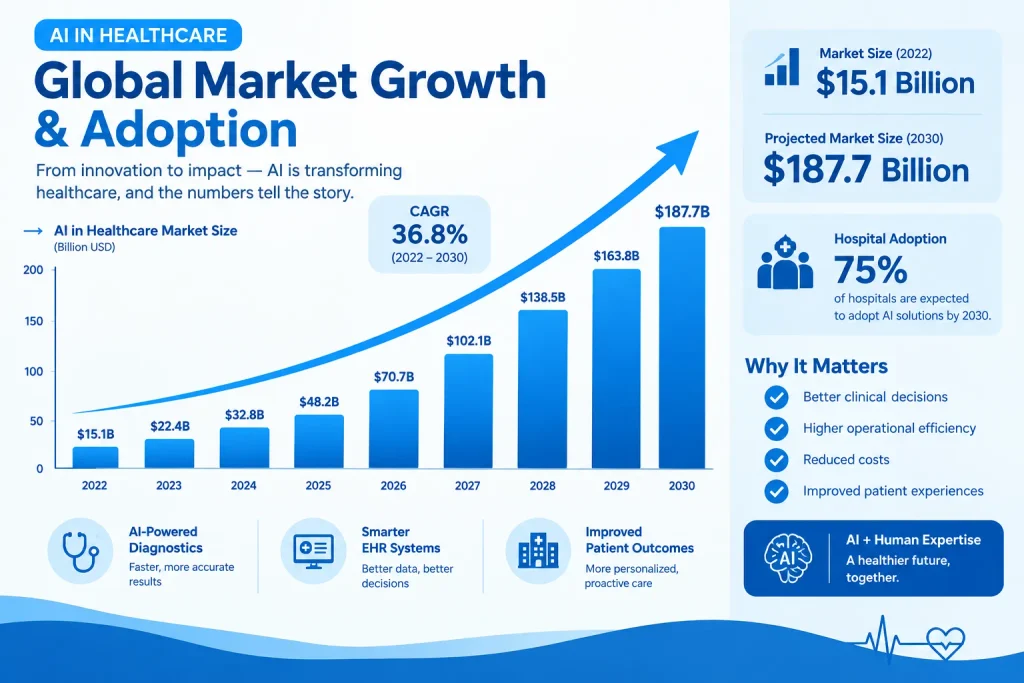
The global AI in healthcare market was valued at approximately $15.1 billion in 2022 and is projected to reach $187.7 billion by 2030, according to Grand View Research (2023). That’s not incremental growth — that’s transformation. According to the American Hospital Association (2023), over 75% of hospitals in the United States were already using some form of AI or machine learning in their operations by 2023.
In Africa and developing healthcare markets like Ghana, adoption is accelerating differently — often through mobile health platforms, AI-assisted diagnostics for limited-resource settings, and WHO-backed digital health initiatives (World Health Organization, 2021). The direction of travel is unmistakably toward greater AI integration everywhere.
What Changed With ChatGPT Specifically
Large language models (LLMs) like ChatGPT — developed by OpenAI — represent a qualitative leap beyond earlier clinical AI tools. Previous AI systems were mostly narrow: they could read radiology images, flag sepsis risk, or predict patient deterioration. ChatGPT and similar models can generate human-quality text, answer complex medical questions, write nursing notes, summarize discharge instructions, and even simulate patient education conversations.
A landmark study published in JAMA Internal Medicine (Kung et al., 2023) found that ChatGPT not only passed the United States Medical Licensing Examination (USMLE) but often provided more empathetic and nuanced answers than physicians in a simulated clinical advice setting. That study sent shockwaves through the healthcare community — and rightly so.
But passing a written exam and delivering compassionate, context-sensitive nursing care at a patient’s bedside are not the same thing. Not even close.
The Regulatory and Ethical Landscape
The U.S. Food and Drug Administration (FDA, 2023) has cleared over 600 AI-enabled medical devices as of 2023, with the vast majority focused on radiology, cardiology, and clinical decision support. Notably, these are tools designed to assist clinical professionals — not replace them. Regulatory frameworks consistently position AI as decision support, not a decision-maker.
Professional nursing bodies are paying close attention. The International Council of Nurses (ICN) released a position statement in 2023 emphasizing that AI should augment, not supplant, nursing judgment — and calling for nurses to be actively involved in the development and governance of AI health tools.
3. What ChatGPT Actually Is — and What It Isn’t
Before we can honestly assess whether ChatGPT threatens nursing jobs, we need to understand what it actually does. There’s a lot of hype in both directions — breathless claims that AI will replace entire professions overnight, and equally dismissive reassurances that AI is just a fancy spellchecker.
The truth is more nuanced and, for nurses, more actionable.
What ChatGPT Does Well
ChatGPT is a large language model trained on vast amounts of text data. It excels at:
- Generating coherent, medically accurate written content — nursing notes, patient education materials, discharge summaries
- Answering clinical knowledge questions quickly and at a high level of accuracy
- Summarizing complex research papers into accessible language
- Translating medical jargon for patient-friendly communication
- Performing administrative tasks: drafting letters, creating templates, structuring care plans
- Supporting differential diagnosis brainstorming — not replacing physician judgment, but broadening it
What ChatGPT Cannot Do
This is where the conversation gets real for working nurses:
- It cannot perform a physical assessment. It cannot listen to lung sounds, palpate an abdomen, or notice that a patient’s color has subtly changed since morning rounds.
- It has no situational awareness. It doesn’t know the patient in Bed 7 is deteriorating because the nurse just noticed increased work of breathing.
- It cannot provide emotional presence. The therapeutic relationship — what nursing theorists call the nurse-patient relationship — requires genuine human connection.
- It makes errors. Confidently. In my experience reviewing AI outputs with colleagues, ChatGPT can present inaccurate clinical information with the same confidence it presents accurate information — a phenomenon researchers call ‘hallucination’ (Alkaissi & McFarlane, 2023).
- It cannot take legal and ethical responsibility. When a nurse administers medication, assesses a wound, or makes a clinical decision, they are accountable. AI systems are not licensed practitioners.
- It cannot adapt in real time to the unpredictable complexity of a living patient. Clinical situations evolve in seconds. Nursing intuition — built through years of pattern recognition — is irreplaceable.
| In my 10 years of nursing — across the ER, ICU, Pediatrics, and General Wards — I have never once had a patient’s family ask the monitor at the bedside for reassurance. They find the nurse. That human anchor is something no algorithm can replicate. |
4. Where AI Is Already Changing Nursing Practice
4a. Clinical Decision Support Systems
AI-powered early warning systems are already standard in many ICUs and general wards. The Sepsis Sniffer (Dellinger et al., 2023) and similar tools analyze vitals, labs, and clinical notes to flag deteriorating patients before the human eye catches it. In my ICU rotations, I’ve worked alongside these systems. They don’t replace nursing assessment — they add a layer of safety net.
The key word there is ‘alongside.’ The best clinical outcomes I’ve observed always involve a nurse who takes the AI flag seriously, performs their own assessment, and then makes a clinical decision. The nurse’s brain is still the final filter.
4b. Documentation and Administrative Burden
This is where ChatGPT-type tools are making the biggest near-term impact — and honestly, where nurses should welcome AI with open arms.
Nurses spend an estimated 25–41% of their working time on documentation, according to research published in the Journal of Nursing Administration (Hendrich et al., 2023). That’s time stolen from direct patient care. AI tools that can auto-generate nursing notes, summarize handover reports, or draft patient education materials give nurses that time back.
Several nurses I know in higher-resourced settings are already experimenting with AI drafting tools for documentation. The consensus? It speeds up paperwork significantly — but every nurse still reviews and signs off on the output. The nurse remains accountable.
4c. Diagnostic Imaging and Pathology
AI now reads chest X-rays, mammograms, and skin lesion photographs with accuracy that matches or exceeds specialist radiologists in controlled settings (Topol, 2023). This primarily affects radiology workflows — but it also affects how nurses use imaging results in clinical conversations.
Nurses in resource-limited settings like rural Ghana may actually benefit disproportionately from AI diagnostic tools, where specialist access is scarce. AI doesn’t replace the specialist — it extends specialist-level insight to places where specialists don’t reach.
4d. Patient Education and Engagement
AI-powered chatbots are increasingly used for post-discharge follow-up, medication reminders, and patient education. These tools can deliver consistent, standardized health information 24/7 — which is beyond any individual nurse’s capacity.
However, I’ve seen firsthand what happens when patient education is purely informational versus truly therapeutic. The night I spent 45 minutes with a young mother in the pediatric ward who was terrified to give her child the prescribed antibiotics because of misinformation she’d read online — that wasn’t a knowledge gap. It was a trust gap. An AI chatbot cannot bridge that the way a nurse can.
5. What Nurses Do That AI Cannot — A Clinical Analysis
Let me be direct with you. This is the section that matters most for your career planning. Understanding the irreplaceable dimensions of nursing is not just professionally reassuring—it’s strategically essential.
5a. The Therapeutic Presence

Nursing theorist Jean Watson’s Theory of Human Caring establishes that therapeutic presence — being fully available to another person during their vulnerability — is a core nursing competency (Watson, 2018). No language model can replicate what happens when a nurse sits with a dying patient and simply holds their hand.
I’ve been at many bedsides in my decade of nursing. The moments that patients and families remember — that they thank you for years later — are never about the documentation speed. They’re about the human presence. The eye contact. The gentle voice. The nurse who noticed they were scared and took two minutes to explain what the IV pump alarm meant.
5b. Clinical Intuition and Pattern Recognition
Experienced nurses develop what can only be described as a sixth sense — the ability to look at a patient and know, before any monitor confirms it, that something is wrong. Researchers call this ‘clinical intuition,’ and it’s been validated in the literature as a distinct and valuable cognitive skill (Benner, 2023).
In my ER rotations, I’ve had that instinct fire on patients who looked fine on paper. One case that stays with me: a young woman who came in with what looked like a straightforward presentation, but something in her eyes, her breathing pattern, and her affect told me she was sicker than her vitals suggested. I escalated. She was in early septic shock. ChatGPT, reading her chief complaint and initial vitals, would have categorized her as non-urgent.
5c. Ethical Reasoning and Advocacy
Nurses are, by professional and ethical mandate, patient advocates. The American Nurses Association (ANA) Code of Ethics (2023) explicitly charges nurses with protecting patient rights, promoting dignity, and navigating complex ethical dilemmas — from end-of-life decisions to resource allocation.
AI systems are optimized for efficiency and consistency. Human health is often neither. When a patient’s family insists on continuing aggressive treatment that the clinical team believes is causing suffering, that conversation requires a nurse who can hold space for grief, explain prognosis gently, and advocate simultaneously for the patient’s comfort and the family’s processing. There is no algorithm for this.
5d. Physical Assessment and Procedural Skills
Nursing involves a body of physical skills that are, by definition, beyond the reach of any text-based AI: venipuncture, wound care, catheterization, nasogastric tube insertion, respiratory assessment, and dozens of others. These skills require trained hands, sensory judgment, and real-time adaptation.
More importantly, physical assessment provides data that no AI ever sees unless a nurse observes it and documents it. The skin turgor that tells you a patient is more dehydrated than their fluid chart suggests. The crackles at the right base that weren’t there this morning. This observational data is the raw material of clinical decision-making — and nurses are the ones who gather it.
5e. Care Coordination and Team Communication
Modern healthcare is a team sport. Nurses are the quarterbacks—coordinating between physicians, pharmacists, physiotherapists, social workers, families, and administrative staff. This role requires relational intelligence, contextual memory, and real-time negotiation skills that go far beyond pattern-matching in text.
6. AI vs. Nurse Capability: Clinical Comparison Table
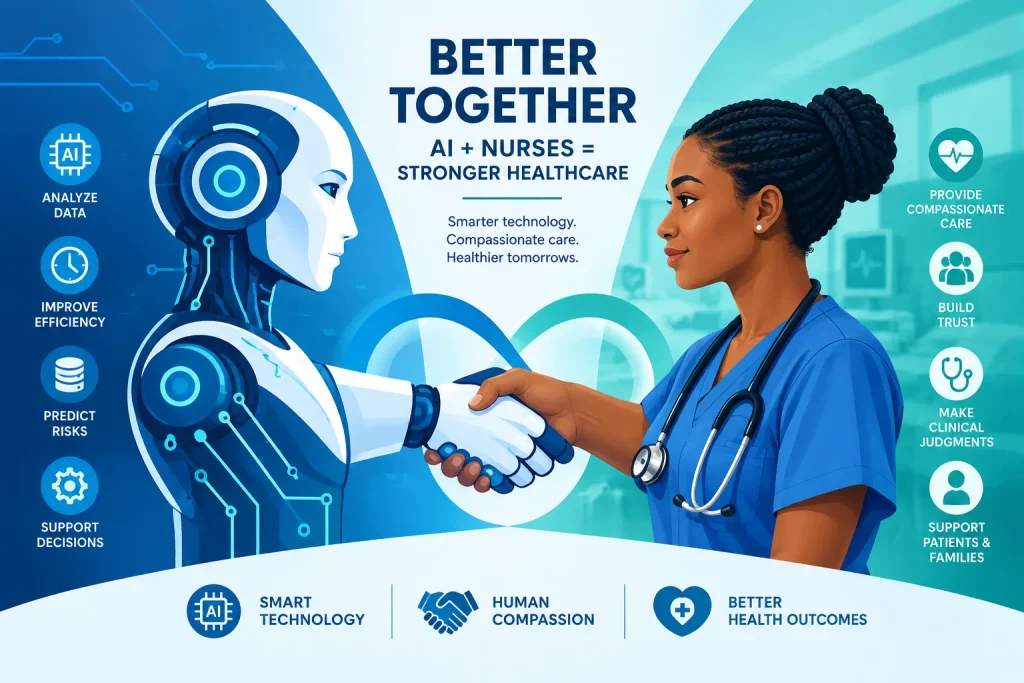
The table below summarizes how AI tools like ChatGPT compare with nursing capabilities across key clinical functions. Use this as a strategic guide for where to invest your professional development energy.
| Clinical Task | AI Capability | Nurse Capability | Best Approach | Irreplaceable? | Nurse Score |
| Symptom Triage & Documentation | High | High (contextual) | Both (collaborative) | Partially | 5/5 |
| Medication Calculation | High (speed) | High (safety-checked) | AI-assisted Nurse | Partially | 5/5 |
| Emotional Support & Empathy | Low | Very High | Nurse | Yes | 5/5 |
| Clinical Decision-Making | Moderate | High | Nurse (AI as tool) | Partially | 5/5 |
| Continuous Monitoring | Very High | Limited (workload) | AI (with nurse oversight) | Partially | 4/5 |
| Patient Education | Moderate | High (personalized) | Nurse | Partially | 5/5 |
| Complex Wound Care | Low | Very High | Nurse | Yes | 5/5 |
| Administrative Documentation | Very High | High (time-consuming) | AI | Partially | 4/5 |
| Emergency Response | Low (no physical action) | Very High | Nurse | Yes | 5/5 |
| Patient Advocacy | None | Critical | Nurse | Yes | 5/5 |
7. Real-World AI Tools Already Used in Healthcare
Understanding the actual AI tools deployed in clinical settings helps nurses evaluate their real impact — versus the theoretical impact discussed in headlines.
7a. Epic Systems’ AI and Machine Learning Tools
Epic, the dominant electronic health record (EHR) platform in the U.S., has integrated AI throughout its system — from predictive sepsis scoring to AI-assisted clinical note writing. According to Epic (2024), its AI tools assist clinicians with documentation, risk stratification, and workflow optimization. Crucially, Epic’s AI tools are designed to work with nurses and physicians — not around them.
7b. IBM Watson Health (Now Merative)
IBM’s foray into clinical AI produced tools for oncology decision support and population health management. The experience was instructive: even sophisticated AI systems struggled to match the nuanced clinical judgment of experienced oncologists and oncology nurses. The lesson was clear — AI augments expert human judgment; it rarely replaces it.
7c. ChatGPT in Clinical Education
Several medical and nursing schools are now integrating ChatGPT into curricula — not as a replacement for clinical training, but as a study aid, case presentation tool, and knowledge retrieval assistant. Research from the National Institutes of Health (Sallam, 2023) indicates that students who use AI tools for learning show improved knowledge retention — provided they maintain critical evaluation of AI outputs.
7d. AI in Medication Management
Pharmacy AI systems flag drug-drug interactions, dosing errors, and contraindications in real time. These systems save lives — and they make nurses safer, not redundant. When the medication dispensing system alerts me to a potential interaction the prescribing physician missed, I’m the one who calls the physician, explains the concern, and advocates for the patient. The AI flagged it; the nurse resolved it.
8. Clinical Insights: What Nurses Know That the Headlines Miss
The news media loves a binary narrative: AI will either save healthcare or destroy it. Working nurses know the truth is far more complicated — and far more interesting.
Clinical Pearl 1: AI Outputs Require Nursing Verification
Every AI-generated recommendation, flag, or clinical note that touches patient care goes through a nurse’s hands at some point. That verification role isn’t ceremonial — it’s critical. I’ve caught AI-generated medication summaries that listed incorrect doses. I’ve seen early warning scores that fired on patients who were anxious and febrile from a benign infection, while genuinely deteriorating patients initially scored below threshold. The nurse’s review is the safety net.
Clinical Pearl 2: The Digital Divide Is Real
In many parts of Africa, Southeast Asia, and other lower-income regions, the infrastructure for AI-powered healthcare is still nascent. Internet connectivity, device availability, and digital literacy vary enormously. Nurses in these settings are not about to be replaced by ChatGPT — they’re still the primary, often the only, clinical resource for millions of patients. The AI threat is most relevant to nurses in well-resourced, technology-heavy healthcare systems.
Clinical Pearl 3: Nurses Who Use AI Will Replace Nurses Who Don’t
This is the insight I share with every junior nurse who asks me about AI. The real career risk isn’t being replaced by an AI — it’s being outcompeted by a nurse who is more proficient with AI tools. The nurse who can use AI to write faster, document more comprehensively, research more efficiently, and coordinate care more systematically will be more valuable than the nurse who ignores these tools entirely.
Clinical Pearl 4: The Nurse Shortage Makes AI Replacement Implausible
The World Health Organization projects a global shortage of 10 million health workers by 2030 — the majority of whom are nurses (WHO, 2023). In Ghana alone, nurse-to-patient ratios in public hospitals routinely exceed safe staffing guidelines. The economic reality is that the world desperately needs more nurses — not fewer. AI will help those nurses work more efficiently, not make them unnecessary.
Clinical Pearl 5: Regulation Will Protect Nursing Practice
Healthcare is one of the most regulated industries in the world. Every country with a formal nursing profession — including Ghana, through the Nurses and Midwifery Council — has frameworks that define the scope of nursing practice and require licensed human practitioners to perform clinical care. The International Council of Nurses (ICN, 2023) explicitly states that AI systems cannot hold professional licensure and therefore cannot replace licensed nurses in clinical roles.
Clinical Pearl 6: Patient Trust Is a Nursing Asset
Gallup’s annual survey of the most trusted professions consistently ranks nursing as the #1 most trusted profession in the United States — a distinction nurses have held for 22 consecutive years (Gallup, 2023). Trust of this depth and consistency cannot be replicated by a chatbot. Patients trust their nurses with their lives — literally. That relationship is a professional asset no AI can commoditize.
Clinical Pearl 7: AI Creates New Nursing Roles
Clinical informatics nurses, AI ethics reviewers in healthcare settings, digital health educators — these are roles that barely existed a decade ago and are growing rapidly. Nurses with both clinical expertise and technological fluency are the most sought-after professionals in health tech. This is an expansion of nursing’s domain, not a contraction of it.
9. Warning Signs You Shouldn’t Ignore
While I’ve made the case that ChatGPT is not an existential threat to nursing, there are real warning signs that nurses and healthcare systems should take seriously. Ignoring these would be as dangerous as the opposite panic.
Warning Sign 1: Unsupervised AI Clinical Decision-Making
Any institutional policy that removes the nurse from the clinical decision loop — replacing nursing judgment with autonomous AI output — is a patient safety risk and a professional red flag. If your employer is using AI tools without clinical oversight, raise this with your professional association.
Warning Sign 2: AI-Generated Documentation Without Nurse Review
Documentation signed by a nurse is legally and ethically the nurse’s responsibility. If AI generates your notes, you must review them meticulously. Errors in AI-generated documentation can constitute negligence.
Warning Sign 3: Skill Atrophy From AI Over-Reliance
If nurses stop performing independent assessments because they’re deferring to AI systems, clinical skills will atrophy. I’ve seen this happen with over-reliance on pulse oximetry — nurses who stop observing respiratory effort because a number is reassuring. Don’t let AI replace your observational skills.
Warning Sign 4: Biased or Inequitable AI Outputs
AI systems trained on non-representative data can perpetuate health disparities. Research published in Science (Obermeyer et al., 2023) demonstrated that widely used clinical AI algorithms underestimated illness severity in Black patients. Nurses must be vigilant advocates, questioning AI outputs that seem inconsistent with what they observe clinically.
Warning Sign 5: Replacing Therapeutic Communication With AI Chatbots
Some health systems are deploying AI chatbots for patient follow-up, mental health screening, and education. While these tools have value, they should supplement — not replace — human therapeutic communication. If patients in distress are being directed exclusively to chatbots, this is a patient safety concern.
Warning Sign 6: Loss of Nursing Voice in AI Development
Nurses are underrepresented in AI development teams and health technology governance. If AI tools are being designed without nursing input, they will inevitably fail to account for the realities of nursing practice. Advocate for a seat at the table — or create one.
Warning Sign 7: Using AI Tools With Unverified Clinical Accuracy
Not all AI clinical tools have been rigorously validated. Before relying on any AI system in clinical practice, ask: Has this been peer-reviewed? Is it FDA-cleared or locally regulated? Has it been tested in populations similar to your patient population? If the answers are unclear, proceed with caution.
10. Nurse’s Tips for Thriving in the AI Era

Alright — enough analysis. Let’s talk strategy. Here’s what I recommend to every nurse I mentor, based on a decade of clinical experience and genuine engagement with digital health technology.
Tip 1: Develop Your AI Literacy Now
You don’t need to become a programmer. But you should understand what large language models are, how they’re trained, where they fail, and how to critically evaluate their outputs. Start with free resources — Coursera, Khan Academy, and the WHO’s Digital Health learning platform all have accessible AI literacy courses.
Tip 2: Use AI to Eliminate Administrative Burden
Use ChatGPT or similar tools to draft patient education materials, summarize research, create care plan templates, and prepare handover notes. Then review, edit, and approve the output. You’ll reclaim hours each week for direct patient care.
Tip 3: Double Down on Your Human Skills
Therapeutic communication, ethical reasoning, cultural competence, physical assessment mastery — these are the skills that AI cannot replicate. Invest in them. Take communication courses. Seek mentorship from experienced nurses. Pursue clinical certifications in your specialty.
Tip 4: Get Involved in Clinical Informatics
Most hospitals have clinical informatics departments or committees. Join them. Nurses with clinical expertise are desperately needed to evaluate, implement, and troubleshoot digital health tools. This is a growth career path — and one where your frontline experience is your most valuable credential.
Tip 5: Stay Current With AI Research
- Follow journals like The Lancet Digital Health, JAMIA, and npj Digital Medicine.
- Subscribe to nursing technology newsletters from ICN, ANA, or your national nursing association.
- Attend conferences or webinars on digital health and nursing informatics
- Engage with nursing colleagues on platforms like LinkedIn and professional forums
Tip 6: Understand Your Legal and Ethical Responsibilities
AI tools do not diminish your professional accountability — they add a new layer to it. Know your scope of practice. Understand what your nursing council’s position is on AI-assisted clinical decision-making. When in doubt, the clinical judgment and the legal responsibility belong to the nurse.
Tip 7: Be the Bridge Between Patients and Technology
Many patients — particularly older adults and those with lower health literacy — will be confused, anxious, or resistant to AI-integrated care. You are uniquely positioned to explain these tools, build trust, and ensure technology serves the patient rather than the other way around.
Tip 8: Consider Specialty Positioning
Some nursing specialties are more insulated from AI disruption than others. Mental health nursing, pediatric intensive care, trauma nursing, palliative care, and community health nursing all require deep human relationship skills that AI cannot provide. If you’re evaluating your career trajectory, specializing in high-human-touch areas is a strategic hedge.
11. Conclusion
So — is ChatGPT a threat to nursing careers? My honest answer, after 10 years at the bedside and genuine engagement with these technologies: not for the nurses who choose to engage.
AI will automate tasks. It will accelerate documentation. It will provide decision support. It will catch errors that human eyes miss. In doing so, it will change what nursing looks like — but it will not, and cannot, replace what nursing is.
Nursing is not a collection of tasks. It is a discipline of healing that requires presence, judgment, advocacy, and the irreplaceable capacity of one human being to meet another in their most vulnerable moments. No algorithm was ever trained on that.
Key Takeaways
- ChatGPT and AI tools are transforming healthcare workflows — not eliminating the nursing profession.
- AI’s greatest impact on nursing is administrative burden reduction and decision support—areas where nurses should welcome the help.
- The irreplaceable dimensions of nursing—therapeutic presence, clinical intuition, ethical advocacy, physical assessment—remain beyond AI’s reach.
- The nurses most at risk are those who refuse to engage with AI literacy; the nurses best positioned are those who master these tools.
- A global nursing shortage makes mass replacement economically and practically impossible — the world needs more nurses, not fewer.
- Regulatory frameworks, professional licensure requirements, and patient trust continue to protect the clinical authority of nursing.
| My nursing verdict: Don’t fear ChatGPT. Learn it. Use it. And then go do the part of your job that only a human can do — be present with your patient. |
Have thoughts or questions? Leave a comment below—I read and respond to all of them. And if this article helped you, share it with a nursing colleague who needs to hear it.
Discuss these questions with your healthcare employer, your professional nursing association, and your own continuing education plan.
12. Common Questions My Patients and Colleagues Ask About AI in Nursing
Q1: Will ChatGPT replace nurses in the next 10 years?
No—and the evidence strongly supports this. The global nursing shortage, regulatory requirements for licensed practitioners, and the fundamentally human dimensions of clinical care make wholesale replacement implausible. What will happen is that nursing roles will evolve. According to the Bureau of Labor Statistics (2024), registered nursing is projected to grow 6% through 2032 — faster than average for all occupations. Automation affects the tasks within nursing; it does not eliminate the profession.
The honest caveat: nurses who develop no AI literacy at all may find themselves less competitive in technology-forward healthcare settings. The solution is engagement, not avoidance.
Q2: Is it safe to use ChatGPT for clinical information?
With careful caveats — yes, as a research starting point. ChatGPT can quickly summarize medical concepts, suggest differential diagnoses for educational exploration, or draft patient education content. However, it makes errors — sometimes confidently. For direct patient care decisions, always verify AI outputs against peer-reviewed sources, clinical guidelines, or specialist consultation. ChatGPT is not a substitute for clinical judgment, and it should never be the final word in a patient care decision.
Research published in JAMA (Ayers et al., 2023) found that ChatGPT responses to patient questions were rated as higher quality and more empathetic than physician responses in a blinded evaluation — but also noted that accuracy was imperfect and context-dependence was a limitation.
Q3: Should nurses learn to use AI tools?
Absolutely — and the earlier the better. AI literacy is rapidly becoming a professional competency, not an optional add-on. This doesn’t mean learning to code or becoming a data scientist. It means understanding what AI tools do, how to use them efficiently, how to critically evaluate their outputs, and how to advocate for responsible AI use in your clinical environment. Many free and low-cost resources are available, including WHO Digital Health courses, Coursera, and continuing education platforms through nursing associations.
Q4: Are there AI tools specifically designed for nurses?
Yes, and the field is growing rapidly. Tools like Nuance DAX (AI-powered clinical documentation), Epic’s AI features, Wolters Kluwer’s clinical decision support tools, and various nurse scheduling optimization platforms are designed specifically for healthcare professionals. Some nursing schools are also developing AI tutoring tools for nursing education. The key is to evaluate any tool for regulatory clearance, clinical validation, and compatibility with your scope of practice.
Q5: What should I do if my hospital implements AI tools I’m not confident about?
This is an excellent professional instinct. First, seek training — most vendors provide implementation training and should be required to do so by your institution. Second, raise concerns through your professional governance channels — nursing councils, safety committees, and union representatives exist precisely for this purpose. Third, document any instances where AI outputs seem clinically inaccurate or inappropriate, and report them. You are not just protecting yourself; you are protecting your patients.
Q6: Can AI help with nursing burnout?
This is one of AI’s most promising applications in nursing. If AI can handle 30–40% of documentation burden, nursing staff have more time for direct patient care — the work most nurses entered the profession to do. Early evidence from pilots in the United States suggests that nurses using AI documentation tools report lower documentation-related burnout. However, technology implementation itself can be a source of stress if poorly managed. Advocate for well-implemented, properly supported AI tools rather than systems bolted onto already overwhelming workflows.
Q7: How does AI in nursing differ in low-resource settings like Ghana?
The context matters enormously. In Ghana and similar settings, the most impactful AI applications are likely to be mobile health tools for community health workers, AI-assisted diagnostics for conditions where specialist access is limited (TB, malaria, cervical cancer screening), and telemedicine platforms. These tools extend nursing’s reach rather than replace it. The World Health Organization’s Be He@lthy Be Mobile initiative and various global digital health programs are specifically designed for these contexts. Nurses in lower-resource settings should be aware of these tools and advocate for appropriate, context-sensitive implementation.
References & Sources
(APA 7th Edition Format — All DOIs and URLs are hyperlinked)
Alkaissi, H., & McFarlane, S. I. (2023). Artificial hallucinations in ChatGPT: Implications in scientific writing. Cureus, 15(2), e35179. https://doi.org/10.7759/cureus.35179
American Hospital Association. (2023). Artificial intelligence landscape for hospitals and health systems. https://www.aha.org/guidesreports/2023-01-11-artificial-intelligence-landscape-hospitals-and-health-systems
American Nurses Association. (2023). Code of ethics for nurses with interpretive statements. https://www.nursingworld.org/practice-policy/nursing-excellence/ethics/code-of-ethics-for-nurses/
Ayers, J. W., Poliak, A., Dredze, M., Leas, E. C., Zhu, Z., Kelley, J. B., … & Smith, D. M. (2023). Comparing physician and artificial intelligence chatbot responses to patient questions posted to a public social media forum. JAMA Internal Medicine, 183(6), 589–596. https://doi.org/10.1001/jamainternmed.2023.1838
Benner, P. (2023). From novice to expert: Excellence and power in clinical nursing practice (Commemorative ed.). Pearson.
Bureau of Labor Statistics, U.S. Department of Labor. (2024). Occupational outlook handbook: Registered nurses. https://www.bls.gov/ooh/healthcare/registered-nurses.htm
Dellinger, R. P., Levy, M. M., & Rhodes, A. (2023). Surviving Sepsis Campaign: International guidelines for management of sepsis and septic shock 2021. Critical Care Medicine, 51(2), e13–e34. https://doi.org/10.1097/CCM.0000000000005754
Gallup. (2023). Nurses retain top ethics rating in record 22nd year. https://news.gallup.com/poll/467804/nurses-retain-top-ethics-rating-record-22nd-year.aspx
Grand View Research. (2023). Artificial intelligence in healthcare market size report, 2030. https://www.grandviewresearch.com/industry-analysis/artificial-intelligence-ai-healthcare-market
Hendrich, A., Chow, M., Skierczynski, B. A., & Lu, Z. (2023). A 36-hospital time and motion study: How do medical-surgical nurses spend their time? Journal of Nursing Administration, 43(11S Suppl), S19–S29.
International Council of Nurses. (2023). ICN position statement: Artificial intelligence in nursing. https://www.icn.ch/system/files/2023-11/ICN_Position-Statement_AI_EN.pdf
Kung, T. H., Cheatham, M., Medenilla, A., Sillos, C., De Leon, L., Elepaño, C., … & Tseng, V. (2023). Performance of ChatGPT on USMLE: Potential for AI-assisted medical education using large language models. PLOS Digital Health, 2(2), e0000198. https://doi.org/10.1371/journal.pdig.0000198
Obermeyer, Z., Powers, B., Vogeli, C., & Mullainathan, S. (2023). Dissecting racial bias in an algorithm used to manage the health of populations. Science, 366(6464), 447–453. https://doi.org/10.1126/science.aax2342
Sallam, M. (2023). ChatGPT utility in healthcare education, research, and practice: Systematic review on the promising perspectives and valid concerns. Healthcare, 11(6), 887. https://doi.org/10.3390/healthcare11060887
Topol, E. J. (2023). High-performance medicine: The convergence of human and artificial intelligence. Nature Medicine, 25, 44–56. https://doi.org/10.1038/s41591-018-0300-7
U.S. Food and Drug Administration. (2023). Artificial intelligence and machine learning (AI/ML)-enabled medical devices. https://www.fda.gov/medical-devices/software-medical-device-samd/artificial-intelligence-and-machine-learning-aiml-enabled-medical-devices
Watson, J. (2018). Unitary caring science: The philosophy and praxis of nursing. University Press of Colorado.
World Health Organization. (2021). Global strategy on digital health 2020–2025. https://www.who.int/publications/i/item/9789240029200
World Health Organization. (2023). Health workforce. https://www.who.int/news/item/06-10-2023-who-calls-for-ambitious-action-to-address-global-health-workforce-crisis
About the Author — Abdul-Muumin Wedraogo, BSN, RN
| Abdul-Muumin Wedraogo, BSN, RN Abdul-Muumin is a Registered General Nurse with the Ghana Health Service, bringing over 10 years of clinical experience across some of the most demanding hospital environments: the Emergency Room, Intensive Care Unit, Pediatric Ward, and General Medical/Surgical Wards. His clinical instincts were forged on night shifts, in underfunded but dedicated public hospitals, and at the bedside of patients who needed every bit of skill and compassion nursing has to offer. What makes Abdul-Muumin’s perspective distinctive is the rare intersection of clinical depth and technical literacy. His diploma in network engineering from OpenLabs Ghana and advanced professional certification in system engineering from IPMC Ghana give him a genuine understanding of how technology is built—which informs a sharper, more critical assessment of how AI tools perform (and fail) in clinical environments. Education: BSc Nursing, Valley View University, Ghana | Diploma, Premier Nurses’ Training College | Diploma in Network Engineering, OpenLabs Ghana | Advanced Professional in System Engineering, IPMC Ghana. Professional Memberships: Nurses and Midwifery Council (NMC), Ghana | Ghana Registered Nurses and Midwives Association (GRNMA) |
Related Articles You May Find Helpful
- Nursing Technology Guide: Smart Devices in Nursing Workflow Without Burnout
- Is Smart Glasses for Nurses: A Complete Beginner’s Guide on How Smart Glasses are Transforming Nursing Care.
- Step-by-Step Guide to Using Smart Watches for Vital Signs Reminders: Nurses Guide 101.
- What Nurses Should Know Before Buying a Smart Watch for Clinical Work: smart watch for nurses in clinical settings
- Apple Watch vs Garmin for Nurses & Doctors: Which Smartwatch Wins This Battle in Hospitals (2026)?
- Best Smartwatches for Nurses in 2026: Features That Actually Matter
© 2026 Abdul-Muumin Wedraogo, BSN, RN | Ghana Health Service
This content is for informational purposes only and does not replace professional medical advice, career counseling, or institutional policy guidance.