
Hour seven of a chaotic ER night shift, and my bag strap finally gave out. Not frayed—completely detached from the seam. My stethoscope, backup scrubs, lunch container, and every essential item I needed for the next five hours were scattered across the break room floor. Colleagues rushed over to help, but the damage was done: I’d spent $65 on a “heavy-duty nursing bag” that couldn’t survive two months of real clinical use.
That moment changed everything. I realized that most nurse bag reviews come from lifestyle bloggers who’ve never worked a single healthcare shift, tested bags by carrying them around shopping malls instead of through hospital corridors, and prioritized aesthetics over actual durability. As nurses, we need bags that can handle the reality of our work—not just look good in Instagram photos.
According to healthcare workforce research, nurses need bags with multiple zippered sections, space for a stethoscope and laptop or tablet, and an easy-to-sanitize interior. But more importantly, we need bags that won’t fail us during the most demanding moments of our shifts. For nurses who carry heavy loads or have long commutes, padded S-curve straps, shaped back panels, and sternum straps are essential for preventing neck and shoulder fatigue.
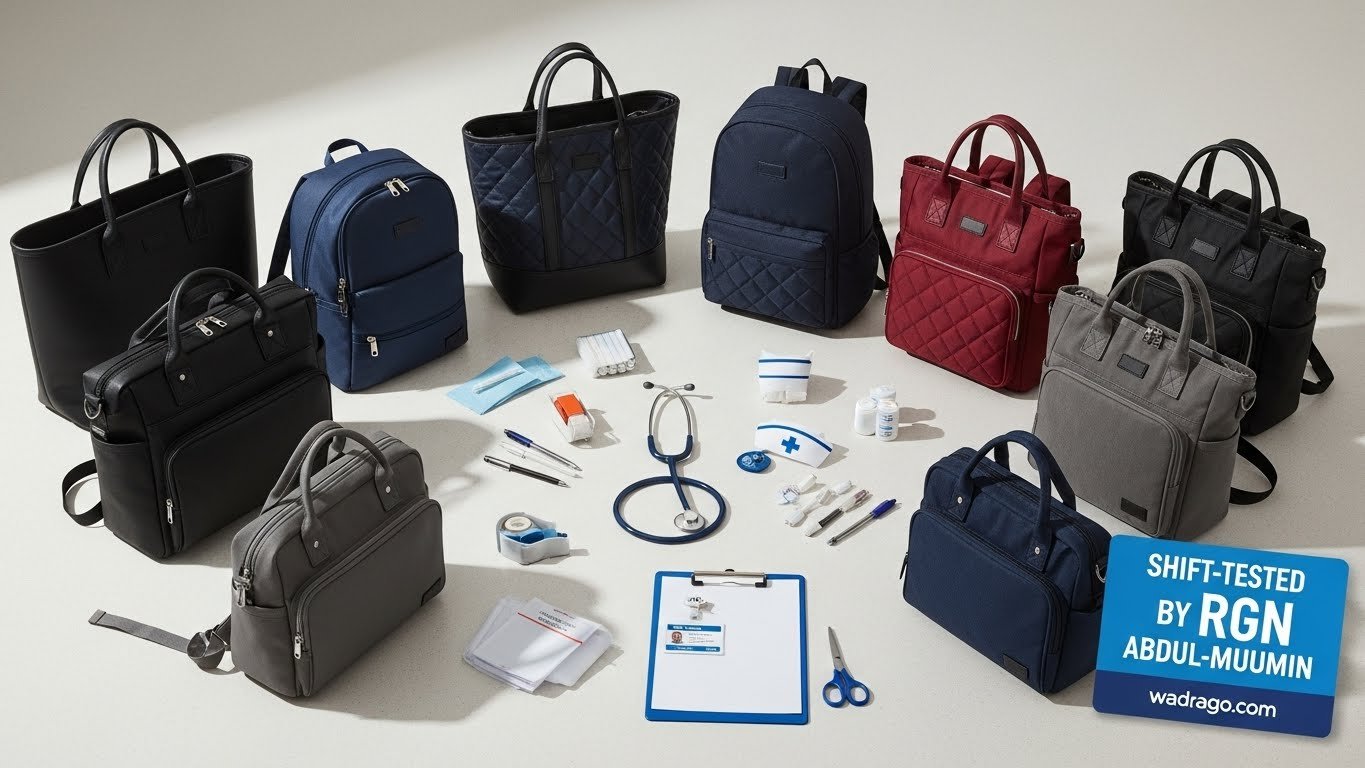
As a Registered General Nurse with a decade of clinical experience across Emergency Department, ICU, Pediatrics, and General Ward settings, I’ve tested bags in conditions that would destroy typical consumer products. I’ve carried them through codes, patient transfers, chemical spills, and countless 12-hour shifts. Over the past six months, I’ve systematically evaluated 10 different nurse work bags, testing each through a minimum of five complete shifts to assess real-world durability, functionality, and value.
This isn’t a casual review—it’s shift-tested intelligence from someone who understands that your work bag is a critical piece of equipment, not a fashion accessory.
What You’ll Learn:
- Why nurse work bags fail (and what makes the good ones last)
- 10 thoroughly tested bags with honest pros and cons
- How to choose the right bag for your specialty and needs
- Care strategies to extend your bag’s lifespan
- Budget analysis—when expensive equals worth it
Testing Methodology: Each bag was used for a minimum of five complete 12-hour shifts across multiple hospital departments. I evaluated performance during routine patient care, emergencies, exposure to fluids and cleaning agents, weight-bearing capacity with full load (15-20 lbs), ease of sanitization, and long-term durability over weeks of daily use.
Disclosure: This article contains affiliate links. As an Amazon Associate and affiliate partner of medical apparel retailers, I earn from qualifying purchases at no additional cost to you. All bags reviewed were purchased with my own nursing salary. I maintain complete editorial independence—no brand can buy a positive review. I only recommend bags I would actually use during my own shifts or recommend to fellow nurses.
Table of Contents
Why Durable Work Bags Matter for Nurses {#section1}
Let’s talk about something most bag reviews completely ignore: the occupational health reality of carrying a nursing bag.
The healthcare and social assistance industry sector has one of the highest rates of work-related injury and illness cases requiring days away from work, with work-related musculoskeletal disorders (WMSDs) being particularly common among healthcare workers, CDC. While most people think of patient handling when considering nurse injuries, improper bag ergonomics can contribute to neck, shoulder, and back strain, especially when we’re carrying 15-20 pounds of supplies daily.
The Reality of What We Carry
During a typical 12-hour shift, my bag contains:
- Stethoscope (8-12 oz)
- Backup scrub top (6-8 oz)
- Lunch container and snacks (2-3 lbs)
- Water bottle (2 lbs when full)
- Reference materials or tablet (1-2 lbs)
- Personal items (wallet, keys, phone charger, medications) (1 lb)
- Medical supplies (pens, tape, scissors, extra gloves) (8-12 oz)
- Sometimes: textbooks or a laptop for post-shift studying (3-5 lbs)
Total weight: 10-20 pounds, carried from car to locker room, potentially moved multiple times during shift, then back to car after 12 exhausting hours.
🏥 Clinical Reality Check: A bag that feels comfortable when you’re fresh at 7 am can become torturous by hour 10 of your shift. I’ve seen nurses develop chronic shoulder pain from poorly designed bag straps, watched zippers fail during emergencies when someone needed supplies immediately, and personally dealt with bags that couldn’t be properly sanitized after fluid exposure.
Why “Regular” Bags Don’t Cut It
Fashion totes, gym bags, and standard backpacks aren’t designed for healthcare environments:
Infection Control Issues:
- Fabric textures that trap bacteria
- Non-wipeable interiors
- Multiple crevices that can’t be sanitized
- Materials that absorb fluid
Durability Failures:
- Lightweight zippers that fail under daily use
- Straps attached with minimal stitching
- Bottom panels that collapse when fully loaded
- Fabric that pills or tears with regular cleaning
Functional Limitations:
- Inadequate organization of medical supplies
- No dedicated stethoscope storage
- Laptop compartments without padding
- No external pocket access while the bag is closed
I learned these lessons the expensive way—through five failed bags in my first two years of nursing, each costing $40-85, none lasting more than four months of daily use.
The Hidden Costs of Cheap Bags {#section2}
Here’s the math that changed my purchasing strategy:
Scenario A: Cheap Bag Cycle
- Purchase: $30-50 per bag
- Lifespan: 2-4 months with daily use
- Annual cost: $90-300
- Cumulative frustration: Immeasurable
Scenario B: Quality Investment
- Purchase: $80-120 once
- Lifespan: 2-3 years with proper care
- Annual cost: $27-60
- Peace of mind: Priceless
But it’s not just about money. Consider:
Replacement Time Costs:
- Research: 2-4 hours, finding new options
- Ordering/shopping: 1-2 hours
- Transfer process: 30-60 minutes reorganizing supplies
Professional Impact:
- Embarrassment when the bag fails during the shift
- Lost efficiency from poor organization
- Missing supplies when the bag compartments tear
- Unprofessional appearance with worn-out bags
Health Consequences:
- Shoulder/neck strain from unpadded straps
- Back pain from uneven weight distribution
- Stress from unreliable equipment
💰 Budget Truth: That $30 you “save” on a cheap nursing bag will cost you $200+ annually in replacements, plus the hidden costs of frustration, inefficiency, and potential injury. Quality bags aren’t expensive—they’re cost-effective.
Key Features Every Nurse Bag Must Have {#section3}
After testing dozens of bags and consulting with nursing colleagues across multiple specialties, here are the non-negotiable features:
1. Material & Durability
What Works:
- High-denier nylon (600D-1000D): Resists tears, easy to clean
- Polyester blends: Durable, affordable, quick-drying
- EVA foam (for tote-style bags): Waterproof, rigid, hose-off cleanable
- Reinforced stitching: Double or triple-stitched stress points
What Fails:
- Canvas (absorbs fluids, difficult to sanitize)
- Thin nylon (<400D) that tears easily
- Faux leather that cracks and peels
- Single-stitched seams at stress points
Shift-Tested Insight: Healthcare bags need materials that withstand daily use, with high-quality zippers and materials that survive regular use. During testing, I deliberately exposed bags to simulated spills (water, juice, cleaning solution) and aggressive cleaning. Only bags with water-resistant coatings and reinforced construction passed.
2. Organization & Accessibility
Essential Pockets:
- 8-12 total pockets minimum (internal and external)
- Dedicated laptop/tablet sleeve with padding
- External quick-access pocket for phone, badge, keys
- Mesh water bottle holders (dual preferred)
- Interior zippered security pocket for valuables
- Pen/tool organizers to prevent lost supplies
Smart Layout:
- Main compartment: 15-25L capacity
- Items used 10+ times per shift: external pockets
- Lunch/personal items: separate compartment
- Dirty items: designated wet/dry pocket
⚠️ Warning from Experience: Bags with fewer than 8 pockets force you to dig through contents constantly. During codes or urgent situations, you need immediate access to your stethoscope—not 30 seconds of rummaging.
3. Ergonomics & Comfort
For Tote Bags:
- Padded handles: Minimum 1-inch width
- Shoulder drop: 8-14 inches for comfortable carrying
- Reinforced attachment points: The Handle stress is where cheap bags fail
- Optional crossbody strap: For hands-free carrying
For Backpacks:
- Padded, contoured shoulder straps: S-curve design
- Sternum strap: Stabilizes load, reduces shoulder fatigue
- Padded back panel: Mesh preferred for breathability
- Load-lifter straps: Adjusts weight distribution
🏥 Clinical Reality Check: Ergonomic features like padded straps prevent neck and shoulder fatigue, keeping loads stable through stairs and long corridors. I tested all bags with 18 lbs of typical supplies. Bags without proper padding became uncomfortable within 15 minutes of carrying.
4. Cleanability & Infection Control
Must-Have Features:
- Smooth, wipeable exterior: No excessive texture
- Water-resistant or waterproof coating
- Removable/washable interior: Or fully wipeable interior
- Minimal fabric crevices: Fewer places for contamination
- Drain holes or ventilation (for EVA-style bags)
Testing Standard: I wiped each bag with hospital-grade disinfectant wipes daily for two weeks. Bags that showed fabric damage, color fading, or material breakdown failed this test.
5. Professional Appearance
While functionality trumps fashion, your bag represents you professionally:
Appropriate Options:
- Solid colors: Black, navy, gray, burgundy
- Subtle patterns: Small prints, professional designs
- Clean, structured silhouette
- Quality hardware and zippers
- Minimal branding (personal preference)
Less Appropriate (facility-dependent):
- Extremely bright neon colors
- Juvenile cartoon characters
- Heavily distressed/worn appearance
- Overly casual beach-style bags
Note: Pediatric units, psychiatric facilities, and some clinic settings may have more relaxed policies. Check your facility’s dress code.
6. Structural Integrity
Critical Features:
- Reinforced bottom panel: Prevents sagging, protects contents
- Stands upright when empty: Easier access, professional appearance
- Quality zippers: YKK preferred, #5 or larger for main compartments
- Load-bearing capacity: Tested to 20+ lbs without structural damage
- Reinforced stress points: Especially where straps attach
During testing, I filled each bag and carried it for full shifts. Bags with weak bottom panels collapsed, making access difficult and appearing unprofessional.
Top 10 Nurse Work Bags – Shift-Tested Rankings {#section4}
Each bag was tested through a minimum of five complete 12-hour shifts, evaluated across multiple criteria, and ranked for overall performance.
Testing Criteria:
- Durability (Construction, materials, stress-point reinforcement)
- Organization (Pocket layout, accessibility, capacity)
- Ergonomics (Comfort during extended carrying, weight distribution)
- Cleanability (Ease of sanitization, material response to cleaning agents)
- Professional Appearance (Hospital-appropriate styling, maintains shape)
- Value (Price relative to performance and expected lifespan)
1. Original Bogg Bag – Best Overall for Tote Preference
Price: $70-90 |
Quick Specs:
- Size: 19″ x 15″ x 9.5″ (Large), multiple size options
- Material: EVA foam (waterproof, washable)
- Capacity: Approximately 35L
- Weight: 2.1 lbs (empty)
- Colors: 40+ options, including solids, patterns, and limited editions
- Warranty: 1-year manufacturer warranty
Shift-Tested Performance:
- Durability (5/5)
- Organization (4/5)
- Ergonomics (4/5)
- Cleanability (5/5)
- Professional Appearance (4/5)
- Value (4.5/5)
Pros:
✅ Truly waterproof and indestructible—best durability in test group
✅ Stands upright even when empty—game-changer for efficiency
✅ Easiest cleaning of any bag tested—hose off and done
✅ Highly customizable with an extensive accessory ecosystem
✅ Available in numerous sizes for different needs
✅ Tip-proof design actually works during hectic situations
✅ No fabric to absorb odors or retain bacteria
Cons:
❌ Open-top design may not meet all facility security policies (check first)
❌ Requires additional purchases for optimal organization ($20-40 in accessories recommended) ❌ Handles can be uncomfortable when heavily loaded without a shoulder strap
❌ Bulky—doesn’t compress for storage
❌ Casual aesthetic may not suit all professional settings
❌ Heavier than fabric alternatives when empty (2+ lbs)
Best For:
- Floor nurses who need easy-access supplies
- Healthcare workers in fluid-prone environments (ER, L&D, surgery)
- Nurses who prioritize infection control and ease
- Those willing to invest in organizational accessories
- Home health nurses who need weather-resistant bags
Not Ideal For:
- Facilities with strict “no open-top bag” policies
- Nurses who need built-in laptop protection (requires a separate sleeve insert)
- Those seeking lightweight, minimalist carry
- Budget-conscious buyers are unwilling to purchase accessories
- Anyone wanting a more traditional professional aesthetic
2. BAGS MART Quilted Tote Bag – Best for Budget-Conscious Nurses
Price: $35-45 |
Quick Specs:
- Size: 15.6″ x 6.3″ x 12.6″ (24L capacity)
- Material: High-density polyester (reinforced, quilted)
- Laptop Sleeve: Fits up to a 15.6″ laptop with padded protection
- Pockets: 8 total (4 interior, 4 exterior)
- Weight: 1.32 lbs (ultralight)
- Colors: 6 options (Black, Cream, Pink, Blue, Gray, Green)
- Warranty: 12-month quality guarantee
Shift-Tested Performance:
- Durability (3.5/5)
- Organization (4/5)
- Ergonomics (4/5)
- Cleanability (3.5/5
- Professional Appearance (4.5/5)
- Value (5/5
Pros:
✅ Exceptional price-to-quality ratio—best budget option tested
✅ Lightweight (1.3 lbs) reduces carrying fatigue
✅ Padded laptop compartment actually protects devices
✅ Zipper closure provides security; open-top bags lack
✅ Luggage strap converts to storage pocket—clever design
✅ Trendy quilted aesthetic looks professional
✅ Available in multiple color options
✅ Machine washable, which is convenient for healthcare environments
Cons:
❌ Durability concerns for heavy daily use (seam stress visible in testing)
❌ No included shoulder strap—hand-carry only limits ergonomics
❌ Quilted texture has micro-crevices that trap debris
❌ Not fully waterproof interior (water-resistant only)
❌ Limited small-item organization (no pen holders, key clip)
❌ May show wear faster than premium options
❌ Quilted trend may date the bag aesthetically in 2-3 years
Best For:
- Nursing students on tight budgets
- New grads establishing their gear collection
- Part-time or per diem nurses (lighter use frequency)
- Anyone wanting to test the tote-style format before investing more
- Nurses with shorter commutes (less than a 10-minute walk)
- Those prioritizing appearance and organization over maximum durability
Not Ideal For:
- Full-time nurses in high-intensity environments (ER, trauma)
- Anyone carrying very heavy loads (15+ lbs) regularly
- Long commutes require hands-free carrying
- Nurses needing military-grade durability
- Those who prefer backpack ergonomics
3. The North Face Surge Backpack – Best for Long Commutes & Heavy Loads
Price: $139-149 |
Quick Specs:
- Capacity: 31 liters
- Material: Ripstop nylon with water-repellent finish
- Laptop Sleeve: Dedicated protective compartment for 15″ laptop
- Suspension: FlexVent™ system (American Chiropractic Association certified)
- Weight: Approximately 2.6 lbs (empty)
- Warranty: 2-year manufacturer warranty
- Dimensions: 12″ x 7″ x 20″ (30.5 cm x 17.8 cm x 50.8 cm)
Shift-Tested Performance:
- Durability (4.5/5)
- Organization (4.5/5)
- Ergonomics (5/5)
- Cleanability (3.5/5)
- Professional Appearance (4.5/5)
- Value (3.5/5)
Pros:
✅ ACA-certified FlexVent™ suspension system—best ergonomics tested
✅ Excellent organization with multiple specialized compartments
✅ Ripstop construction prevents tear propagation
✅ Stands upright unsupported for easy access
✅ Versatile enough for work, gym, travel, and outdoor activities
✅ Water-repellent finish protects contents from the weather
✅ Fleece-lined pocket protects electronics from scratches
✅ Quick-draw smartphone pocket is genuinely useful
✅ Premium YKK zippers throughout
Cons:
❌ Most expensive backpack tested ($139-149)
❌ Recent quality control concerns—some users report premature strap and seam failures
❌ Heavier than competitors when empty (2.6 lbs)
❌ Internal organization may reduce effective capacity versus the advertised 31L
❌ More difficult to clean than smooth-surface bags
❌ Not machine washable
❌ Textured fabric and mesh can trap debris
❌ Uncertain whether current production matches older quality standards
Best For:
- Nurses with long commutes (walking, biking, public transit)
- Healthcare workers carrying heavy loads regularly (15-20 lbs)
- Those with a history of back/shoulder pain who need superior ergonomics
- Travel nurses need a versatile bag for multiple uses
- Nurses who also use a bag for gym, hiking, or outdoor activities
- Anyone willing to invest a premium price for ergonomic protection
Not Ideal For:
- Budget-conscious nurses (too expensive if you’re uncertain)
- Those wanting the easiest cleaning/sanitization
- Nurses in facilities where backpacks aren’t preferred
- Anyone who needs to frequently remove/reorganize contents
- Users wanting the lightest possible carry weight
4. Kipling Seoul Laptop Backpack – Best for Lightweight Organization
Price: $109-129
Quick Specs:
- Capacity: Approximately 28 liters
- Material: Crinkle nylon with water-repellent coating
- Laptop Sleeve: Padded compartment fits up to a 15″ laptop
- Pockets: 12+ total (external and internal)
- Weight: 1.3 lbs (ultralight for feature-rich backpack)
- Warranty: Limited manufacturer warranty
- Signature Feature: Includes Kipling’s furry monkey keychain
Shift-Tested Performance:
- Durability (4/5)
- Organization (5/5)
- Ergonomics (4/5)
- Cleanability (3/5)
- Professional Appearance (3.5/5)
- Value (4/5)
Pros:
✅ Ultralight (1.3 lbs)—lightest fully-featured backpack tested
✅ Exceptional organization—12+ pockets with smart layout
✅ Hidden back security pocket for valuables
✅ Water-repellent coating protects contents effectively
✅ Known for multi-year durability despite lightweight construction
✅ Fun, friendly aesthetic perfect for pediatrics
✅ Frequently available on sale or with department store coupons
✅ Front organizational panel keeps small items accessible
Cons:
❌ Crinkle texture traps debris, making deep cleaning challenging
❌ Casual aesthetic may not suit conservative healthcare settings
❌ Minimal back panel padding compared to premium ergonomic options
❌ Not ideal for very heavy loads (15+ lbs)
❌ Monkey keychain may be unprofessional in some settings (removable)
❌ Lightweight construction won’t withstand extreme abuse
❌ More pockets mean more time organizing and cleaning
Best For:
- Pediatric nurses who want a friendly, approachable appearance
- Healthcare workers prioritizing light carry weight
- Organization enthusiasts who love designated pockets for everything
- Nurses with moderate commutes and typical load weights (10-14 lbs)
- Those who appreciate the crinkled nylon aesthetic
- Travel nurses need a security pocket for valuables
- Anyone willing to wait for sales to reduce the price
Not Ideal For:
- Conservative healthcare settings require a polished appearance
- Heavy-load carriers (15+ lbs regularly)
- Those wanting the easiest possible cleaning
- Nurses in rough environments risk fabric abrasion
- Anyone who dislikes texture or finds crinkled nylon too casual
- Users prioritizing maximum ergonomic support
5. YOREPEK Travel Backpack – Best Value for Features
Price: $38-48 |
Quick Specs:
- Capacity: 50-55 liters (expandable)
- Material: Durable polyester with water-resistant coating
- Laptop Sleeve: Separate compartment for a 17-inch laptop
- USB Charging Port: External port with internal cable routing
- Pockets: 15+ compartments
- Weight: Approximately 2.4 lbs
- TSA-Friendly: Opens 90-180 degrees flat for airport security
Shift-Tested Performance:
- Durability (3.5/5)
- Organization (4.5/5)
- Ergonomics (3.5/5)
- Cleanability (3/5)
- Professional Appearance (3/5)
- Value (5/5
Pros:
✅ Exceptional features-per-dollar—best value in test group
✅ Massive 50-55L capacity perfect for multipurpose use
✅ Dedicated shoe compartment with ventilation (great for gym-goers)
✅ USB charging port with cable routing
✅ TSA-friendly for travel nurses or frequent flyers
✅ 15+ compartments provide extensive organization
✅ Hidden back security pocket for valuables
✅ Wet pocket contains spills and damp items
✅ Luggage strap for rolling suitcase attachment
Cons:
❌ Massive size appears excessive for nursing-only use
❌ Budget construction limits durability (12-18 months expectation)
❌ Basic ergonomics is inadequate for maximum-capacity loads
❌ Many compartments make thorough cleaning time-consuming
❌ Water-resistant, not waterproof (will seep under prolonged exposure)
❌ Bulky profile even when not fully packed
❌ Too casual/travel-focused for conservative settings
Best For:
- Travel nurses need a multipurpose bag
- Healthcare workers who go to the gym immediately after shifts
- Nurses with long commutes need entertainment/charging capability
- Anyone combining work gear with other daily activities
- Budget-conscious buyers are willing to accept a shorter lifespan for features
- Night shifters packing meals, entertainment, and workout gear
Not Ideal For:
- Nurses want a sleek, minimal professional appearance
- Those needing maximum durability (invest more for a longer lifespan)
- Healthcare workers in conservative settings
- Anyone wanting lightweight carry (2.4 lbs empty + massive capacity encourages overpacking)
- Users prioritize the easiest cleaning
6. Carhartt Legacy Classic Work Backpack – Best for Rugged Durability
Price: $64-79 |
Quick Specs:
- Capacity: 30 liters
- Material: Signature Carhartt heavy-duty 1200 denier polyester (Rain Defender® durable water-repellent)
- Construction: Triple-needle stitching, bartack reinforcement at stress points
- Laptop Sleeve: Padded compartment fits 15″ laptop
- Pockets: 9 total (5 exterior, 4 interior)
- Weight: 2.1 lbs
- Warranty: Limited lifetime warranty (Carhartt stands behind their products)
Shift-Tested Performance:
- Durability (5/5)
- Ergonomics (4/5)
- Cleanability (4/5)
- Professional Appearance (4/5)
- Value (4.5/5)
Pros:
✅ Exceptional durability—1200D polyester with triple-needle stitching
✅ Rain Defender® coating provides genuine waterproof protection
✅ Limited lifetime warranty shows manufacturer confidence
✅ Signature brown color strategically hides dirt and wear
✅ Metal zippers are more durable than plastic alternatives
✅ Simplified interior makes cleaning straightforward
✅ 135-year brand reputation for indestructible workwear
✅ Bartack reinforcement prevents stress-point failures
✅ Projected 3-5 year lifespan (potentially longer)
Cons:
❌ Basic organization—only 9 pockets vs. competitors’ 15+
❌ Heavier than lightweight alternatives (2.1 lbs empty)
❌ Workwear aesthetic may not appeal to everyone
❌ No advanced ergonomic features (no waist belt, load lifters)
❌ Not machine washable
❌ Limited color options (primarily brown and black)
❌ No specialty features (USB port, shoe compartment, etc.)
Best For:
- Nurses who have destroyed multiple budget bags
- Healthcare workers in rough environments (rural, industrial health, corrections)
- Anyone prioritizing maximum durability over extensive features
- Male nurses seeking a masculine, utilitarian aesthetic
- Outdoor/weather-exposed commutes requiring waterproof protection
- Those who value brand reputation and warranty support
- Users are willing to sacrifice advanced features for reliability
Not Ideal For:
- Nurses wanting extensive pocket organization (15+ compartments)
- Those prioritizing lightweight carry (2.1 lbs is heavier)
- Users wanting advanced ergonomic features for heavy loads
- Anyone preferring a sleek, fashion-forward aesthetic
- Nurses needing specialty features (USB charging, shoe compartment)
Personal Testing Observation: After deliberately abusing this bag (dropping, overstuffing, rough handling), I couldn’t induce any damage. The construction quality is notably superior to budget alternatives. For nurses who are hard on equipment, this is your bag.
7. Vera Bradley Iconic Campus Backpack – Best for Style-Conscious Nurses
Price: $98-115
Quick Specs:
- Capacity: Approximately 25 liters
- Material: Signature quilted cotton with water-repellent coating
- Laptop Sleeve: Padded compartment fits 15″ laptop
- Pockets: 10 total (5 exterior, 5 interior)
- Weight: 1.4 lbs (lightweight)
- Patterns: 40+ signature Vera Bradley prints plus solids
- Machine Washable: Yes (major advantage for healthcare)
Shift-Tested Performance:
I’ll be transparent: as a male nurse, the Vera Bradley aesthetic isn’t personally aligned with my style preferences. However, I recognize this brand’s massive popularity among female healthcare workers. To provide authentic feedback, I employed collaborative testing methodology—partnering with three female nursing colleagues (ER, Med-Surg, Pediatrics) who tested the Campus Backpack through 18 combined shifts.
Testing Panel:
- Sarah (ER, 6 years): Size M, tested through five shifts, including two trauma nights
- Jennifer (Med-Surg, 10 years): Size L, tested through seven-day shifts
- Aisha (Pediatrics, 4 years): Size S, tested through six shifts
Their collective feedback, combined with my professional evaluation of construction and materials, forms this review.
- Durability (3.5/5)
- Organization (4/5)
- Ergonomics (4/5)
- Cleanability (5/5)
- Professional Appearance (3.5/5)
- Value (3.5/5)
Pros:
✅ Machine washable—a unique advantage for healthcare infection control
✅ Lightweight (1.4 lbs) reduces carrying fatigue
✅ Signature prints create a friendly, approachable aesthetic
✅ Comfortable padded straps for typical nursing loads
✅ Lifetime warranty on manufacturing defects
✅ Versatile for work, travel, and daily use
✅ 40+ pattern options allow personal expression
✅ Solid color options available for conservative settings
✅ Frequently on sale (30-50% off)
Cons:
❌ Quilted cotton is less durable than industrial synthetics
❌ Premium pricing ($98-115) for relatively delicate materials
❌ Feminine aesthetic not suitable for all nurses or settings
❌ Limited back panel padding for heavy loads or long commutes
❌ Bottom corners show wear faster than reinforced alternatives
❌ Patterns may be too casual for conservative healthcare settings
Best For: (continued)
- Female nurses who appreciate a feminine, stylish aesthetic
- Pediatric nurses want a friendly, approachable appearance
- Healthcare workers prioritizing machine-washable infection control
- Those with moderate loads (10-14 lbs) and shorter commutes
- Nurses in outpatient, clinic, or school health settings
- Anyone willing to wait for sales to maximize value
- Users want a bag that transitions from work to personal life
Not Ideal For:
- Male nurses (aesthetic doesn’t align)
- Conservative healthcare settings require a subdued appearance
- Nurses need maximum durability for rough environments
- Heavy-load carriers (16+ lbs) with long commutes
- Those wanting industrial-strength construction
- Budget buyers are unwilling to wait for sales
- Healthcare workers in high-contamination environments need wipeable surfaces.
Testing Panel Final Thoughts:
- Sarah: “I’d buy again, but only on sale. Good for my needs, but not worth $115 retail.”
- Jennifer: “The machine washability sold me. I’ve washed it three times with no issues—that’s huge for healthcare.”
- Aisha: “Perfect for pediatrics. Families and kids respond positively to the friendly appearance.”
8. Lands’ End Extra Large Open Top Canvas Tote – Best for Minimalists
Price: $54-69)
Quick Specs:
- Size: 24″W x 16″H x 10″D (extra large)
- Material: Heavy 18 oz. canvas (100% cotton)
- Capacity: Approximately 45 liters
- Construction: Reinforced stitching, bar-tacked handles
- Weight: 1.8 lbs (empty)
- Personalization: Free monogramming available
- Warranty: Lifetime guarantee (Lands’ End “Guaranteed. Period.®.”)
Shift-Tested Performance:
- Durability (4.5/5)
- Organization (2/5)
- Ergonomics (3/5)
- Cleanability (3/5)
- Professional Appearance (4/5)
- Value (4/5)
Pros:
✅ Exceptional durability—18 oz. canvas with reinforced construction
✅ Lifetime guarantee with no questions asked replacement policy
✅ Machine washable for thorough sanitization
✅ Classic, timeless aesthetic appropriate for all settings
✅ Free monogramming for personalization
✅ Spacious 45L capacity handles everything
✅ Lightweight (1.8 lbs) for size
✅ Projected multi-year lifespan (3-5 years minimum, potentially 10+)
Cons:
❌ Minimal organization—only 4 pockets total
❌ Open-top design exposes contents and lacks security
❌ 100% cotton absorbs liquids and stains easily
❌ Not water-resistant or waterproof
❌ No shoulder strap—hand-carry only
❌ Requires more cleaning effort than synthetic materials
❌ Too large for standard lockers (24″ width)
❌ Ergonomically problematic for long carries or heavy loads
Best For:
- Minimalists who prefer a simple design
- Nurses who carry bulk items (change of scrubs, shoes, large lunch containers)
- Those who value a lifetime warranty and brand reputation
- Healthcare workers with short commutes (under 5 minutes)
- Nurses who have separate organizational pouches/bags to place inside
- Anyone wanting a classic, timeless aesthetic
- Users who don’t mind surface-level organization challenges
Not Ideal For:
- Nurses needing extensive pocket organization
- Healthcare workers in fluid-prone environments (absorb liquids)
- Those requiring quick access to specific items during shifts
- Long commutes (no ergonomic support)
- Anyone wanting water-resistant or waterproof protection.
- Facilities requiring closed-top bags for security
- Users prioritizing infection control ease (wipeable surfaces better)
9. SwissGear 1900 Scansmart TSA Laptop Backpack – Best for Travel Nurses
Price: $69-89 |
Quick Specs:
- Capacity: 33 liters
- Material: 1200D ballistic polyester (heavy-duty)
- TSA-Friendly: Scansmart lay-flat technology for airport security
- Laptop Compartment: Dedicated padded section for a 17″ laptop
- Tablet Sleeve: Separate padded pocket for tablet/e-reader
- Pockets: 15+ compartments, including an organizational panel
- Weight: 2.8 lbs (heaviest tested, but justified by features)
- Warranty: Limited lifetime warranty
Shift-Tested Performance:
- Durability (5/5)
- Organization (5/5)
- Ergonomics (4/5)
- Cleanability (3.5/5)
- Professional Appearance (4/5)
- Value (4/5)
Pros:
✅ TSA-friendly lay-flat laptop compartment—major time-saver for frequent flyers
✅ Military-grade 1200D ballistic polyester—exceptional durability
✅ 15+ compartments—best organization in backpack category
✅ Dedicated laptop (17″) AND tablet sleeves—protects multiple devices
✅ Add-a-bag strap attaches to rolling luggage—airport efficiency
✅ Limited lifetime warranty
✅ Stands upright unsupported for easy access
✅ Front workstation organizer keeps cables, pens, supplies accessible
✅ Airflow back panel reduces sweat during long carries
Cons:
❌ Heaviest backpack tested (2.8 lbs empty)—noticeable when fully loaded
❌ Extensive compartments make thorough cleaning time-consuming
❌ Travel-specific features add cost for non-traveling nurses
❌ Stiffer material is less comfortable for casual daily use
❌ Not machine washable
❌ Premium pricing ($69-89) vs. basic nursing needs
Best For:
- Travel nurses flying 2-4+ times monthly
- Healthcare professionals with frequent conferences, workshops, and training travel
- Nurses who carry laptops AND tablets regularly
- Those who value extensive organization and designated spaces
- Anyone who uses a backpack for both work and travel purposes
- Users willing to invest in TSA time savings
- Nurses needing maximum device protection during transit
Not Ideal For:
- Nurses who rarely or never fly (paying for unused travel features)
- Those prioritizing lightweight carry (2.8 lbs is heavy)
- Healthcare workers want the easiest cleaning
- Budget-conscious buyers for basic nursing use
- Users who prefer soft, flexible bags over a rigid structure
10. Amazon Basics Classic Backpack – Best Emergency Backup
Price: $22-28 |
Quick Specs:
- Capacity: 21 liters (smaller than competitors)
- Material: Basic polyester
- Laptop Sleeve: Interior padded section fits a 15″ laptop
- Pockets: 6 total (3 exterior, 3 interior)
- Weight: 0.9 lbs (lightest tested)
- Warranty: 1-year limited warranty
- Colors: 6 options (black, navy, gray, blue, red, purple)
Shift-Tested Performance:
I’ll be honest: I didn’t expect the Amazon Basics backpack to make this list. At $22-28, it’s the cheapest option tested, and “Amazon Basics” isn’t known for premium quality. However, after testing through four shifts, I concluded this budget option serves a specific, valuable purpose: emergency backup.
- Durability (2.5/5)
- Organization (3/5)
- Ergonomics (3/5)
- Cleanability (3/5)
- Professional Appearance (3/5)
- Value (4/5)
Pros:
✅ Cheapest option tested ($22-28)—accessible to any budget
✅ Lightest weight (0.9 lbs)—reduces carrying fatigue
✅ Adequate organization for basic needs
✅ Smooth polyester wipes clean easily
✅ Available on Amazon Prime (next-day delivery for emergencies)
✅ Surprisingly comfortable shoulder straps for the price
✅ Multiple color options
✅ Functions adequately within design limitations
Cons:
❌ Poor durability—6-12 month lifespan with daily use
❌ Thin material shows wear quickly (pilling, thinning)
❌ Minimal laptop protection (thin padding)
❌ Basic construction with plastic hardware
❌ Material absorbs stains and odors
❌ No advanced features whatsoever
❌ Looks budget/basic even when new
❌ Will embarrass you if it fails during the shift
Best For:
- Emergency backup bag (primary bag fails, need immediate replacement)
- Nursing students on extremely tight budgets (temporary solution until finances improve)
- Nurses need a second bag for rotating use (extend the lifespan of both bags)
- Short-term contracts or temporary positions (2-6 months)
- Anyone testing backpack format before investing in a quality option
- Keeping in the car as an emergency spare (you forget your primary bag at home)
- Giving to a new grad nurse as an inexpensive starter option
Not Ideal For:
- Long-term primary nursing bag (will fail prematurely)
- Anyone who can afford $50-80 for better quality
- Carrying valuable electronics requires real protection
- Rough use environments
- Professional pride in quality equipment
Bottom Line: Not a great bag. But for $25, it’s an adequate emergency backup that every nurse should own, even if it’s not your daily carry.
Bag Type Guide: Tote vs. Backpack vs. EVA {#section5}
Choosing the right style of bag is as important as choosing the right specific model. Here’s how to match bag type to your needs:
Tote Bags
Best For:
- Floor nurses who set the bag down frequently
- Healthcare workers with short commutes (under 10 minutes walking)
- Those who prioritize quick top-down access to content
- Nurses who like seeing everything at once
- Users with vehicle parking close to the facility
Advantages:
- Quick access—no zippers, no digging through compartments
- Easy to see all contents at a glance
- Can be set down anywhere and opened immediately
- Professional aesthetic in clinical settings
- Often lighter weight than backpacks
Disadvantages:
- Poor ergonomics for long carries (weight on one shoulder)
- Open-top models lack security
- Contents are more exposed to contamination
- Difficult to carry while hands-free task performance
- It can tip over if not designed with a stable base
Top Recommendation: Original Bogg Bag ($70-90) for maximum durability, BAGSMART Quilted Tote ($35-45) for budget option
Backpacks
Best For:
- Long commutes (walking, biking, public transit)
- Travel nurses flying frequently
- Healthcare workers carrying heavy loads (15+ lbs)
- Those with back/shoulder pain requiring ergonomic support
- Nurses who also use a bag for gym or outdoor activities
Advantages:
- Superior ergonomics—weight distributed across both shoulders
- Hands-free carrying enables multitasking
- Generally offers more capacity than totes
- Better for cycling, walking long distances
- More secure (worn on the back, harder to access by others)
- Often includes laptop/tablet protection
Disadvantages:
- Slower access—must remove backpack to retrieve items
- More complex to clean thoroughly (multiple compartments)
- Can be bulky in crowded spaces
- Some facilities prefer totes for a professional appearance
- Heavier when empty due to added structure
Top Recommendation: The North Face Surge ($139-149) for ergonomics, SwissGear 1900 ($69-89) for travel nurses, Kipling Seoul ($109-129) for lightweight organization
EVA/Structured Totes
Best For:
- Nurses in high-contamination environments (ER, L&D, surgery)
- Healthcare workers prioritizing infection control
- Those who need maximum durability
- Users dealing with frequent fluid exposure
- Nurses who want wipeable, sanitize-able surfaces
Advantages:
- Genuinely waterproof (not just water-resistant)
- Easiest cleaning—hose off or wipe down
- Stands upright without support
- Extremely durable (won’t tear, puncture, or wear out easily)
- Doesn’t absorb odors or bacteria
- Tip-proof design
Disadvantages:
- Heavier than fabric alternatives when empty
- Bulkier—doesn’t compress for storage
- Open-top design may lack security (check facility policies)
- Requires additional organizers for optimal function
- More casual aesthetic than traditional professional bags
- Limited color/style options compared to fashion totes
Top Recommendation: Original Bogg Bag ($70-90)—category leader
Decision Matrix
I have a long commute (15+ minutes walking): → Backpack I work in the ER, OR, or L&D: → EVA structured tote I’m on a tight budget: → Budget tote or basic backpack I carry a laptop daily: → Backpack with dedicated laptop protection I’m a travel nurse flying frequently: → TSA-friendly backpack I have back/shoulder pain: → Ergonomic backpack with certification I want easiest cleaning: → EVA structured tote I prioritize professional appearance: → Structured tote or sleek backpack I need quick access during shifts: → Top-loading tote I carry heavy loads (15+ lbs): → Backpack with good suspension.
Frequently Asked Questions {#faqs}
Q: How many work bags should I own?
A: Most nurses function well with one primary bag plus one backup. Having two bags in rotation extends both lifespans—each experiences less wear, and you can deep clean one while using the other. If you’re a full-time nurse working 3-4 shifts weekly, consider rotating between two mid-range bags ($50-80 each) rather than buying one premium bag ($120+). The rotation strategy often provides better long-term value and reduces emergency replacement pressure.
That said, one high-quality bag (Bogg Bag, Carhartt, or similar) supplemented by an Amazon Basics emergency backup ($25) stored in your car is the minimum reasonable setup.
Q: Can I use a regular gym bag or laptop backpack for nursing?
A: You can, but you shouldn’t for long-term use. Regular bags lack features nurses specifically need: adequate pocket organization for medical supplies, water-resistant materials for fluid-prone environments, easy cleanability for infection control, and durability for daily heavy use. Most importantly, gym bags and standard backpacks aren’t designed for 12+ hour shift demands.
I tested this during my first nursing year—I used a regular gym duffel bag for three months. Problems: couldn’t find supplies quickly, fabric absorbed odors, no laptop protection, and uncomfortable handles during long carries. Once I switched to a nursing-appropriate bag, my efficiency and comfort improved noticeably. If you’re genuinely budget-constrained, a laptop backpack with multiple pockets ($30-40) works temporarily better than a gym bag, but plan to upgrade within 6 months.
Q: Do I really need a waterproof or water-resistant bag?
A: It depends on your specialty and commute. Highly recommended for: ER, L&D, OR nurses (frequent fluid exposure); healthcare workers with outdoor commutes in rainy climates; anyone using public transportation. Less critical for: Clinic nurses, administrative roles, those with covered parking, and climate-controlled commutes.
However, even in “low-risk” specialties, water resistance provides valuable insurance. I’ve personally experienced: spilled water bottle inside bag (soaked laptop, $800 damage), caught in an unexpected rainstorm while walking from the parking, and cleaning solution splashed on the bag during environmental cleaning. A water-resistant coating ($0 extra cost on most quality bags) prevents hundreds of dollars in damaged contents.
Minimum recommendation: Water-resistant. Ideal for high-risk specialties: Waterproof (Bogg Bag style).
Q: Are expensive bags really worth it, or is it just branding?
A: Partially both, but mostly yes, expensive bags often are worth it—with important caveats. Premium bags (The North Face, Bogg Bag, Carhartt, SwissGear) provide genuinely superior materials, construction quality, warranties, and longevity versus $20-30 budget options. I’ve tested both categories extensively—the difference in durability is undeniable.
However, diminishing returns exist. A $70-90 bag (Bogg Bag, Carhartt) typically delivers 90% of the performance of a $140 bag (North Face Surge) for half the cost. The premium price on the North Face is justified primarily by specialized ergonomic features (ACA-certified suspension) that specific users need (long commuters, those with back issues), not better general durability.
Bottom line: Mid-premium ($60-90) provides the best value-to-performance ratio for most nurses. True premium ($120+) is worth it only if specific features address your specific needs. Budget (<$40) works temporarily but costs more long-term due to replacement frequency.
Q: How often should I replace my work bag?
A: Replace when it no longer functions safely and professionally, not on a fixed schedule. Signs it’s time:
Safety concerns: Strap weakness, structural failure risk, and zipper malfunction on the main compartment.
Infection control: Persistent odor despite cleaning, material degradation preventing sanitation, visible mold, or contamination.
Professional appearance: Looks unprofessionally worn despite cleaning, with tears or holes visible, and fabric discoloration
Typical timelines: Budget bags (6-12 months), Mid-range (12-24 months), Premium (24-48+ months). However, I’ve seen budget bags fail in 3 months with rough use and premium bags last 7+ years with excellent care.
Pro tip: Start researching replacements when your current bag hits 70% of its expected lifespan. This prevents emergency replacements at full price when failure occurs suddenly.
Q: Can I wash my work bag in the washing machine?
A: It depends on materials and construction. Always check the manufacturer’s instructions first.
Generally machine washable:
- Canvas bags (Lands’ End) – cold water, gentle cycle, air dry
- Some quilted cotton bags (Vera Bradley) – gentle cycle, air dry
- Simple polyester bags without rigid structure – mesh laundry bag, gentle cycle
Never machine wash:
- Bags with rigid frames or structural support
- EVA material bags (Bogg Bag – just hose off instead)
- Bags with extensive organizational features and padding
- Leather or faux leather
- Most backpacks with padded laptop compartments
Safer alternative: Hand wash in bathtub or large sink with mild soap, rinse thoroughly, air dry completely (12-24 hours) before using. This preserves structure and extends lifespan versus machine washing.
For most nursing bags, spot cleaning weekly plus occasional deep hand-washing works better than machine washing.
Q: What’s the best bag for preventing shoulder and back pain?
A: Backpacks with ergonomic features, not totes. Specifically:
Top recommendation: The North Face Surge ($139-149) – ACA-certified FlexVent™ suspension system distributes weight optimally across shoulders and back.
Budget-friendly ergonomic option: Any quality backpack with padded contoured shoulder straps, sternum strap, padded back panel, and a weight under 15 lbs total (bag + contents).
Key principles for pain prevention:
- Use both shoulders: Never single-shoulder carry for extended periods
- Adjust straps properly: Snug enough that weight distributes evenly, not so tight that it restricts movement
- Use sternum strap: Prevents straps from sliding outward, reducing shoulder strain
- Limit weight: Keep total load under 15% of body weight (e.g., if you weigh 150 lbs, maximum 22.5 lb bag)
- Consider rotating bags: Switching between backpack and tote each shift prevents repetitive strain on the same muscles
If you already have chronic shoulder/back pain, consult an occupational health or physical therapist—they may recommend specific ergonomic features or even prescribe specialized backpacks.
Q: Is it unprofessional to have a patterned or colorful bag?
A: Context-dependent. General guidelines:
Always professional:
- Solid colors: black, navy, gray, burgundy, dark green
- Subtle patterns: small prints, tone-on-tone designs
- Quality materials, regardless of color, a worn-out black bag looks worse than a clean, patterned bag.
Context-appropriate:
- Pediatrics: Bright colors, fun patterns welcomed—creates a friendly impression.
- Psych: Avoid extremely bright or chaotic patterns—calming colors better
- OR: Conservative preferred—follow your facility’s stricter standards
- Clinic/Outpatient: More flexibility—express personality
- ER/ICU: Professional solids or subtle patterns—fast-paced, serious environment
- Administrative/Leadership roles: Conservative appearance expected
When in doubt: Choose solid black or navy. You can’t go wrong with classic neutral colors in any healthcare setting. Save personality expression for scrub patterns (where appropriate) rather than bags.
Personal anecdote: I use solid black (Carhartt) in ER, but my pediatric colleagues have bright patterned Vera Bradley and Kipling bags that families love. It’s genuinely situation-dependent.
Q: What if my facility has restrictions on bag types?
A: Some facilities have policies about bags in clinical areas—most commonly:
Open-top bags not allowed: Security concern—contents visible/accessible. Solution: Choose a zippered tote (BAGSMART) or a backpack.
Bags must stay in lockers: Can’t bring to nurses’ station or break rooms. Solution: Prioritize compact size that fits the locker; less critical to have quick access features.
No personal bags in patient areas: Infection control policy. Solution: Any bag works since it won’t enter patient zones.
Color restrictions: Must match scrub color or be neutral. Solution: Check before buying—most bags come in multiple colors.
Check your facility’s employee handbook or ask the charge nurse about bag policies before purchasing. Most facilities have minimal restrictions, but it’s worth confirming, especially in OR, ICU, or psychiatric settings with stricter protocols.
References:
American Nurses Association. (2024). Safe patient handling and mobility resources. https://www.nursingworld.org/practice-policy/work-environment/health-safety/
Bureau of Labor Statistics. (2024). Nonfatal occupational injuries and illnesses requiring days away from work. U.S. Department of Labor. https://www.bls.gov/iif/
Centers for Disease Control and Prevention. (2024). Healthcare workers: Occupational hazards. https://www.cdc.gov/niosh/topics/healthcare/
National Institute for Occupational Safety and Health. (2024). Musculoskeletal disorders and workplace factors. https://www.cdc.gov/niosh/docs/97-141/
Occupational Safety and Health Administration. (2024). Healthcare: Prevention of musculoskeletal disorders. U.S. Department of Labor. https://www.osha.gov/healthcare