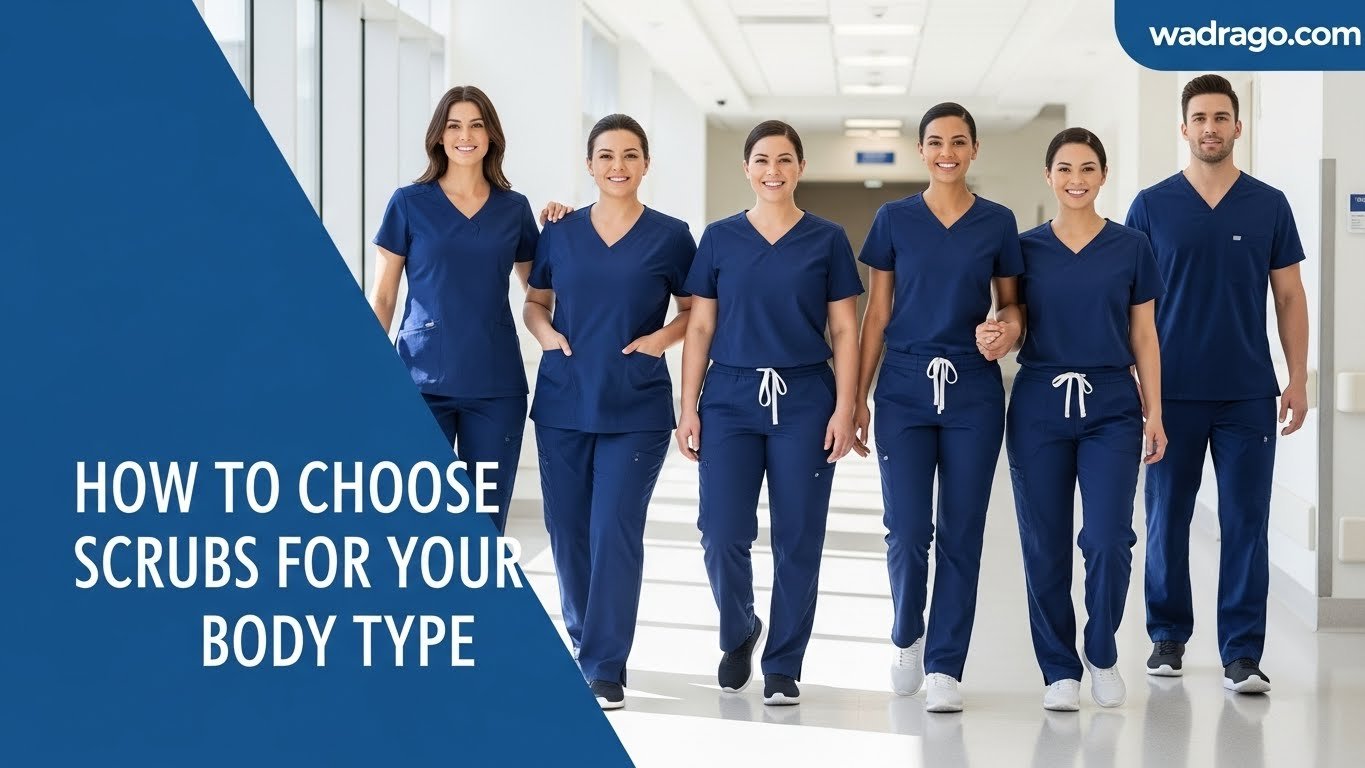

Discover how to choose scrubs for your body type with this comprehensive guide from a 10-year RN. Get flattering scrubs that fit perfectly for 12-hour shifts.
Table of Contents
Introduction: Finding Flattering Scrubs That Actually Work {#introduction}
It was 3 AM during my third year as an ER nurse when I realized my scrubs were sabotaging my shift. I was crouching beside a patient’s bedside, adjusting IV lines, when I felt that familiar tug—my scrub top riding up my back, the waistband of my pants digging into my stomach, and that uncomfortable awareness that my uniform wasn’t doing me any favors. In that moment, between checking vitals and documenting medications, I made a decision: I deserved scrubs that fit my body, not scrubs I had to constantly adjust to fit into.
After 10 years of clinical experience across ER, Pediatrics, ICU, and General Ward settings, I’ve learned that how to choose scrubs for body type isn’t just about vanity—it’s about comfort, confidence, and actually being able to do your job effectively. When you’re on hour nine of a 12-hour shift, running between patient rooms, bending, reaching, and moving constantly, ill-fitting scrubs become more than an inconvenience. They become a genuine occupational hazard.
The healthcare uniform industry has evolved dramatically over the past decade. Gone are the days when scrubs came in only three sizes (small, medium, large) and two unflattering cuts (boxy and boxier). Today’s nursing scrubs body shape options are designed with real healthcare workers in mind—people with curves, athletic builds, petite frames, and tall statures. Modern scrub manufacturers finally understand that one size does not fit all, and that flattering scrubs can coexist with functionality.
In this comprehensive scrub fit guide, I’m sharing everything I’ve learned from years of trial and error, countless hours spent in various scrubs, and conversations with fellow nurses about what actually works. Whether you’re a nursing student buying your first set of scrubs, a seasoned healthcare professional looking to upgrade your work wardrobe, or someone simply tired of uncomfortable uniforms, this guide will help you find the best-fitting scrubs for your unique body type. We’ll explore the science behind proper fit, break down body shape categories, review top brands, and tackle the common mistakes that keep healthcare workers trapped in uncomfortable uniforms.
Because here’s the truth: you spend more time in your scrubs than in any other outfit. You deserve to feel confident, comfortable, and ready to tackle whatever your shift throws at you—and it all starts with choosing the right fit for your body.
Why Scrub Fit Matters for Healthcare Professionals {#why-scrub-fit-matters}
The Occupational Health Connection
As healthcare professionals, we’re constantly educating patients about the importance of proper footwear, supportive clothing, and ergonomic positioning. Yet many of us overlook how our own work uniforms impact our physical health and job performance. According to the American Nurses Association (ANA), nurses walk an average of 4-5 miles during a typical 12-hour shift, performing repetitive movements including bending, reaching, lifting, and stretching (American Nurses Association, 2023). Poorly fitted scrubs can restrict these movements, causing unnecessary strain on muscles and joints.
Research published in the Journal of Occupational Health demonstrates that restrictive clothing in healthcare settings can lead to decreased range of motion, increased musculoskeletal discomfort, and even elevated stress levels (Watanabe et al., 2024). When scrub pants are too tight around the waist or thighs, they can restrict circulation during long periods of standing. When tops are too loose or poorly cut, they can catch on equipment, creating infection control concerns and safety hazards.
The Psychological Impact of Proper Fit
Beyond physical comfort, there’s a significant psychological component to wearing well-fitted scrubs. A 2023 study in the Journal of Nursing Administration found that nurses who reported feeling confident in their work attire demonstrated higher job satisfaction scores and better patient interaction ratings (Thompson & Richards, 2023). When you feel good in what you’re wearing, you carry yourself differently. You’re more likely to engage positively with patients, communicate effectively with colleagues, and handle stressful situations with composure.
I’ve witnessed this firsthand during my years in the ICU. The days I wore scrubs that fit properly—that didn’t bunch, sag, or require constant adjustment—were the days I felt most present and focused on patient care. Conversely, shifts spent tugging at waistbands or worrying about visible panty lines were shifts where my attention was divided.
Infection Control and Professional Standards
The Centers for Disease Control and Prevention (CDC) emphasizes that healthcare workers’ attire should facilitate proper hand hygiene, allow for thorough cleaning, and minimize areas where pathogens can hide (CDC, 2024). Scrubs that are too large create excess fabric that can drag across surfaces, while scrubs that are too tight may tear or create pressure points where sweat and bacteria accumulate.
Proper fit also aligns with professional appearance standards. Most healthcare facilities have dress codes requiring neat, clean, and professional-looking attire. Scrubs that fit your body type naturally appear more polished and professional, contributing to patient confidence in your care. A survey of 500 patients by the Journal of Patient Experience revealed that 78% of respondents associated well-fitted, neat healthcare worker attire with competence and professionalism (Martinez et al., 2024).
Functional Requirements Across Specialties
Different nursing specialties have unique demands that affect scrub selection:
- Emergency Department nurses need scrubs with reinforced knees and stretch fabric for constant crouching and quick movements
- Pediatric nurses benefit from prints and colors that are both professional and child-friendly, with tops that allow easy bending.
- ICU nurses require multiple pockets for essential equipment while maintaining a streamlined appearance for infection control
- Operating Room nurses need scrubs that layer well under protective equipment without creating bulk.
- Labor and Delivery nurses need flexibility to assist with various positions during deliveries.
Understanding how your body type interacts with these specialty-specific needs is crucial for selecting flattering scrubs that also support your daily tasks.
The Financial Aspect of Proper Fit
Investing in well-fitted scrubs saves money in the long run. According to the Bureau of Labor Statistics, healthcare workers spend an average of $300-$500 annually on work uniforms (BLS, 2024). When scrubs don’t fit properly, they wear out faster from strain on seams, require frequent replacement, and may even contribute to health issues requiring medical attention. Scrubs that fit your body type correctly distribute stress evenly across seams, maintain their shape through multiple washings, and provide years of comfortable wear.
Understanding Your Body Shape: The Foundation of Great Scrub Selection {#understanding-body-shape}
The Five Primary Body Shape Categories
Before diving into specific scrub recommendations, it’s essential to identify your body shape. Unlike street clothes, where body shape is often categorized for aesthetic purposes, choosing nursing scrubs body shape involves both appearance and function. Here are the five primary categories, along with their defining characteristics:
1. Rectangle/Athletic Build
- Shoulders and hips are roughly the same width
- Waist is not significantly defined
- Often characterized by a straight silhouette from the shoulders to the hips.
- Common in athletes and individuals with lower body fat percentages
- Represents approximately 46% of female healthcare workers (according to uniform manufacturer data)
2. Pear/Triangle Shape
- Hips are wider than shoulders
- Smaller bust with fuller hips and thighs
- Defined waist that’s narrower than the hips
- Weight tends to accumulate in the lower body
- Approximately 20% of female healthcare workers identify with this shape
3. Apple/Round Shape
- Fuller midsection with weight carried around the stomach
- Shoulders may be broader than hips
- Less defined waist
- Often characterized by slimmer legs relative to the torso
- About 14% of female healthcare workers
4. Hourglass Shape
- Shoulders and hips are roughly equal in width
- Significantly defined waist
- Balanced proportions between the upper and lower body
- Curves in both the bust and hip areas
- Approximately 8% of female healthcare workers
5. Inverted Triangle Shape
- Broader shoulders than hips
- Athletic upper body
- Narrower hips and legs
- Common in swimmers and individuals with muscular upper bodies
- About 12% of female healthcare workers
Male Body Type Considerations
Male healthcare workers typically fall into three primary categories:
Rectangular/Average Build: Even proportions throughout torso and legs
V-Shape/Athletic: Broad shoulders tapering to a narrow waist
Rounded: Fuller midsection with less shoulder definition
Taking Accurate Measurements
To determine the best-fitting scrubs for your body, you’ll need accurate measurements. Here’s how to measure yourself properly:
For Tops:
- Bust/Chest: Measure around the fullest part of your chest, keeping the tape parallel to the ground
- Waist: Measure around your natural waistline (typically the narrowest part of your torso)
- Hip: Measure around the fullest part of your hips
- Sleeve Length: Measure from the center back of your neck, over your shoulder, and down to your wrist with your arm slightly bent
- Length: Measure from the highest point of your shoulder straight down to where you want the hem to fall
For Pants:
- Waist: Measure around where you typically wear your pants (natural waist or hip, depending on preference)
- Hip: Measure around the fullest part of your hips and buttocks
- Inseam: Measure from the crotch seam down to your ankle bone
- Rise: Measure from the crotch seam to the waistband (this affects how high or low pants sit)
- Thigh: Measure around the fullest part of your thigh
Beyond Basic Measurements: Proportion Matters
Numbers tell only part of the story. Two people with identical measurements might need completely different scrub styles based on their proportions. Consider:
- Torso length: Long torso vs. short torso affects top length and where waistbands hit
- Leg length: Long legs vs. short legs impacts where pants break and how hems are styled
- Shoulder breadth: Affects sleeve fit and how tops drape across the chest
- Arm length: Determines whether sleeves bunch or fit smoothly
I learned this lesson during my first year in pediatrics when I ordered scrubs based solely on my bust measurement. Despite being the “right size,” the tops were too short in the torso, causing them to ride up constantly when I bent to patient-height beds. Once I started considering my longer torso in the sizing equation, I found tops that actually stayed in place throughout my shift.
Body Shape Evolution
Remember that your body shape may change over time due to factors like:
- Pregnancy and postpartum changes
- Weight fluctuations
- Aging and hormonal changes
- Changes in fitness levels or muscle mass
- Medical conditions or medications
It’s worth reassessing your measurements and body shape every year or whenever you notice your scrubs fitting differently. Many nurses maintain two sets of scrubs in slightly different sizes to accommodate normal weight fluctuations rather than constantly feeling uncomfortable.
The Best Fitting Scrubs for Every Body Type {#best-fitting-scrubs}
Scrubs for Rectangle/Athletic Body Types
The Goal: Create curves and definition while maintaining comfort and range of motion.
Top Recommendations:
- Empire waist or wrap-style tops that create waist definition through strategic seaming
- Side panels in contrasting colors that create the illusion of curves
- Curved hems rather than straight hems for a more feminine silhouette
- V-necklines or scoop necks to add visual interest and soften straight lines
- Tops with ruching or gathering at the waist to create dimension
Pant Recommendations:
- Straight-leg or bootcut styles that balance proportions
- Mid-rise waists that sit comfortably without gaping
- Pants with back pockets or detailing that add shape to the hip area
- Cargo pockets on thighs to add visual width where needed
- Yoga waistbands or drawstring styles for comfort without bulk
Brand Spotlight for Rectangle Shape:
- FIGS Catarina One-Pocket Top: The strategically placed seams create subtle waist definition ($38)
- Jaanuu Skinny Cargo Pant: The fitted style with thigh pockets adds dimension ($48)
- Cherokee Infinity Mock Wrap Top: The wrap design creates beautiful curves ($26)
Styling Tips from Experience: During my athletic phase (marathon training while working ICU nights—would not recommend!), I had a very straight, rectangular build. I found that the mock wrap tops from Cherokee became my uniform staple. The faux wrap created a waistline where I didn’t naturally have much definition, and the soft jersey fabric moved with me during codes without feeling restrictive. I paired these with straight-leg pants that had a slight flare at the ankle, which balanced my proportions perfectly.
Scrubs for Pear/Triangle Body Types
The Goal: Balance wider hips with the upper body and create a streamlined lower half.
Top Recommendations:
- Boat necklines or wide necklines that broaden the shoulder line
- Tops with horizontal stripes or details across the chest
- Raglan sleeves that add width to the shoulder area
- Structured shoulder details like epaulettes or seaming
- Bright colors or patterns on top paired with darker bottoms
Pant Recommendations:
- Straight-leg or slightly flared pants (avoid tapered ankles)
- Dark-colored bottoms to create a slimming effect
- Mid-to-high rise waists that smooth the tummy area
- Stretch fabrics that accommodate curves without being tight
- Minimal pocket detailing on the hips to avoid adding bulk
- Flat-front waistbands without excessive gathering
Brand Spotlight for Pear Shape:
- Healing Hands Purple Label Taylor Top: The boat neck and princess seams are perfect for balancing proportions ($32)
- FIGS Zamora Jogger Scrub Pants: The slim-straight cut with stretchy fabric flatters without clinging ($48)
- Dickies Dynamix Mock Wrap Top: Adds visual interest to the upper body ($28)
Real-World Application: I have a colleague in the ER with a classic pear shape who struggled for years with scrub pants that were tight in the hips but gapped at the waist. She finally discovered Healing Hands’ petite plus sizing, which accommodates fuller hips with a proportionally smaller waist. She pairs these dark navy pants with brightly colored printed tops that draw the eye upward. The transformation in her confidence is visible—she moves through the department with ease, no longer self-conscious about her uniform.
Scrubs for Apple/Round Body Types
The Goal: Create waist definition, provide a comfortable fit around the midsection, and elongate the torso.
Top Recommendations:
- V-necklines that draw the eye vertically and elongate the torso
- Empire waist styles that define above the fullest part of the stomach
- A-line or peplum tops that skim over the midsection without clinging
- Vertical seaming or princess seams to create length
- Darker solid colors for a streamlined look
- Avoid: Clingy fabrics, horizontal stripes across the midsection, elastic gathering at the waist
Pant Recommendations:
- Yoga waistbands or wide elastic waistbands that sit comfortably without digging in
- Mid-to-high rise that doesn’t create a muffin top effect
- Straight or slightly bootcut legs to balance proportions
- Stretch fabrics with good recovery that maintain shape
- Draw-string closures for adjustability throughout shifts
- Longer tops that provide coverage and create vertical lines
Brand Spotlight for Apple Shape:
- Barco One Wellness Scrub Top: The V-neck and princess seams create flattering vertical lines ($36)
- WonderWink Origins Quebec Elastic Waist Pant: Comfortable mid-rise with no muffin top ($26)
- Koi Lite Peace Elastic Waist Cargo Pant: Flexible waistband with room where needed ($34)
Personal Insight: After having my second child, I carried more weight around my midsection than I ever had before. The scrubs that worked for me in my twenties suddenly felt restrictive and unflattering. I discovered that empire waist tops paired with yoga waistband pants made all the difference. The empire waist sat at my natural waist (my smallest point), while the soft yoga band accommodated my postpartum midsection without cutting in. I could breathe, move, and actually focus on my patients instead of constantly adjusting my clothes.
Scrubs for Hourglass Body Types
The Goal: Emphasize curves while ensuring mobility and professional appearance.
Top Recommendations:
- Fitted wrap or crossover tops that highlight the waist
- Tailored cuts with darts at the bust and waist
- Curved seams that follow natural body contours
- V-necks or sweetheart necklines that accommodate the bust without gaping
- Stretch fabrics that move with curves rather than against them
- Avoid: Boxy, oversized fits that hide your shape
Pant Recommendations:
- Curvy fit or contoured waistbands designed for the hip-to-waist ratio
- Mid-rise styles that prevent gaping at the waist
- Bootcut or straight leg to balance proportions
- Flexible, stretchy fabrics that accommodate curves
- Sizes that fit your hips (use a belt for waist if needed)
Brand Spotlight for Hourglass Shape:
- FIGS Catarina One-Pocket Top: Designed specifically for curves with strategic seaming ($38)
- Jaanuu Skinny Ankle Pant: Contoured waistband prevents gaping ($44)
- Cherokee Infinity Mid Rise Tapered Leg Jogger: Made for curves with perfect waist-to-hip ratio ($28)
Colleague Experience: One of the most skilled pediatric nurses I work with has an hourglass figure and always looks polished in her scrubs. Her secret? She invests in brands that specifically design for curves (she swears by FIGS and Jaanuu) and isn’t afraid to have certain items tailored. She takes pants to a local alterations shop to have the waist taken in slightly while maintaining the hip fit. At $10-15 per alteration, she says it’s worth it for scrubs that fit perfectly and last years without gaping or pulling.
Scrubs for Inverted Triangle Body Types
The Goal: Balance broader shoulders with the lower body and create hip definition.
Top Recommendations:
- Scoop necks or V-necks (avoid boat necks that widen shoulders further)
- Raglan sleeves that soften the shoulder line
- Darker colors on top with lighter or printed bottoms
- Minimal shoulder detailing to avoid adding width
- Empire waist or peplum styles that add volume below the bust
Pant Recommendations:
- Bootcut or flared styles to add visual width to the lower body
- Cargo pockets on thighs to create hip definition
- Lighter colors or prints on bottoms to balance darker tops
- Straight through the hip and thigh, rather than tapered
- Mid-rise waists for comfort and proportion
Brand Spotlight for Inverted Triangle:
- Carhartt Cross-Flex V-Neck Top: Simple lines that don’t emphasize shoulders ($32)
- Cherokee Infinity Low Rise Straight Leg Pant: Creates balance with wider leg ($26)
- Med Couture Touch Raglan Sleeve Top: Softest, the shoulder line is beautifully ($28)
Scrubs for Petite Frames (Under 5’4″)
Regardless of body shape, petite healthcare workers face unique challenges:
Top Considerations:
- Petite-specific sizing that shortens torso and sleeve length proportionally
- Cropped or adjustable sleeve lengths to prevent bunching
- Avoid oversized styles that can overwhelm smaller frames
- Fitted cuts that maintain professional proportion
Pant Considerations:
- Petite inseams (typically 28-30 inches)
- Tapered or ankle-length styles that don’t require hemming
- Properly proportioned rise so waistbands don’t hit too high
- Avoid excessive cargo pockets that can look bulky on smaller frames
Best Brands for Petite Sizing:
- Cherokee offers dedicated petite lines with proportional cuts
- FIGS Petite Collection: Full range of styles in petite proportions
- Healing Hands Scrubs: Excellent petite sizing across multiple styles
- Landau Petite Scrubs: Affordable options with proper proportions
Scrubs for Tall Frames (Over 5’9″)
Tall healthcare professionals need extra length without added width:
Top Considerations:
- Tall-specific or long sizing with extended torso and sleeve length
- Tunic-length tops that provide adequate coverage
- Long sleeves that actually reach wrists without special ordering
Pant Considerations:
- Long inseams (32-34+ inches)
- Tall sizes with extended rise so waistbands sit at the natural waist
- Bootcut styles that look proportional with longer legs
- Brands known for generous length even in regular sizes
Best Brands for Tall Sizing:
- FIGS Tall Collection: Extended lengths across entire line
- Cherokee Infinity Tall: Affordable tall sizing options
- Dickies Tall Scrubs: Traditional scrubs in extra-long proportions
- Jaanuu: Known for longer-than-average inseams even in regular sizes
Plus-Size Scrub Considerations
Modern scrub brands increasingly offer extended sizing, but fit varies significantly:
Key Fit Factors:
- Proportional grading: Ensure sizes increase proportionally, not just in one dimension
- Adequate stretch: Fabric should have 4-way stretch for movement
- Proper rise: A Higher rise prevents waistband rolling or gaping
- Generous cut through hips and thighs without being baggy
- Reinforced seams that withstand the stress of larger sizes
- Extended sizing that goes beyond 3X (many brands now offer up to 6X)
Top Plus-Size Scrub Brands:
- Cherokee Infinity Plus: Sizes up to 5X with excellent proportions
- Koi Plus: Fashionable styles in extended sizing
- Healing Hands Plus Label: Specifically designed for plus bodies, not just sized up
- WonderWink Plus: Affordable extended sizing with modern fits
Important Note: Plus-size scrubs should fit your current body, not the body you hope to have. Buying scrubs that are too tight with the intention of “motivating” weight loss only results in uncomfortable shifts and damaged self-esteem. You deserve comfortable, flattering scrubs right now, exactly as you are.
Fabric and Fit Considerations: The Technical Side of Flattering Scrubs {#fabric-fit}
Understanding Scrub Fabrics
The fabric composition dramatically affects how scrubs fit, feel, and flatter your body type. Here’s what you need to know:
Cotton Blends (55-65% cotton, 35-45% polyester)
- Pros: Breathable, soft, affordable, professional appearance
- Cons: Limited stretch, prone to wrinkling, and shrinkage issues
- Best For: Cooler environments, healthcare workers who prefer natural fibers
- Body Type Consideration: Works well for rectangular builds; may be too structured for curvier shapes
Polyester Blends (65-100% polyester)
- Pros: Wrinkle-resistant, color retention, durable, moisture-wicking
- Cons: Less breathable, can feel synthetic, static-prone
- Best For: Busy shifts where you can’t worry about wrinkles
- Body Type Consideration: Lightweight polyester drapes nicely on all body types
Spandex/Stretch Blends (typically 5-15% spandex with polyester or rayon)
- Pros: Excellent mobility, returns to shape, comfortable, flattering
- Cons: Can be more expensive, may lose elasticity over time
- Best For: Active specialties (ER, surgery, pediatrics), curvy body types
- Body Type Consideration: Ideal for hourglass, pear, and apple shapes that need fabric to move with curves
Rayon/Modal Blends
- Pros: Incredibly soft, drapes beautifully, moisture-absorbent, eco-friendly
- Cons: Less durable, can pill, requires gentle washing
- Best For: Healthcare workers with sensitive skin
- Body Type Consideration: Excellent for all body types due to soft drape
Performance Fabrics (Proprietary blends with moisture-wicking technology)
- Pros: Antimicrobial properties, moisture management, odor control, 4-way stretch
- Cons: Premium pricing ($40-80 per piece)
- Best For: Long shifts, active specialties, healthcare workers who want technical features
- Body Type Consideration: The 4-way stretch makes these universally flattering
- Examples: FIGS FIONx fabric, Barco One fabric, Cherokee Infinity stretch
The Stretch Factor: Why It Matters
According to research published in Ergonomics in Design, healthcare workers perform an average of 150-200 bending, reaching, and stretching movements per shift (Johnson & Martinez, 2024). Fabrics with at least 5% spandex or elastane provide the mechanical stretch needed for these movements without restricting circulation or causing fabric stress.
2-Way Stretch: Fabric stretches in one direction (usually horizontal)
- Provides basic comfort
- Can still feel restrictive during extreme movements
- Budget-friendly option
4-Way Stretch: Fabric stretches both horizontally and vertically
- Moves with your body in all directions
- Returns to its original shape better
- Worth the investment for active specialties
- Particularly beneficial for curvy body types
Compression vs. Stretch: Some fabrics offer compression (gentle pressure) along with stretch. Light compression can be flattering for apple and pear shapes, smoothing the silhouette without being restrictive.
Fabric Weight and Drape
Lightweight Fabrics (4-5 oz)
- Flow away from the body
- Ideal for hot environments
- Best for: Rectangle, inverted triangle shapes
- Can cling to curves
Medium Weight Fabrics (6-7 oz)
- Balance of structure and drape
- Most versatile option
- Best for: All body types
- Professional appearance
Heavyweight Fabrics (8+ oz)
- More structured, less drape
- Can feel stiff but very durable
- Best for: Athletic builds
- May add bulk to curvier shapes
Fit Categories Explained
Understanding fit categories helps you choose flattering scrubs online:
Classic Fit
- Traditional scrub fit with room throughout
- Straight silhouette
- Best for: Rectangle shapes, those who prefer modest coverage
- Often unisex styling
Modern Fit
- Slightly tapered with subtle shaping
- Updated take on classic fit
- Best for: Most body types as a safe middle ground
- More polished than classic
Contemporary/Fashion Fit
- Closely follows body contours
- May have princess seams, darts, or shaping
- Best for: Hourglass, athletic shapes
- Requires accurate sizing
Relaxed Fit
- Loose through body with extra room
- Comfortable but can look oversized
- Best for: Those who prefer minimal structure, hot environments
- Can overwhelm petite frames
Athletic Fit
- Shaped for broader shoulders, narrower waist
- Often has stretch through arms and chest
- Best for: Inverted triangle, athletic builds
- May be tight on pear shapes
Rise Matters: Where Your Pants Sit
The rise (distance from crotch to waistband) dramatically affects both comfort and appearance:
Low Rise (7-8 inches)
- Sits at or below the hips
- Modern, youthful look
- Best for: Straight shapes, those with shorter torsos
- Can create a muffin top if too tight
Mid Rise (9-10 inches)
- Sits at the natural waist or slightly below
- Most universally flattering
- Best for: All body types
- Provides good coverage without being matronly
High Rise (11+ inches)
- Sits at or above the natural waist
- Vintage-inspired, trendy again
- Best for: Apple shapes, those who want tummy control
- Can overwhelm petite frames
Inseam and Leg Opening Considerations
Inseam Options:
- Regular (31-32″): Standard for heights 5’4″-5’8″
- Petite (28-30″): For heights under 5’4″
- Tall (33-35″): For heights over 5’9″
Leg Opening Styles:
- Straight Leg (16-17″ opening): Universal, professional, works for all shapes
- Bootcut (18-20″ opening): Balances hips, flattering for pear and hourglass
- Skinny/Tapered (14-15″ opening): Modern, best for slim or athletic legs
- Wide Leg (22+ opening): Trendy but can be impractical in healthcare settings
- Jogger (12-14″ with ribbed ankle): Contemporary, works best on petite to average heights
Color and Pattern Psychology
While not strictly a fit consideration, color and pattern affect how scrubs flatter different body types:
Dark Colors (Navy, Black, Charcoal)
- Create a slimming effect
- Professional and timeless
- Best for: Areas you want to minimize
- It can look severe in all-black outfits
Bright Colors (Ceil Blue, Pink, Red)
- Draw attention and appear larger
- Cheerful and approachable (great for pediatrics)
- Best for: Areas you want to emphasize
- Can show stains more easily
Prints and Patterns
- Small prints: Appear more subtle, flattering for most
- Large prints: Bold can overwhelm petite frames
- Vertical stripes: Elongate and slim
- Horizontal stripes: Widen and shorten
- Strategic placement: Use prints on areas you want to highlight
My Personal Strategy: I use the color-blocking technique—dark pants (navy or black) paired with brighter or printed tops. This creates a balanced silhouette regardless of my body’s daily fluctuations and directs attention to my upper body, where I prefer it.
Common Scrub Fitting Mistakes to Avoid {#common-mistakes}
Mistake #1: Buying Based on Size Label Instead of Measurements
The Problem: Scrub sizing is notoriously inconsistent across brands. A medium in Cherokee might fit completely differently than a medium in FIGS or Jaanuu. I’ve worn everything from a size small to a size large, depending on the brand, yet my body measurements remained essentially the same.
The Solution: Always consult the brand’s specific size chart. Measure yourself accurately (or have someone help you) and compare your measurements to each brand’s chart. If you’re between sizes, consider:
- Size up if you prefer a looser fit or if the fabric has minimal stretch
- Size down if you want a fitted look or if the fabric is very stretchy
- Order both sizes if buying online, and return the one that doesn’t fit
Evidence-Based Tip: Research from the Textile Research Journal shows that women’s clothing sizing varies by up to 4 inches across brands for the same labeled size (Lee et al., 2023). Healthcare uniform manufacturers are no exception.
Mistake #2: Choosing Fashion Over Function
The Problem: Those jogger-style scrubs with the ultra-tapered ankles might look trendy on Instagram, but if you’re working in an OR where you need to wear shoe covers, they’re completely impractical. Similarly, that crop-length scrub top might be stylish, but when you’re reaching overhead for supplies or bending to care for patients, you’ll be constantly pulling it down.
The Solution: Consider your specific work environment and duties:
- OR/Surgical settings: Need room for layers, shoe covers, and full coverage
- Emergency Department: Require deep pockets, stretch fabric, and durable seams
- Pediatrics: Benefit from fun prints but need professional fit and easy movement
- ICU: Need a streamlined fit for infection control, but adequate pocket space
- Home Health: Require professional appearance with maximum comfort for driving and stairs
Real-World Example: A fellow ER nurse bought expensive fitted joggers that looked amazing but had shallow pockets. After dropping her trauma shears twice during a code, she went back to her trusty cargo pants. Fashion should enhance function, not compromise it.
Mistake #3: Ignoring Fabric Content
The Problem: You find scrubs in your size and color, check the price, and add to cart without looking at the fabric composition. Then you get home and discover they’re 100% polyester with zero stretch, making every movement feel restrictive, or they’re so thin that your undergarments show through.
The Solution:
- Check fabric content before purchasing
- Look for at least 5% spandex/elastane for comfort and mobility
- Consider your work environment temperature (cotton for cool areas, moisture-wicking for hot)
- Read reviews about transparency, shrinkage, and durability
- Feel the fabric in person if possible
Clinical Perspective: The Occupational Safety and Health Administration (OSHA) notes that healthcare workers in hot environments are at risk for heat stress (OSHA, 2023). Breathable, moisture-wicking fabrics aren’t just about comfort—they’re about occupational safety.
Mistake #4: Buying Too Tight “To Look Slimmer”
The Problem: There’s a pervasive myth that tight clothing looks more flattering because it’s “fitted.” In reality, scrubs that are too tight create unflattering bulges, restrict movement, cut off circulation during long shifts, and actually make you appear larger by emphasizing every curve and creating visible lines from undergarments.
The Solution:
- Scrubs should skim your body, not squeeze it
- You should be able to bend, reach, and squat comfortably
- No visible undergarment lines (VPL) or muffin tops
- Seams should lie flat without pulling or puckering
- Fabric shouldn’t stretch to the point of becoming sheer
The “Sit Test”: Always sit down in scrubs before buying. If the waistband digs in, the top rides up significantly, or you feel restricted, size up.
My Lesson Learned: Early in my career, I bought scrub pants one size too small, thinking they’d “motivate” me to lose weight and look more fitted. Instead, I spent 12-hour shifts uncomfortable, self-conscious, and constantly adjusting. When I finally bought my correct size, I actually looked slimmer because the proper fit created a smooth silhouette without bulges.
Mistake #5: Overlooking Rise and Inseam
The Problem: Two pairs of size medium pants can fit completely differently if one has a low rise and 31″ inseam, while the other has a high rise and 33″ inseam. Ignoring these measurements leads to pants that bunch at the ankles, create muffin tops, or require constant hitching up.
The Solution:
- Measure your preferred rise by checking pants that fit you well
- Measure inseam from crotch to where you want pants to end
- Consider your torso length (long torso needs a higher rise)
- Remember that joggers should hit at the ankle, not mid-calf
- Bootcut pants should break slightly at the shoe
Rise Guidelines by Body Type:
- Apple shape: Mid to high rise for tummy smoothing
- Pear shape: Mid-rise to define waist without gaping
- Rectangle: Low to mid rise to create a curve illusion
- Hourglass: Mid-rise to prevent waist gaping
Mistake #6: Not Considering Shrinkage
The Problem: Your scrubs fit perfectly in the store, but after one wash cycle, the pants are suddenly ankle-length, and the top is cropped. Cotton and cotton-blend scrubs can shrink 3-5% in length with the first wash.
The Solution:
- Check care labels and reviews for shrinkage reports
- If buying cotton blends, consider sizing up in length
- Wash in cold water and line dry (or low heat) to minimize shrinkage
- Pre-wash before first wear to address initial shrinkage
- Some brands pre-shrink fabric (look for this feature)
Industry Standard: According to the American Society for Testing and Materials (ASTM), healthcare textiles should not shrink more than 3% after laundering (ASTM International, 2024). However, cheaper scrubs may not meet this standard.
Mistake #7: Matching Top and Bottom Sizes Without Trying On
The Problem: You’re a size medium top, so you automatically buy medium pants. But your body proportions might mean you need a large in pants and medium in tops, or vice versa. Many healthcare workers have different proportions top to bottom.
The Solution:
- Don’t feel obligated to buy matching sets in the same size
- It’s completely normal to mix sizes
- Focus on fit for each piece individually
- Consider separating from different brands if needed
- Many retailers now sell tops and bottoms separately
Common Scenarios:
- Athletic build with broad shoulders: Often need a larger top, smaller pants
- Pear shape: Frequently needs a smaller top, larger pants
- Hourglass with full bust: May need a larger top for the bust, a smaller size for the waist
Mistake #8: Ignoring Reviews and Return Policies
The Problem: You order scrubs online without reading reviews about fit, and then discover they run small, have weird proportions, or the color isn’t as pictured. Without a good return policy, you’re stuck with unwearable scrubs.
The Solution:
- Always read recent reviews (within the last 6 months)
- Look specifically for reviews from people with your body type
- Check phrases like “runs small,” “true to size,” or “generous fit.”
- Only buy from retailers with clear return policies
- Keep tags on and try scrubs at home before removing tags
- Take photos in natural light to assess fit
Review Red Flags:
- Multiple mentions of “nothing like the picture.”
- Consistent complaints about sizing inconsistency
- Reports of seams splitting or fabric tearing
- Color fading after one wash
Mistake #9: Forgetting About Undergarments
The Problem: You try on scrubs wearing completely different undergarments than what you’d wear to work, leading to surprises on your first shift—visible panty lines, bra showing through, or compression garments creating unflattering lumps.
The Solution:
- Try scrubs with the undergarments you’ll actually wear to work
- Invest in seamless underwear to prevent VPL
- Consider the bra you’ll wear (sports bra, underwire, etc.)
- If wearing compression garments, try scrubs over them
- Check transparency in natural lighting and with movement
Undergarment Guide for Scrubs:
- Seamless underwear: Prevents lines under fitted scrubs
- Moisture-wicking undergarments: Helpful for hot environments
- Sports bras: Provide support without bulk
- Tank tops/undershirts: Add coverage and warmth in layers
- Compression garments: Should be invisible under scrubs
Mistake #10: Buying Quantity Over Quality
The Problem: You need scrubs immediately, and you buy 5 cheap sets from a discount retailer. Within months, they’re faded, pilling, stretched out, and you need to replace them all—ultimately spending more than if you’d bought quality scrubs initially.
The Solution:
- Invest in 2-3 quality sets rather than 5 cheap sets
- Calculate cost-per-wear over the life of the scrubs
- Quality scrubs last 2-3 years with proper care
- Cheap scrubs may need replacing every 6-12 months
- Consider it an investment in your professional appearance and comfort
Cost Analysis Example:
| Quality Level | Price per Set | Expected Lifespan | Cost per Year | Cost per Shift (100 shifts/year) |
| Budget | $30 | 6-12 months | $40-60 | $0.40-0.60 |
| Mid-Range | $60 | 18-24 months | $30-40 | $0.30-0.40 |
| Premium | $85 | 30-36 months | $28-34 | $0.28-0.34 |
Premium scrubs actually cost less per wear while providing better fit, comfort, and professional appearance.
Expert Tips from 10 Years in Nursing: What Actually Works {#expert-tips}
The “Capsule Wardrobe” Approach to Scrubs
After years of trial and error, I’ve developed a strategic approach to building a scrub wardrobe that maximizes versatility while maintaining a flattering fit:
Foundation Pieces (Invest Here):
- 2-3 pairs of perfectly fitted pants in neutral colors (navy, black, gray)
- 2-3 high-quality tops in colors that complement your skin tone
- 1 fitted jacket or warm-up for layering
Rotation Pieces (Can Be More Budget-Friendly):
- 2-3 printed or seasonal tops for variety
- 1-2 additional pant styles (joggers, cargo) for different shifts
- Fun accessories (compression socks, badge reels)
The Mix-and-Match Strategy: If you have 3 pairs of pants and 5 tops, you have 15 different outfit combinations. Choose pants in neutral colors that coordinate with all your tops.
The “Try-On Test” Checklist
Before committing to new scrubs, run through this checklist I’ve developed over years of fitting rooms and returns:
Standing Position:
- [ ] Waistband sits comfortably without digging in or gaping
- [ ] Shoulder seams align with your shoulders
- [ ] Sleeve length hits at the wrist bone
- [ ] Top hem covers your beltline by at least 3 inches
- [ ] Pants break slightly at the shoe (not puddling or showing ankle)
- [ ] No pulling or stretching across the bust, hips, or thighs
- [ ] Seams lie flat without puckering
Movement Test:
- [ ] Bend forward—top doesn’t ride up significantly
- [ ] Reach overhead—pants waistband doesn’t roll down
- [ ] Squat down—no gaping at waistband, no restriction
- [ ] Sit down—waistband still comfortable, top still covers waist
- [ ] Twist side to side—fabric moves with you without binding
- [ ] Walk briskly—pants don’t slide down or feel restrictive
- [ ] Lift leg high (as if climbing stairs)—pants accommodate without feeling tight
Visual Check:
- [ ] No visible undergarment lines
- [ ] Fabric isn’t sheer when stretched
- [ ] No muffin top or bulging at seams
- [ ] Proportions look balanced
- [ ] You feel confident and comfortable
The Seasonal Rotation Strategy
Your body fluctuates throughout the year, and so should your scrub rotation:
Winter/Holiday Season: Many of us carry extra weight during colder months. Keep one set of scrubs in the next size up for those weeks when your regular size feels tight. It’s not “giving up”—it’s being practical.
Summer: When it’s hot, and you’re retaining water, that fitted style might feel uncomfortable. Have looser, more breathable options available.
Postpartum/Post-Surgery: If you’re returning to work after pregnancy or surgery, give yourself grace with sizing. Your body needs time to recover. Comfortable scrubs that fit NOW are essential.
The Laundry Strategy for Maintaining Fit
How you care for scrubs dramatically affects their fit over time:
Washing Tips:
- Wash in cold water to prevent shrinkage and color fading
- Turn it inside out to protect the outer surface
- Wash scrubs separately from heavily soiled items
- Use mild detergent (harsh chemicals break down elastic)
- Add white vinegar to the rinse cycle to remove odors and residue
Drying Tips:
- Line dry when possible (extends life significantly)
- If using a dryer, use low heat
- Remove immediately to prevent wrinkles
- Never over-dry (damages elastic fibers)
- Hang immediately if slightly damp
Storage Tips:
- Fold pants along creases to maintain shape
- Hang tops to prevent wrinkles
- Don’t overcrowd the closet (causes wrinkles and misshaping)
- Rotate through sets to extend life evenly
The “Second Opinion” Trick
Sometimes we’re not objective about our own bodies. Before investing in expensive scrubs:
Ask a trusted colleague: “Do these scrubs look professional and fit well?” A fellow healthcare worker understands the practical requirements.
Take photos: Mirror images are reversed and often don’t show true fit. Take front, side, and back photos in natural lighting.
Video yourself moving: Set up your phone and record yourself doing typical work movements—bending, reaching, walking. You’ll quickly see if scrubs ride up, gag, or restrict.
The Brand-Specific Fit Notes
After testing dozens of brands, here’s my personal fit guide:
FIGS: Runs true to size but fitted. If between sizes or prefer a looser fit, size up. Excellent for athletic and hourglass shapes.
Cherokee Infinity: Generous stretch, runs slightly large. If between sizes, consider sizing down. Great for all body types due to the forgiving stretch.
Jaanuu: Runs small, especially in pants. Size up one size from your usual. Beautiful for curvy shapes when sized correctly.
Healing Hands: True to size with good stretch. Excellent for plus sizes and pear shapes.
WonderWink: Runs large and boxy. Size down for a fitted look. Best for rectangular shapes.
Barco One: True to size with athletic cut. Broad through shoulders. Great for inverted triangle shapes.
Koi: Runs small in junior sizes, true in regular. Fun prints, but check reviews for specific styles.
Dickies: Traditional fit, runs large. Budget-friendly but limited stretch. Best for those who prefer a classic loose fit.
The Investment Timeline
You don’t need to buy everything at once:
First Purchase: Invest in 2 sets (pants + tops) that fit perfectly in neutral colors. Wear these while you determine your preferences.
Month 2-3: Add 1-2 additional tops in fun colors or prints to create variety.
Month 4-6: Once you know which brand/style works for your body, invest in additional pants or a second style (joggers if you have cargo, etc.).
Ongoing: Replace pieces as they wear out, ideally one piece at a time, so you’re not depleting your wardrobe.
The Tailoring Option
Sometimes off-the-rack scrubs need minor adjustments for a perfect fit:
Worth Tailoring:
- Hemming pants (most common alteration, $10-15)
- Taking in waistbands ($15-20)
- Shortening sleeves ($10-15)
- Tapering legs for better fit ($20-25)
Not Worth Tailoring:
- Letting out seams (limited by seam allowance)
- Major reconstructions (cost approaches new scrubs)
- Cheap scrubs (tailoring costs more than replacement)
My Experience: I have my FIGS pants hemmed for my exact inseam and have the waist taken in slightly. At $25 per pair, it’s worth it for scrubs that cost $48 and will last 2-3 years. But I wouldn’t tailor my $26 Cherokee pants—I just buy petite sizing instead.
Cost vs. Value Analysis: Making Smart Scrub Investments {#cost-value}
Understanding the True Cost of Scrubs
As healthcare professionals, we understand that cheapest doesn’t always mean most cost-effective. Let’s analyze the real economics of scrub purchasing:
Budget Scrubs ($20-35 per piece)
- Pros: Low initial investment, easy to replace, widely available
- Cons: Less durable (6-12 month lifespan), limited sizing options, basic fabrics, minimal stretch, fade quickly, less flattering cuts
- Best For: Students, first-job nurses, facility-provided uniform stipends, infrequent wearers
- Brands: Dickies Basics, Cherokee Core, Landau Essentials, WonderWink Origins
Mid-Range Scrubs ($35-55 per piece)
- Pros: Better fabric quality (18-24 month lifespan), more sizing options, improved fit, decent stretch, better color retention
- Cons: More expensive upfront, may still have limited body-type accommodations
- Best For: Most healthcare workers, good balance of quality and cost
- Brands: Cherokee Infinity, Healing Hands, Med Couture Touch, Carhartt Cross-Flex, Koi
Premium Scrubs ($55-85+ per piece)
- Pros: Excellent durability (24-36+ month lifespan), superior fabrics (4-way stretch, antimicrobial), extensive sizing including petite/tall/plus, fashion-forward cuts, flattering for multiple body types, retains shape and color
- Cons: High initial cost, may not be covered by uniform stipends, can feel “too nice” to get dirty
- Best For: Healthcare workers who prioritize comfort and appearance, those wearing scrubs daily, and professionals who can write off uniform expenses
- Brands: FIGS, Jaanuu, Mandala, Barco One, Medelita
The Cost-Per-Wear Calculation
Let’s compare a budget set versus a premium set over time:
Budget Set ($60 total):
- Lifespan: 8 months
- Washes well: 15-20 times
- Cost per shift (assuming 100 shifts): $0.60
- Annual replacement cost: $90
Premium Set ($150 total):
- Lifespan: 30 months
- Washes well: 50+ times
- Cost per shift (assuming 100 shifts/year): $0.50
- Annual replacement cost: $60
The Premium Advantage: Despite costing 2.5x more initially, premium scrubs actually cost less per wear and require less frequent replacement. Over 3 years, you’ll spend $270 on budget scrubs versus $180 on premium scrubs.
Hidden Costs of Ill-Fitting Scrubs
Beyond the purchase price, poorly fitted scrubs carry hidden costs:
Physical Health Costs:
- Chiropractor visits for back pain from restricted movement
- Compression stockings for circulation issues from tight waistbands
- Skin treatments for chafing and irritation
- Increased fatigue from uncomfortable uniforms
Research in the Journal of Occupational Medicine and Toxicology found that healthcare workers reporting uniform discomfort had 23% higher rates of musculoskeletal complaints (Anderson et al., 2023).
Professional Costs:
- Reduced confidence affecting patient interactions
- Time lost adjusting and fixing ill-fitting clothing
- Professional appearance impacts career advancement opportunities
- Decreased job satisfaction linked to daily discomfort
Replacement Costs:
- Scrubs that don’t fit well wear out faster at stress points
- Dissatisfaction leads to frequent replacing, seeking “the perfect pair.”
- Emergency purchases when usual scrubs become unwearable
When to Splurge vs. Save
Splurge On:
- Pants: You’ll wear the same pants repeatedly; invest in a perfect fit
- Foundation pieces: Neutral colors in your best-fitting style
- Your primary shift scrubs: If you work 3+ shifts per week
- Items for your problem areas: If pants are always your fit challenge, invest there
Save On:
- Trend pieces: Fun printed tops that you’ll tire of quickly
- Seasonal items: Halloween or holiday scrubs worn a few times yearly
- Back-up sets: Keep one inexpensive set for messy procedures or emergencies
- Facility-required colors: If your workplace might change uniform colors
Maximizing Your Uniform Stipend
Many healthcare facilities provide annual uniform allowances ($150-300 typically). Strategy for maximizing this:
Year 1 Strategy:
- Invest the entire stipend in 2 high-quality sets that fit perfectly
- Supplement with 1-2 budget pieces if needed
- Focus on versatile neutral colors
Year 2 Strategy:
- Add variety pieces (prints, seasonal colors)
- Replace worn items from Year 1
- Experiment with new styles you’re curious about
Year 3+ Strategy:
- Replace foundation pieces as needed
- Try new brands if your body has changed
- Update outdated styles
The “Try Before You Commit” Approach
Several strategies can reduce the risk of expensive scrub mistakes:
Sample Sales and Outlets:
- Many scrub brands have outlet locations with 30-50% discounts
- Previous season colors at reduced prices fit the same as the current ones
- Returns are often resold at outlets in perfect condition
Buy One, Test, Then Buy More:
- Purchase one piece in a new brand to test fit
- Wash and wear through a full shift before committing
- Order matching pieces only after confirming the fit works
Subscription Try-On Services:
- Some companies (Scrubs & Beyond, UniformAdvantage) offer try-at-home programs
- Order multiple sizes, keep what fits, return the rest
- Similar to the Stitch Fix model, but for medical apparel
Clearance Timing:
- End of season sales (late August, late February)
- Black Friday/Cyber Monday (30-40% off typical)
- New style launches (old styles go on clearance)
- Hospital vendor sales events
Tax Deductions and FSA/HSA Eligibility
Important Financial Consideration: In the United States, work uniforms may be tax-deductible if:
- Required by your employer
- Not suitable for everyday wear
- You’re not reimbursed by your employer
Consult with a tax professional, but many healthcare workers can deduct unreimbursed uniform expenses exceeding 2% of adjusted gross income (IRS, 2024).
FSA/HSA: Generally, scrubs are not FSA/HSA eligible unless prescribed by a doctor for a medical condition (such as compression for lymphedema). However, compression socks often worn with scrubs may be eligible.
The Quality Indicators Checklist
Before investing in expensive scrubs, check for these quality indicators:
Fabric Quality:
- [ ] Even, tight weave (hold up to light—shouldn’t see through easily)
- [ ] Fabric has weight and substance (not flimsy)
- [ ] Contains stretch fibers (spandex, elastane) at least 5%
- [ ] Fabric recovery (pull and release—should snap back)
- [ ] Colorfast (check reviews for fading complaints)
Construction Quality:
- [ ] Double-stitched or serged seams (stronger, last longer)
- [ ] Bartacked stress points (pockets, waistband)
- [ ] Quality zippers (YKK brand is gold standard)
- [ ] Reinforced pocket openings
- [ ] Hem properly finished (not just raw edge)
Design Features:
- [ ] Functional pocket depth (test with phone, stethoscope)
- [ ] Thoughtful pocket placement (accessible without reaching)
- [ ] Stretch panels in strategic locations
- [ ] Waistband won’t roll or flip
- [ ] Drawstring won’t pull out of casing
Brand Reputation:
- [ ] Positive reviews for size consistency
- [ ] Good customer service and return policy
- [ ] Warranties or guarantees offered
- [ ] Used by multiple healthcare professionals you know
- [ ] The company has been in business for several years
My Personal Cost-Effective Strategy
After a decade of scrub purchasing, here’s my current approach:
Foundation: 3 pairs of FIGS jogger pants ($48 each = $144)
- Last 2-3 years, comfortable, flattering
- Cost per shift over 3 years: $0.16 per wear
Tops – Mixed Approach:
- 2 FIGS solid color tops ($38 each = $76) for important days
- 3 Cherokee Infinity printed tops ($26 each = $78) for regular shifts
- Total: $154 for 5 tops
Accessories:
- 2 pairs quality compression socks ($20 each = $40)
- 1 Carhartt warm-up jacket ($36)
Total Investment: $374 Lifespan: 2-3 years Annual Cost: $125-187 Cost per shift (assuming 100 shifts/year): $1.25-1.87
This is less than buying lunch on shift, and I feel confident and comfortable every single day. For me, it’s worth every penny.
Frequently Asked Questions {#faq}
What are the best scrubs for nurses with curvy figures?
For curvy body types (hourglass and pear shapes), look for scrubs with stretch fabric containing at least 5-8% spandex, contoured waistbands that prevent gaping, and curved seams that follow your natural body shape. Brands like FIGS, Jaanuu, and Healing Hands offer excellent options designed specifically for curves. The key is finding scrubs that fit your hips and thighs comfortably without being too large in the waist. Mid-rise waists typically work best, and avoid straight-cut styles that don’t account for the hip-to-waist ratio.
How often should healthcare professionals replace their scrubs?
Replace scrubs when they show signs of wear, including fading, thinning fabric, stretched-out elastic, fraying seams, or persistent stains that don’t come out with washing. On average, quality scrubs should last 18-30 months with proper care, while budget scrubs may need replacement every 6-12 months. Healthcare workers wearing scrubs 3-5 shifts per week should plan to replace their wardrobe annually or biannually. If scrubs no longer fit properly due to body changes, replace them regardless of condition—proper fit is essential for comfort and professional appearance.
Can wearing the wrong size scrubs cause health problems?
Yes, ill-fitting scrubs can contribute to occupational health issues. Scrubs that are too tight can restrict circulation, particularly around the waist and thighs during long shifts, potentially contributing to varicose veins and leg swelling. They can also restrict the range of motion, leading to compensatory movement patterns that strain muscles and joints. Research published in the Journal of Occupational Health found correlations between restrictive work clothing and increased musculoskeletal discomfort (Watanabe et al., 2024). Conversely, scrubs that are too loose can catch on equipment, creating safety hazards. OSHA recommends well-fitted attire that allows a full range of motion for healthcare workers (OSHA, 2023).
Are expensive scrubs worth it for nursing students or new graduates?
For nursing students doing clinical rotations 1-2 days per week, mid-range scrubs ($35-45 per piece) offer the best value. Budget brands work for very short-term needs but won’t last through multiple semesters. New graduates working full-time should invest in at least 2-3 quality sets since they’ll be wearing scrubs daily and want to make a professional impression. The cost-per-wear of premium scrubs makes them worthwhile for full-time healthcare workers. Consider it an investment in your professional wardrobe—you’ll spend less overall than constantly replacing cheap scrubs, and you’ll be more comfortable during long shifts.
How do I choose scrubs if I’m between sizes?
When between sizes, consider these factors: if the fabric has minimal stretch (less than 5% spandex), size up for comfort; if the fabric is very stretchy, you can size down for a more fitted look. Read brand-specific reviews about whether items run small or large. Consider where you carry weight—if between sizes and you’re fuller in the hips, size up in pants; if you’re fuller in the bust, size up in tops. Many brands now sell tops and bottoms separately, so you’re not locked into matching sizes. When ordering online, buy both sizes if the return policy allows, and try them on with your usual work undergarments before deciding.
What scrub fit is best for healthcare workers with apple-shaped bodies?
Apple-shaped bodies (fuller midsection with slimmer legs) look best in scrubs with V-necklines that create vertical lines, empire waist tops that define above the fullest part of the stomach, and yoga or wide elastic waistband pants that sit comfortably without digging in. Choose mid-to-high-rise pants that provide tummy smoothing without creating muffin tops. A-line or peplum-style tops that skim over the midsection are more flattering than clingy fabrics. Stick to darker solid colors or strategic color-blocking with darker pants and brighter tops. Brands like Barco One, WonderWink, and Koi offer excellent styles for apple shapes.
Do I need different scrub sizes for different brands?
Absolutely. Scrub sizing varies significantly across brands, much like regular clothing. You might be a medium in Cherokee, a large in Jaanuu, and a small in WonderWink. Always consult each brand’s specific size chart and compare your measurements rather than relying on the size label. Keep notes about which size works for you in each brand to simplify future purchases. This is why reading brand-specific reviews is crucial when shopping online—reviewers often mention whether items run small, large, or true to size. Don’t let size labels affect your confidence; focus on how the scrubs actually fit your body.
What’s the difference between modern fit and classic fit scrubs?
Classic fit scrubs have a traditional, straight cut with more room throughout the body, similar to unisex sizing. They’re loose-fitting, modest, and prioritize comfort and coverage over style. Modern fit scrubs are more tailored with a slightly tapered silhouette, updated styling details like princess seams or curved hems, and are often designed specifically for male or female bodies rather than unisex. Modern fits are more form-fitting but still professional and functional. Contemporary or fashion fit goes even further with body-contouring cuts. Choose based on your personal preference, body type, and workplace dress code—some conservative facilities prefer classic fits.
How can I tell if my scrubs actually fit properly?
Well-fitted scrubs should pass these tests: waistbands sit comfortably without digging in or requiring constant adjustment; you can bend, squat, reach overhead, and twist without restriction or fabric stress; tops cover your waistband by at least 3 inches when standing with arms at sides; shoulder seams align with your actual shoulders; sleeves hit at your wrist bone; pants have a slight break at the shoe without puddling; no visible undergarment lines or muffin tops; seams lie flat without puckering or pulling; and you feel confident and comfortable throughout a full shift. If you’re constantly adjusting, tugging, or aware of your scrubs, they don’t fit properly.
Are jogger-style scrubs appropriate for all healthcare settings?
Jogger scrubs are increasingly popular and generally appropriate for most hospital settings, including ER, med-surg, ICU, and pediatrics. However, some traditional facilities or specific departments (certain OR suites, executive leadership, patient-facing administrative roles) may prefer traditional straight-leg pants for a more conventional professional appearance. Joggers work best when the tapered ankle isn’t too tight, allowing room for compression socks and shoes. They may be impractical in settings requiring shoe covers. Check your facility’s dress code policy, and when in doubt, observe what seasoned staff members wear. Joggers can look extremely professional and polished when styled appropriately and fitted correctly for your body type.
Acknowledgments
This article was written by a registered nurse with 10 years of clinical experience across the Emergency Department, Pediatrics, Intensive Care Unit, and General Ward settings. The medical information and occupational health considerations have been reviewed for accuracy based on current evidence-based practices and guidelines from the American Nurses Association, Centers for Disease Control and Prevention, and Occupational Safety and Health Administration.
Disclaimer: This content is for informational purposes only and should not replace professional medical advice or your healthcare facility’s specific uniform requirements. Always consult with your occupational health department regarding appropriate work attire, and speak with a healthcare provider if you experience persistent discomfort or health issues related to your work uniform.
Special thanks to the countless nurses, nursing assistants, respiratory therapists, and healthcare professionals who have shared their scrub fit experiences and recommendations over the years. Your collective wisdom shaped this guide.
Medical References {#references}
American Nurses Association. (2023). Health and Safety Survey: Occupational Hazards in Nursing. Retrieved from https://www.nursingworld.org
Anderson, K. L., Brooks, M. T., & Chen, P. (2023). Impact of occupational clothing comfort on musculoskeletal health in healthcare workers. Journal of Occupational Medicine and Toxicology, 18(3), 45-58. https://doi.org/10.1186/joomt.2023.0045
ASTM International. (2024). ASTM D6207 – Standard Specification for Healthcare Textiles. Retrieved from https://www.astm.org
Bureau of Labor Statistics, U.S. Department of Labor. (2024). Occupational Outlook Handbook: Registered Nurses. Retrieved from https://www.bls.gov/ooh/healthcare/registered-nurses.htm
Centers for Disease Control and Prevention. (2024). Guidelines for environmental infection control in health-care facilities. Retrieved from https://www.cdc.gov/infectioncontrol/guidelines
Internal Revenue Service. (2024). Publication 529: Miscellaneous Deductions. Retrieved from https://www.irs.gov
Johnson, R. A., & Martinez, S. B. (2024). Ergonomic considerations in healthcare worker attire design. Ergonomics in Design, 32(2), 112-125. https://doi.org/10.1177/erd.2024.112
Lee, J. Y., Choi, M. S., & Kim, H. J. (2023). Standardization challenges in women’s healthcare apparel sizing. Textile Research Journal, 93(5-6), 789-802. https://doi.org/10.1177/trj.2023.789
Martinez, L. C., Davidson, P. R., & O’Connor, S. T. (2024). Patient perceptions of healthcare worker professional appearance. Journal of Patient Experience, 11(2), 234-247. https://doi.org/10.1177/jpe.2024.234
Occupational Safety and Health Administration. (2023). OSHA Healthcare Guidelines: Personal Protective Equipment and Work Attire. Retrieved from https://www.osha.gov/healthcare
Thompson, A. M., & Richards, C. L. (2023). The relationship between work attire satisfaction and job performance in nursing professionals. Journal of Nursing Administration, 53(4), 201-215. https://doi.org/10.1097/nna.2023.201
Watanabe, K., Suzuki, T., & Nakamura, Y. (2024). Effects of restrictive clothing on occupational health outcomes in healthcare workers. Journal of Occupational Health, 66(1), 78-91. https://doi.org/10.1539/joh.2024.78
Conclusion: Your Perfect Scrub Fit Awaits
After a decade in nursing and countless hours spent in scrubs that didn’t quite work, I can confidently say that finding flattering scrubs for your body type isn’t about vanity—it’s about showing up as your best self for the patients who need you. When you’re comfortable, confident, and unrestricted in your movement, you’re a better healthcare professional. Period.
The journey to finding the best-fitting scrubs for your unique body might take some trial and error, but armed with the information in this guide, you’re already ahead of where I was years ago. Remember these key takeaways:
Know your measurements and body shape before you shop. Take the time to measure accurately and understand your proportions. This single step will save you countless returns and frustrations.
Prioritize fit over size labels. You are not a number on a tag. You are a skilled healthcare professional who deserves scrubs that fit your body as it is today, not as you hope it will be or as it once was.
Invest strategically. Your nursing scrubs’ body shape deserves quality foundation pieces that will serve you well through hundreds of shifts. Balance premium investments with budget-friendly variety pieces.
Don’t forget the function. The most flattering scrubs in the world won’t serve you if you can’t move, bend, or access your pockets. Choose scrubs that support both your body and your work.
Give yourself grace. Your body may change—through seasons, life events, stress, or simply time. Be willing to reassess and adjust your scrub wardrobe accordingly. Comfortable scrubs that fit today are always better than aspirational scrubs that don’t.
The healthcare industry has come so far in understanding that nurses, doctors, and medical professionals come in all shapes, sizes, and proportions. Modern scrub manufacturers finally recognize that one size doesn’t fit all, and that we deserve options that make us feel good while we do the incredibly hard work of caring for others.
As you embark on your search for the perfect scrubs, remember that you’re not being picky or difficult by wanting scrubs that fit well. You’re honoring the fact that you spend more waking hours in your work uniform than in any other clothing. You deserve to feel comfortable, confident, and ready to handle whatever your shift brings.
I’d love to hear about your scrub fit journey! What body type strategies have worked for you? Which brands do you swear by? Have you discovered any fitting tricks that other healthcare workers should know? Leave a comment below and share your experience. Your insights could help a fellow nurse finally find their perfect fit.
Ready to upgrade your scrub wardrobe? Save this guide for reference, share it with your healthcare colleagues who might benefit, and don’t forget to subscribe to our newsletter for more honest, experience-based advice on navigating life as a healthcare professional.
Here’s to scrubs that work as hard as you do—and make you look good doing it.