
Walking into the pediatric ward on my first day as a Registered General Nurse, I made a rookie mistake that taught me an invaluable lesson: I wore crisp, all-white scrubs. Within the first hour, I witnessed a three-year-old patient burst into tears at the sight of me, clinging desperately to his mother. His older sister whispered, “The white coat lady gives shots.” That moment crystallized something I’d learned in theory but hadn’t fully grasped in practice—in pediatric nursing, what we wear matters just as much as what we say.
Over my 10 years of clinical experience across the Emergency Room, Pediatrics, ICU, and General Ward settings, I’ve learned that dressing appropriately for pediatric ward work goes far beyond simply following hospital dress codes. It’s about creating an environment where children feel safe, parents feel confident, and healthcare delivery becomes more effective. In this comprehensive guide, I’ll share evidence-based insights and practical advice on how to dress as a pediatric nurse, combining professional standards with child-friendly approaches that reduce anxiety and build trust.
Whether you’re a nursing student preparing for your first pediatric rotation, an experienced nurse transitioning to pediatrics, or a healthcare professional looking to optimize your work attire, this guide will provide you with everything you need to know about pediatric nursing attire in 2026.
Affiliate Disclosure: This article contains affiliate links to products I genuinely recommend based on my clinical experience and research. If you purchase through these links, I may earn a small commission at no additional cost to you. This helps support my work providing evidence-based healthcare content. I only recommend products I’ve personally evaluated or that are supported by clinical evidence.
Table of Contents
Understanding the Psychology Behind Pediatric Nursing Attire
Why Your Uniform Color Matters: The Science of Child Perception
Children’s emotional responses to healthcare environments are significantly influenced by the colors and patterns worn by nursing staff. During my pediatric rotations at various facilities within the Ghana Health Service, I witnessed firsthand how uniform choices directly impacted patient cooperation during procedures.
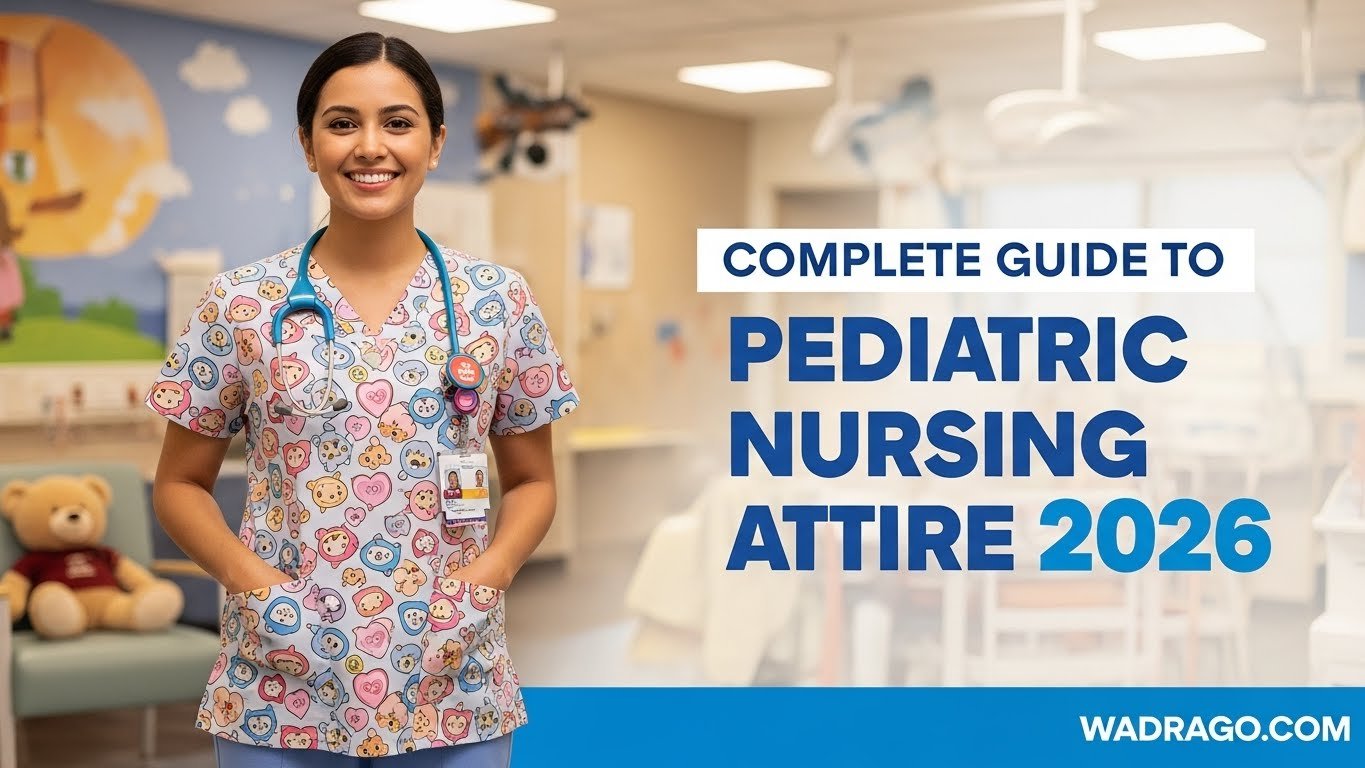
Research comparing pink-patterned uniforms to traditional navy blue uniforms found that children exposed to pink-colored nursing attire experienced anxiety levels approximately 18% lower than those whose nurses wore navy blue. When emotions and uniform color were studied in 233 children, positive emotions were most often associated with blue, bold pink-patterned, or yellow-patterned tops.
In my experience working with pediatric patients, I’ve observed that children aged 3-7 are particularly sensitive to visual cues. A five-year-old boy once told me, “You’re not scary like the other nurses—you have dinosaurs on your shirt!” That simple observation led to a smooth vaccination appointment where he barely flinched.
The White Uniform Problem: Why Traditional Attire May Increase Pediatric Anxiety
Studies have found that 41% of children aged 3-5 found traditional white nursing uniforms to be frightening. Children exposed to white nursing uniforms showed higher anxiety levels compared with children exposed to colored nursing clothing.
This isn’t just anecdotal. A study conducted at Meyer Children’s Hospital in Florence found that when nurses switched from light blue traditional scrubs to nonconventional attire inspired by children’s drawings, both children’s and parents’ perceptions of the nurses improved significantly.
As a healthcare professional trained at Valley View University, I learned that evidence-based practice should guide our decisions—and the evidence overwhelmingly supports colorful, child-friendly attire in pediatric settings.
Pediatric Ward Dress Code Guidelines: What Hospitals Require
Understanding Facility-Specific Requirements
Healthcare organizations have dress codes to maintain safety and professional image, though differences exist regarding scrub color and style, jewelry, piercings, and hair color. Before purchasing any pediatric nursing attire, always consult your facility’s specific dress code policy.
Children’s hospitals typically require that hair be secured so it doesn’t fall forward over the shoulders or into the face, and artificial nails or nail polish that could harbor bacteria are prohibited for patient safety.
During my time rotating through different departments in the Ghana Health Service, I’ve encountered variations in dress code requirements. Some facilities mandate specific scrub colors for identification purposes, while others allow more flexibility. Here’s what to verify before your first shift:
- Color specifications: Some pediatric units assign specific colors to different roles (RNs vs. CNAs vs. nursing students)
- Print restrictions: Verify whether character prints are permitted or if only solid colors are allowed
- Footwear requirements: Closed-toe, non-slip requirements are nearly universal
- Accessory limitations: Jewelry restrictions for infection control
- Hair and grooming standards: Length requirements and color restrictions
- Identification badge placement: Visible identification requirements
Infection Control and Laundering Requirements
The US CDC recommends that contaminated laundry be washed at water temperatures of at least 160°F (70 degrees Celsius), using 50-150 ppm of chlorine bleach to remove significant quantities of microorganisms. OSHA Bloodborne Pathogen Standards require that if an employee’s scrubs become soiled with blood or other potentially infectious materials while working, the employer must clean this attire at no cost to the employee.
In my clinical practice, I’ve adopted a strict protocol of changing into fresh scrubs at the beginning of each shift and removing them before leaving the facility. This practice, while not universally mandated, significantly reduces the risk of pathogen transmission between the healthcare environment and the community.
Choosing the Right Scrubs for Pediatric Nursing
Best Scrub Colors for Pediatric Settings
Based on research evidence and my clinical experience, here are the most effective scrub colors for pediatric nursing:
Optimal color choices:
- Blue (especially soft or bright blue): Associated with calmness and trust
- Pink (particularly patterned pink): Shown to reduce anxiety in hospitalized children
- Yellow (cheerful patterns): Creates positive emotions and approachability
- Green (soft or bright shades): Calming and associated with healing
- Purple: Fun and friendly without being overstimulating
Colors to use cautiously:
- White: Can trigger fear and anxiety in younger children
- Red: May be associated with blood or danger
- Black: Can appear intimidating or somber
- Dark navy: Less approachable than brighter alternatives
Pediatric nurses might wear brightly colored or patterned scrubs to create a more child-friendly environment, though the scrubs still need to adhere to the same standards of hygiene and professionalism.
Pattern and Design Selection: What Works Best
Scrubs featuring classic characters like Mickey and Minnie Mouse, as well as beloved princesses, bring a touch of magic to pediatric settings, and kids recognize these characters instantly, making them feel more comfortable.
Most effective print categories for different age groups:
For toddlers and preschoolers (ages 2-5):
- Simple animal prints (puppies, kittens, bunnies)
- Primary-colored shapes and patterns
- Familiar cartoon characters
- Vehicles (cars, trucks, trains)
- Farm animals
For school-age children (ages 6-11):
- Superheroes (Spider-Man, Batman, Wonder Woman)
- Popular animated characters
- Pokémon and gaming references
- Space and science themes
- Sports themes
- Dinosaurs
For adolescents (ages 12-18):
- Subtle patterns or solid bright colors
- Abstract designs
- Nature themes
- Musical notes or artistic patterns
- Minimalist character references
In my pediatric ICU experience, I’ve found that having a rotation of different themed scrubs helps maintain novelty and can serve as conversation starters. A seven-year-old patient once spent an entire examination counting the number of butterflies on my scrub top, completely distracted from her anxiety about the procedure.
Top-Rated Pediatric Scrub Brands for 2026
Based on comfort, durability, and child-friendly design options, here are my top recommendations:
1. Cherokee Tooniforms Cherokee Tooniforms feature fun, character-inspired designs that bring comfort to little ones, with cheerful colors and soft, flexible fabrics.
Pros:
- Licensed character designs (Disney, superheroes, Sesame Street)
- Affordable price point ($25-$45 per piece)
- Durable fabric that withstands frequent washing
- Wide size range (XXS-5XL)
Cons:
- Limited stretch compared to premium brands
- May fade slightly after extensive laundering
2. FIGS scrubs are made from high-quality technical fabrics that offer a comfortable fit while maintaining a professional look, and are known to be breathable, quick-drying, with anti-odor and anti-wrinkle properties.
Pros:
- Superior technical fabric (FIONx and FREEx materials)
- Excellent moisture-wicking properties
- Professional appearance, even with fun prints
- Four-way stretch for mobility
Cons:
- Higher price point ($38-$78 per piece)
- Limited character print options compared to specialty pediatric brands
3. Uniform Advantage Pediatric Collection Based on my research and colleague recommendations:
Pros:
- Extensive pediatric-specific print collection
- Mid-range pricing ($20-$40 per piece)
- Regular sales and healthcare worker discounts
- Comfortable all-day wear
Cons:
- Sizing can run large
- Fabric weight varies by style
4. Healing Hands Healing Hands scrubs are designed for soft, breathable comfort throughout long shifts, with the Purple Label and HH360 lines especially popular with nurses who want that yoga-pant feel.
Pros:
- Exceptional comfort for 12+ hour shifts
- Moisture-wicking fabric
- Flattering fit
- Good color retention after washing
Cons:
- Limited pediatric-specific prints
- Higher price point ($35-$55 per piece)
5. Grey’s Anatomy by Barco Grey’s Anatomy scrubs offer soft, accommodating fabric with durability that maintains appearance day after day, available in a palette of colors and styles.
Pros:
- Professional yet comfortable
- Excellent durability
- Stretch fabric for ease of movement
- Multiple pocket configurations
Cons:
- Fewer playful pediatric prints
- Premium pricing ($30-$65 per piece)
Footwear Selection for Pediatric Nursing
Essential Features for Pediatric Nursing Shoes
During a typical 12-hour pediatric shift, nurses walk an average of 4-5 miles. Your footwear choice directly impacts your physical well-being and ability to provide excellent patient care.
Non-negotiable features:
- Closed-toe design for safety and infection control
- Slip-resistant outsole (ASTM F2913 certified when possible)
- Adequate arch support
- Cushioned insole for shock absorption
- Easy-to-clean materials (fluid-resistant)
- Proper fit with enough toe room
Highly recommended features:
- Breathable upper materials
- Removable insoles for custom orthotics
- Lightweight construction
- Antimicrobial treatment
- Rocker sole design for natural gait
Top Nursing Shoe Recommendations for Pediatric Settings
1. Brooks Ghost 15 Brooks Ghost 15 is most recommended by the brand for healthcare workers, featuring ultralightweight cushioning, breathable upper, and a system of shock absorbers to prevent foot pain, with an APMA Seal of Acceptance.
Price: $140-$160 Best for: All-day comfort with excellent cushioning Healthcare discount: Brooks offers 25% off for healthcare workers
2. Hoka Bondi 8 / Clifton 10 Hoka Clifton 10 offers substantial cushioning, elevated shock absorption, ergonomic setup, and stable ride, effectively erasing harsh ground with its 44.4/32.0 mm stack height.
Price: $165-$180 Best for: Maximum cushioning and impact protection Note: Sizing runs large; order half size down
3. ASICS GT-2000 14 ASICS GT 2000 14 offers strong arch support through its 3D Guidance System with fatigue-reducing cushioning, making it perfect for healthcare workers who spend long hours on foot.
Price: $130-$150 Best for: Nurses needing stability and arch support. Note: Machine washable, which is a significant advantage
4. Dansko XP 2.0 Dansko shoes are comfortable with a roomy, reinforced toe box for protection and a contoured footbed for extra support, and are easy to clean by wiping down with a damp, soapy cloth.
Price: $135-$155 Best for: Traditional clog lovers, easy on/off Caution: Some nurses report ankle instability with clogs; ensure proper fit
5. ON Cloud 5 Based on research and nursing reviews:
Price: $140-$160 Best for: Lightweight feel with CloudTec cushioning Note: Less lateral support than other options; best for nurses without existing foot issues
Pediatric-Specific Footwear Considerations
In pediatric settings, consider these additional factors:
Quiet soles: Rubber soles that don’t squeak on floors can help maintain a calmer environment, especially important in pediatric ICU or during nap times.
Fun colors: While maintaining professionalism, colorful shoes can be another conversation starter with young patients. I’ve worn bright purple running shoes that have helped ease countless anxious children into examinations.
Easy cleanability: Pediatric wards see their share of spills—from formula to bodily fluids. Shoes that can be quickly wiped clean or thrown in the washing machine are invaluable.
Accessories and Additional Attire for Pediatric Nursing
Compression Socks: Essential Support for Long Shifts
Compression socks help improve circulation and have been shown to help with swelling and leg pain related to varicose veins. After years of 12-hour shifts, I can personally attest to the difference quality compression socks make.
Recommended compression level:
- 15-20 mmHg: Mild compression for prevention and daily wear
- 20-30 mmHg: Moderate compression for those with existing leg fatigue or varicose veins
Top compression sock brands:
- Compression: Sockwell, Comrad
- Fun patterns: Available from most brands, choose pediatric-friendly designs
- Athletic styles: CEP, 2XU
Badge Holders and Identification
Large-print badges with nursing role initials were consistently cited as useful for patient and family identification of nursing staff.
Pediatric-friendly badge holder options:
- Retractable badge reels with fun characters
- Breakaway lanyards for safety (prevents choking hazards)
- Badge buddies with large, clear role identification
- Decorative stethoscope ID tags
Hair Accessories and Grooming
Hair should be secured so it does not fall forward over the shoulders or into the face. In pediatric settings, I recommend:
Safe and practical hair options:
- Scrunchies in fun colors or patterns
- Non-slip headbands
- Secure bobby pins (ensure they don’t fall out near patients)
- Low buns or braids that stay put during patient handling
Avoid:
- Dangling hair accessories that could be grabbed by toddlers
- Elaborate styles that require frequent adjustment
- Hair accessories that could fall into sterile fields
Watches and Jewelry
Acceptable:
- Simple analog watch with second hand (essential for vital signs)
- Wedding band or simple ring
- Small stud earrings
Avoid:
- Dangling earrings (can be grabbed by children)
- Multiple rings or bracelets (harbor bacteria)
- Long necklaces (strangulation risk when bending over patients)
- Artificial nails (infection control violation)
In my clinical experience, I’ve found that a colorful silicone watch band can be another fun element that catches children’s attention while remaining functional and easy to clean.
Seasonal and Specialty Considerations
Warm-Up Jackets for Cold Units
Pediatric ICUs and some hospital areas maintain cooler temperatures. Consider these options:
Lab coats: While traditional, they can appear intimidating to children. If your facility requires them, choose:
- Shorter lengths (waist or hip-length rather than knee-length)
- Bright colors when possible
- Character-embroidered options
Scrub jackets: More casual and child-friendly
- Fleece-lined for warmth
- Fun prints or solid bright colors
- Zip-front for easy removal
Seasonal Scrub Selections
Throughout my nursing career, I’ve found that seasonal scrubs create wonderful opportunities for connection:
Holiday themes:
- Halloween: Pumpkins, friendly ghosts, autumn leaves
- December holidays: Snowflakes, winter animals, festive patterns
- Valentine’s Day: Hearts, animals with hearts
- Spring: Flowers, Easter bunnies, spring animals
- Back-to-school: School buses, apples, pencils
These themed scrubs serve as excellent conversation starters and help normalize the hospital environment for children who associate certain times of year with fun and celebration.
Protective Gear Over Scrubs
When isolation precautions are necessary:
Pediatric-specific considerations:
- Explain protective gear at the child’s developmental level
- Use child life specialists when available
- Consider allowing children to see you put on gear, so it’s less frightening
- Maintain eye contact and speak clearly through masks
- Use colorful isolation gowns when the facility permits
Budget-Friendly Strategies for Building Your Pediatric Nursing Wardrobe
How Many Scrubs Do You Need?
For full-time pediatric nursing (three to four 12-hour shifts per week), I recommend:
Minimum wardrobe:
- 5-6 scrub tops in various colors/patterns
- 4-5 scrub pants in coordinating solid colors
- 2-3 pairs of nursing shoes (rotate to extend life)
- 5-7 pairs of compression socks
Ideal wardrobe:
- 8-10 scrub tops (mix of character prints and solid colors)
- 6-8 scrub pants
- 3 pairs of nursing shoes
- 10+ pairs of compression socks
Money-Saving Tips
1. Shop sales strategically:
- Black Friday/Cyber Monday (20-40% off typical)
- End-of-season clearance
- Healthcare worker discount programs
2. Mix and match:
- Invest in quality, solid-color pants that coordinate with multiple tops
- Purchase fun character tops that can be worn with neutral bottoms
3. Join loyalty programs:
- Many scrub retailers offer points programs
- Birthday discounts and exclusive sales
4. Consider secondhand options:
- Gently used scrubs from nursing resale groups
- Consignment stores near medical facilities
- Always thoroughly launder before first wear
5. Take advantage of healthcare worker discounts:
- Brooks: 25% off
- FIGS: Periodic healthcare worker promotions
- Uniform Advantage: Regular nurse discounts
- Local scrub stores often offer professional discounts
Maintaining Your Pediatric Nursing Wardrobe
Proper Laundering for Longevity and Hygiene
Healthcare workers’ uniforms become contaminated with microorganisms during normal use, and typical temperatures of domestic washing machines do not exceed 110°F due to child safety considerations, though clinical guidelines recommend higher temperatures.
My recommended laundering protocol:
- Separate immediately: Change out of scrubs before leaving the facility when possible. Store work clothes separately from personal clothing.
- Pre-treat stains promptly: Use enzymatic stain removers for biological stains. Hydrogen peroxide works well for blood.
- Wash in hot water: Use the hottest water temperature appropriate for fabric (typically 130-140°F for home machines).
- Use appropriate detergent: Healthcare-specific or antimicrobial detergents provide extra protection. Add oxygen bleach for white or colorfast scrubs.
- Dry thoroughly: High-heat drying not only removes moisture but also helps kill remaining microorganisms.
- Inspect regularly: Check for wear, tears, or fading. Replace scrubs when they lose their professional appearance.
When to Replace Your Scrubs and Shoes
Scrubs should be replaced when:
- Fabric becomes thin or threadbare
- Colors fade significantly
- Seams begin to split
- Overall appearance looks worn
Typical lifespan: 6-12 months with regular rotation for quality scrubs; 3-6 months for budget options
Shoes should be replaced when:
- Outsole tread is worn smooth
- Cushioning feels compressed
- Structural support is compromised
- Uppers show significant wear
Typical lifespan: 6-9 months for quality nursing shoes with daily wear; rotating multiple pairs extends individual shoe life
Special Situations and Advanced Considerations
Dressing for Pediatric Subspecialties
Pediatric Emergency Department:
- Bright, energetic colors to project calm confidence
- Durable fabrics that handle high-intensity activities
- Easy-to-clean materials
- Secure pockets for essential tools
Pediatric ICU:
- Calming colors (soft blues, greens, purples)
- Professional appearance for a critical care setting
- Quiet shoes for a sensitive environment
- Layering options for temperature regulation
Pediatric Oncology:
- Hopeful, uplifting patterns
- Superhero themes resonate well
- Maintain a cheerful demeanor through attire
- Consider seasonal/holiday themes
Neonatal ICU:
- Softer, gentler colors
- Smaller prints or solids
- Professional appearance for interactions with anxious parents
- Warm layers (NICUs run warm, but staff need options)
Cultural Sensitivity in Pediatric Attire
Throughout my 10 years serving diverse populations in the Ghana Health Service, I’ve learned that cultural sensitivity extends to appearance:
Consider:
- Modest coverage in communities with conservative values
- Avoiding culturally inappropriate symbols or characters
- Respecting religious considerations
- Being aware of color meanings in different cultures
Best practice: When working with diverse populations, opt for universal themes (animals, nature, geometric patterns) that transcend cultural boundaries while maintaining child-friendly appeal.
Male Nurses in Pediatric Settings
Male nurses constitute a growing portion of the nursing workforce and bring valuable diversity to pediatric care. Attire considerations remain largely the same, though specific options may differ:
Recommendations for male pediatric nurses:
- Within the FIGS brand, cargo scrub pants, polo-collared tops, and themed sets are popular amongst male nurses
- Character scrubs are equally effective regardless of nurse gender
- Athletic-fit scrub brands may provide a better fit
- The same color psychology principles apply
- Beard grooming should follow facility infection control policies
Acknowledgments
I would like to thank the Ghana Health Service for providing diverse clinical experiences that have shaped my understanding of pediatric nursing care. Special appreciation to my colleagues in the Pediatrics, Emergency Room, and ICU departments who have shared their insights on effective pediatric communication strategies. Thanks also to the Nurses and Midwifery Council (NMC) Ghana and the Ghana Registered Nurses and Midwives Association (GRNMA) for their continued support of evidence-based nursing practice.
Research data cited in this article were sourced from PubMed, the Centers for Disease Control and Prevention (CDC), the Journal of Clinical Nursing, and other peer-reviewed medical journals. Product information reflects current market offerings as of December 2026.
Frequently Asked Questions
Q1: Can I wear fun, colorful scrubs in all pediatric settings, or are some too informal?
Most pediatric units embrace colorful, child-friendly scrubs, but always verify your facility’s dress code. Pediatric ICU and specialty units sometimes require more subdued colors while still allowing patterns. Emergency departments typically welcome bright colors. When in doubt, ask your unit manager or check the employee handbook. In my experience across various Ghana Health Service facilities, even the most formal pediatric units have relaxed their policies to accommodate evidence-based practices showing that colorful attire reduces child anxiety.
Q2: How do I clean scrubs that get contaminated with bodily fluids during my shift?
Per OSHA regulations, visibly contaminated scrubs should be laundered by your employer at no cost to you. Change into fresh scrubs if available at your facility. If you must transport contaminated scrubs home, place them in a sealed plastic bag, wash separately from other laundry in hot water with appropriate disinfectant detergent, and dry on high heat. Never shake out soiled scrubs, as this can aerosolize pathogens.
Q3: Are character scrubs unprofessional? Some colleagues say they undermine our nursing image.**
Research consistently shows that parents rate nurses in child-friendly attire as more approachable, reliable, and competent in pediatric settings. A 2009 study found that 76% of children preferred colorful uniforms over traditional attire. Professionalism in pediatric nursing includes meeting the developmental needs of your patients. Character scrubs serve a therapeutic purpose in reducing child anxiety and facilitating care. However, balance is key—your attire should be clean, well-fitted, and appropriate for your specific unit.
Q4: What’s the best color scrub to wear if I work with all age groups in pediatrics, from newborns to adolescents?
Blue is your best universal choice. Research shows it evokes positive emotions across age groups, appears professional, and doesn’t trigger anxiety like white can. Soft blue or royal blue works well. For variety, alternate with green or purple. Save character-heavy prints for days when your patient census skews younger, and opt for solid colors or subtle patterns when working primarily with adolescents who may find overt cartoon characters juvenile.
Q5: How many pairs of nursing shoes should I own, and should I rotate them?
I recommend owning at least two pairs of quality nursing shoes and rotating them between shifts. This allows each pair to fully dry and decompress between wears, significantly extending their lifespan. Rotating shoes also prevents overuse injuries by varying the support pattern your feet experience. Consider having one primary pair for most shifts and a backup pair that’s broken in and ready when your primary shoes need replacement or deep cleaning.
Q6: Can I wear my nursing scrubs to and from work, or should I change at the facility?
Best practice is to change at your facility to minimize pathogen transmission between the healthcare environment and the community. If your facility doesn’t provide changing facilities or laundered scrubs, wear clean street clothes over your scrubs during your commute and change shoes upon arrival. Remove your scrubs immediately upon returning home and launder them separately from household laundry.
Q7: What should I wear for a pediatric nursing job interview?
For pediatric nursing interviews, business casual attire is most appropriate: dress pants or a modest skirt with a professional blouse or button-down shirt, closed-toe shoes, minimal jewelry, and a neat, professional hairstyle. Avoid wearing scrubs to an interview unless specifically instructed. Once hired, ask about the unit’s dress code and shadow current staff to observe what’s appropriate before your first shift.
Q8: Are there specific fabrics I should look for in pediatric nursing scrubs?
Look for fabrics with these properties: moisture-wicking to keep you dry during active shifts, 4-way stretch for mobility during patient care, wrinkle-resistant for a polished appearance throughout your shift, and antimicrobial treatment to reduce bacterial growth. Popular fabric blends include polyester-spandex (offers stretch and durability), cotton-polyester blends (breathable and easy care), and advanced technical fabrics like FIGS’ FIONx. Avoid 100% cotton, which wrinkles easily and doesn’t wick moisture well.
Q9: How can I make my nursing uniform more comfortable for 12-hour pediatric shifts?
Optimize comfort through layering (start with moisture-wicking undergarments), proper fit (scrubs should allow a full range of motion without being baggy), strategic accessory choices (use a comfortable belt if needed for pants support), appropriate undergarments (seamless options prevent chafing), and smart shoe rotation (change shoes mid-shift if possible or rotate between two pairs). I also recommend compression socks for circulation support and keeping a spare scrub top in your locker for unexpected contamination.
Q10: What accessories are appropriate for pediatric nurses to wear?
Appropriate accessories include functional watches with second hands for vital signs, small stud earrings, plain wedding bands or simple rings, fun badge reels with child-friendly characters, and colorful compression socks. Avoid dangling jewelry that children can grab, multiple rings or bracelets that harbor bacteria, long necklaces that pose strangulation risk, artificial nails that violate infection control, and strong fragrances that may trigger sensitivities. Your accessories should enhance rather than detract from your ability to provide safe, effective care.
Q11: Should I wear different attire when caring for immunocompromised pediatric patients?
When caring for immunocompromised children, follow your facility’s specific isolation protocols, which may include hospital-laundered scrubs, dedicated shoes that don’t leave the unit, and additional protective equipment. Some pediatric oncology units require all scrubs to be facility-laundered. Even with these restrictions, you can still choose cheerful colors within the approved palette. The key is balancing infection control with creating a positive, child-friendly environment.
Q12: How do I handle situations where my uniform gets damaged during a shift?
Keep a backup scrub top in your locker or car for emergencies. Most facilities have spare scrubs available—check with your charge nurse or central supply. If you experience a significant bodily fluid exposure that soaks through to your skin, follow your facility’s exposure protocol immediately, which includes changing clothes and documenting the incident. For minor stains or tears that don’t compromise infection control, you may finish your shift if replacement isn’t readily available, but change as soon as possible.
Conclusion: Dressing for Success in Pediatric Nursing
After 10 years as a Registered General Nurse working across Emergency Room, Pediatrics, ICU, and General Ward settings, I’ve learned that what we wear in pediatric nursing isn’t merely about meeting dress codes—it’s about optimizing the healing environment for our most vulnerable patients. The evidence is clear: colorful, child-friendly attire reduces anxiety, improves patient cooperation, and enhances parents’ confidence in our abilities.
Your pediatric nursing wardrobe should balance three essential elements: professional appearance that meets facility standards and inspires confidence, functional design that supports the physical demands of nursing with comfortable, durable materials and practical features, and a child-centered approach that reduces patient anxiety through colors, patterns, and themes that resonate with young patients.
As you build your pediatric nursing wardrobe, remember that your attire is a therapeutic tool. That dinosaur-print scrub top isn’t frivolous—it’s evidence-based practice. Those colorful compression socks aren’t just fun—they’re supporting your vascular health through long shifts. Your comfortable, supportive nursing shoes aren’t an indulgence—they’re essential equipment for delivering quality care.
Start with the basics: invest in 5-6 quality scrub sets in child-friendly colors and patterns, purchase 2-3 pairs of supportive nursing shoes and rotate them regularly, add compression socks for circulation support during long shifts, and ensure all attire meets your facility’s infection control and safety requirements.
Then personalize your approach based on your specific unit, patient population, and personal style. Whether you’re caring for newborns in the NICU, school-age children in a general pediatrics ward, or critically ill patients in the PICU, your thoughtful attire choices communicate care, competence, and compassion before you ever speak a word.
As healthcare professionals, we have the privilege and responsibility of caring for children during some of their most vulnerable moments. Let’s honor that responsibility by dressing in ways that reduce their fear, ease their anxiety, and remind them that the hospital can be a place of healing and hope—one colorful scrub at a time.
Ready to upgrade your pediatric nursing wardrobe? Start by assessing your current scrubs against the guidelines in this article, identifying gaps in your wardrobe, and shopping strategically during sales or using healthcare worker discounts. Remember to always consult your facility’s specific dress code policies before making purchases.
For personalized medical advice or concerns about your child’s healthcare experience, please consult with your healthcare provider. The guidance in this article is for educational purposes and reflects current evidence-based practices as of 2026.
Medical Disclaimer
The information provided in this article is for educational and informational purposes only and should not be construed as medical, professional, or clinical advice. While I am a Registered General Nurse with 10 years of clinical experience, this content reflects general best practices and research findings rather than personalized recommendations for individual situations.
Always consult your healthcare facility’s specific policies, procedures, and dress code requirements. Product recommendations are based on research, clinical experience, and user reviews, but may not be suitable for all individuals. If you have specific medical conditions affecting your footwear needs, foot health, or circulation, please consult with a healthcare provider before making purchasing decisions.
This article contains affiliate links, and I may earn a commission from purchases made through these links at no additional cost to you. All product recommendations are made in good faith based on quality, functionality, and suitability for pediatric nursing practice.
References
Centers for Disease Control and Prevention. (2023). Guidelines for environmental infection control in health-care facilities. https://www.cdc.gov/infectioncontrol/guidelines/environmental/
Occupational Safety and Health Administration. (2023). Bloodborne pathogens standard 1910.1030. U.S. Department of Labor. https://www.osha.gov/bloodborne-pathogens
Albert, N. M., Wocial, L., Meyer, K. H., Na, J., & Trochelman, K. (2008). Impact of nurses’ uniforms on patient and family perceptions of nurse professionalism. Applied Nursing Research, 21(4), 181-190. https://doi.org/10.1016/j.apnr.2007.04.008
Mete, S., & Uysal, N. (2009). How do mothers and children evaluate nurses’ uniforms and work clothes? Journal of Clinical Nursing, 18(13), 1972-1978. https://doi.org/10.1111/j.1365-2702.2008.02709.x
Landau, S. C., & Limm, W. (2000). How does dress code affect patient preferences in the pediatric emergency department? Pediatric Emergency Care, 16(3), 159-161. https://doi.org/10.1097/00006565-200006000-00005
Barrett, R., & Randle, J. (2008). Hand hygiene practices: Nursing students’ perceptions. Journal of Clinical Nursing, 17(14), 1851-1857. https://doi.org/10.1111/j.1365-2702.2007.02215.x
Skorupski, V. J., & Rea, R. E. (2006). Patients’ perceptions of today’s nursing attire: Exploring dual images. Journal of Nursing Administration, 36(9), 393-401.
Pelzang, R. (2010). Time to learn: Understanding patient-centered care. British Journal of Nursing, 19(14), 912-917. https://doi.org/10.12968/bjon.2010.19.14.49050
American Podiatric Medical Association. (2024). Seal of acceptance for footwear. https://www.apma.org/seal
Zarchi, K., & Jemec, G. B. E. (2012). The efficacy of compression hosiery. Dermatologic Surgery, 38(2), 204-207. https://doi.org/10.1111/j.1524-4725.2011.02226.x
World Health Organization. (2023). Infection prevention and control in health care. https://www.who.int/teams/integrated-health-services/infection-prevention-control
Brooks Running. (2024). Ghost 15: Healthcare worker collection. https://www.brooksrunning.com/healthcare
FIGS. (2024). Technical scrubwear for healthcare professionals. https://www.wearfigs.com
Cherokee Uniforms. (2024). Tooniforms collection. https://www.cherokeeuniform.com
Healing Hands Scrubs. (2024). Purple Label collection. https://www.healinghandsscubs.com
Author Bio:
Abdul-Muumin Wedraogo, RGN, BSc Nursing, is a Registered General Nurse with 10 years of clinical experience across Emergency Room, Pediatrics, ICU, and General Ward settings in the Ghana Health Service. He holds a Bachelor of Science in Nursing from Valley View University and is a registered member of the Nurses and Midwifery Council (NMC), Ghana, and the Ghana Registered Nurses and Midwives Association (GRNMA). Abdul-Muumin is passionate about evidence-based practice and sharing practical healthcare insights that bridge clinical expertise with everyday applications. When not on the ward, he applies his technical background (Diploma in Network Engineering, Advanced Professional in System Engineering) to exploring the intersection of healthcare and technology. Connect with him at Wadrago.com for more nursing insights and medical lifestyle content.