
Master how to dress as a nurse in clinic settings with expert guidelines on scrubs, business casual, footwear, and professional appearance for outpatient care environments.
<a name=”introduction”></a>
Introduction
I’ll never forget my first day transitioning from the fast-paced emergency department to an outpatient family medicine clinic. I showed up in my standard navy hospital scrubs, comfortable clogs, and my hair pulled back in my usual messy bun—only to discover that half the nursing staff was wearing business casual attire with crisp white lab coats. I felt completely out of place, and worse, patients seemed unsure whether I was actually their nurse or perhaps a member of the administrative staff.
That awkward morning taught me an important lesson: how you dress as a nurse in clinic and outpatient settings can be dramatically different from inpatient hospital environments, and understanding these nuances is essential for both professional credibility and patient confidence.
If you’re making the transition to ambulatory care, starting your first clinic job, or simply want to upgrade your outpatient nursing wardrobe, you’re in the right place. After 10 years working across emergency departments, pediatrics, ICU, and general ward settings—including significant time in outpatient clinics—I’ve learned exactly what works (and what doesn’t) when it comes to clinic nursing attire.
Research demonstrates that patients associate better quality care with nurses who maintain a professional appearance. Your clothing choices aren’t just about comfort or personal style—they directly impact how patients perceive the care they receive, how colleagues view your professionalism, and even your own confidence throughout the workday.
In this comprehensive guide, we’ll explore everything you need to know about dressing appropriately for clinic and outpatient nursing roles, including:
- Specific dress code requirements that differ from hospital settings
- How to choose between scrubs and business casual attire
- Professional footwear that balances style, comfort, and safety
- Grooming standards that meet infection control guidelines
- Budget-friendly wardrobe building strategies
- Real-world tips from experienced clinic nurses
Whether your facility requires scrubs, business casual, or a mix of both, you’ll walk away with actionable guidance to help you look polished, feel confident, and maintain the professional image that ambulatory care nursing demands.
Table of Contents
<a name=”why-attire-matters”></a>
Why Your Attire Matters in Outpatient Settings
The Unique Nature of Clinic Environments
Outpatient and clinic settings operate differently from inpatient hospital floors in several key ways that directly influence appropriate nursing attire. In ambulatory care facilities, patients are generally healthier, more mobile, and often have scheduled appointments rather than emergent needs. The environment tends to be quieter, more controlled, and focused on preventive care, chronic disease management, and routine procedures.
A comprehensive analysis of patient preferences found that in outpatient settings, American patients over 50 and European and Asian patients of all ages showed strong preferences for healthcare providers in business attire with or without white lab coats. This preference contrasts sharply with surgical and emergency settings, where scrubs are universally expected.
From my own experience moving between hospital wards and outpatient clinics, I’ve noticed that clinic patients tend to scrutinize appearance more carefully. They’re not distracted by acute symptoms or urgent medical interventions—they have time to observe, form opinions, and build relationships with their healthcare team. Your appearance becomes part of their overall assessment of the quality of care they’re receiving.
Professional Identity and Patient Trust
Nursing uniforms serve multiple important functions: they allow patients to identify nurses more easily, provide a protective barrier between skin and contamination sources, and influence patient perceptions about care quality. In busy clinic waiting rooms where patients encounter receptionists, medical assistants, nurses, nurse practitioners, and physicians, clear visual identification becomes crucial.
During my pediatric clinic rotations, I observed something fascinating: when I wore colorful, patterned scrub tops, young patients were noticeably more relaxed during vaccinations and examinations. Their parents, however, seemed to trust my clinical judgment more when I added a professional lab coat over my scrubs. This taught me that context matters—the same outfit can project different messages depending on your patient population and care setting.
Infection Control Considerations
While clinic environments typically present lower infection risks than acute care hospitals, maintaining appropriate attire standards remains important for patient and staff safety. Studies have identified healthcare provider apparel as a potential source of bacterial contamination, with research showing white coats and nursing uniforms may harbor various pathogens.
Outpatient nursing dress codes must balance professional appearance with practical infection control measures. Unlike operating rooms with strict surgical attire protocols, clinics allow more flexibility—but this doesn’t mean we can neglect hygiene considerations. Your clothing choices should facilitate frequent handwashing, minimize bacterial reservoirs, and allow for proper laundering between shifts.
Organizational Branding and Consistency
Many healthcare organizations use color-coded uniforms or standardized attire to strengthen their brand identity and help patients quickly identify different care team members. Evidence-based dress code implementations in healthcare systems have included discipline-specific standardized colors of professional attire to improve identification and professionalism.
In my current primary care clinic, registered nurses wear ceil blue scrubs, medical assistants wear navy, and nurse practitioners have the option of business casual with white lab coats. This system immediately communicates each person’s role, reducing confusion for patients and streamlining workplace communication.
<a name=”understanding-dress-codes”></a>
Understanding Clinic Dress Codes: What to Expect
Common Dress Code Variations in Outpatient Settings
Healthcare nursing dress codes lack standardization, with requirements varying dramatically between facilities regarding scrub colors and styles, shoe specifications, tattoo coverage, body piercings, nail specifications, and hair color policies. This variability means your first step should always be obtaining and thoroughly reviewing your specific facility’s dress code policy.
Based on my experiences across multiple outpatient facilities, I’ve encountered these common dress code categories:
1. Scrubs-Only Environments Many urgent care centers, ambulatory surgery centers, infusion clinics, and procedural outpatient facilities require scrubs for all clinical staff. These settings typically involve:
- Facility-provided scrubs in standardized colors
- Specific scrub brands or styles for uniformity
- Strict color coding by department or role
- Clear guidelines about undershirts and layering
2. Business Casual Settings Some primary care practices, specialty clinics, and executive health centers permit or require business casual attire, including:
- Dress slacks or skirts with professional tops
- White lab coats worn over business attire
- Conservative dresses are appropriate for clinical work
- Professional closed-toe footwear
3. Hybrid Policies Increasingly common are facilities offering flexibility based on daily duties:
- Scrubs for clinical procedure days
- Business casual for consultation or administrative days
- Personal choice within professional guidelines
- Department-specific requirements
Key Elements Found in Most Clinic Dress Codes
Regardless of your specific facility’s preferences, most outpatient nursing dress codes address these core elements:
Professional Appearance Requirements
Professional attire standards typically require conservative jewelry (small earrings, wedding rings, medical alert bracelets), well-trimmed nails not extending beyond a quarter inch from the finger with no artificial nails, neutral nail polish if worn, and natural hair colors without extreme styles.
From a practical standpoint, these restrictions make sense. During my years performing venipunctures, EKGs, and physical assessments in clinic settings, I’ve learned that dangling jewelry can contaminate sterile fields, long nails harbor bacteria and can scratch patients, and excessive accessories simply get in the way of efficient patient care.
Hygiene and Grooming Standards
Maintaining a professional appearance requires daily bathing, proper oral care, and avoiding body odors or cigarette/tobacco smells that can bother patients, along with keeping clothing wrinkle-free. This might seem obvious, but after 12-hour shifts, it’s easy to let standards slip.
I’ve made it a personal rule to never wear the same scrubs two days in a row, even if they appear clean. Clinic environments may seem less “dirty” than hospitals, but we’re still exposed to respiratory droplets, skin flora, and various body fluids throughout the day.
Footwear Specifications
Nearly all outpatient dress codes mandate closed-toe, closed-back footwear made from fluid-resistant or wipeable materials. OSHA regulations require protective footwear meeting ASTM F2414 standards in areas where foot injuries from falling, rolling objects, or sole penetration could occur.
Even in lower-risk clinic settings, I’ve witnessed dropped instruments, spilled specimens, and inadvertent foot injuries. Appropriate footwear isn’t just about appearance—it’s genuine occupational safety.
Pediatric and Specialty Clinic Variations
Pediatric settings show different preferences, with research indicating pediatric patients and parents favor printed scrub tops or bright colors, while pediatric patients respond better to casual, colorful attire, even as parents still prefer providers in business attire and white coats.
During my pediatric clinic rotations, I learned to keep a collection of fun, character-themed scrub tops specifically for days when I’d be working with young children. The Sesame Street and superhero prints immediately put kids at ease, but I always added a professional lab coat when discussing care plans with parents—acknowledging both the child’s comfort and the parents’ need to see clinical expertise.
How to Navigate Unclear Dress Codes
What if your facility’s dress code document is vague, outdated, or simply doesn’t exist? Here’s my approach:
- Observe current staff: Spend your first few days noting what experienced nurses wear
- Ask your manager directly: Schedule time to discuss specific expectations
- When in doubt, err conservative: Professional and slightly formal beats too casual
- Invest in versatile pieces: Items that work for both scrubs-required and business-casual days
- Keep backup options: Store an extra outfit at work for unexpected dress code situations
I once showed up to a new clinic job in business casual, only to discover the facility had changed their policy to scrubs-only the week before I started—and no one had informed me. Having an emergency set of scrubs in my car saved me from an awkward first impression.
<a name=”scrubs-for-clinic”></a>
Scrubs for Clinic Nursing: Making the Right Choice
Selecting the Right Scrub Fabric
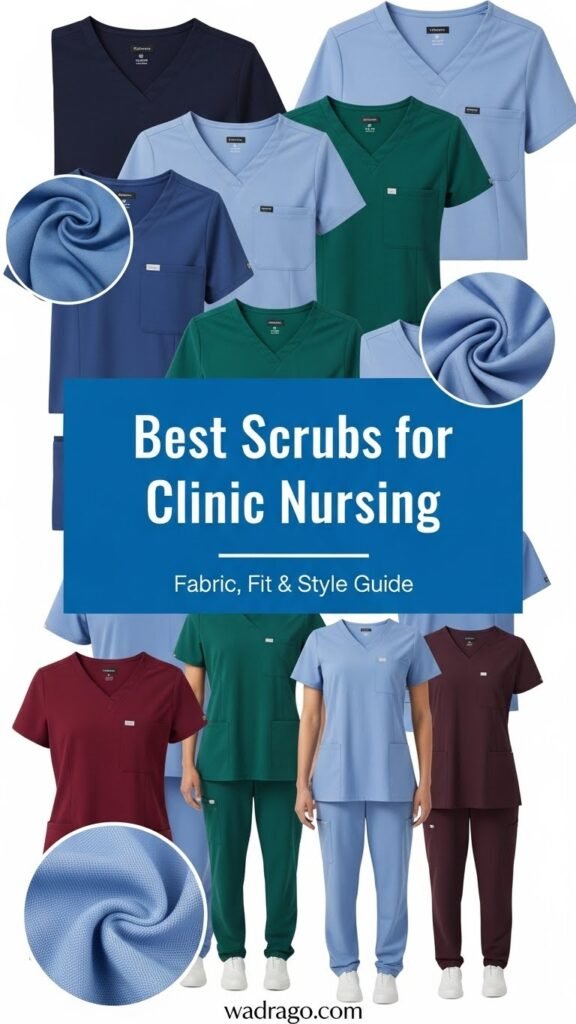
Not all scrubs are created equal, and the fabric you choose dramatically impacts comfort, durability, and professional appearance throughout long clinic shifts.
Polyester Blends: Polyester provides strength, easy washing, wrinkle resistance, and moisture-wicking properties, though it may generate static electricity. Most modern medical scrubs use polyester-rayon-spandex blends that combine durability with stretch and comfort.
After testing numerous brands over the years, I’ve found that scrubs with at least 5% spandex offer the flexibility needed for physical assessments, equipment positioning, and the constant bending and reaching that clinic nursing requires.
Cotton and Cotton Blends Cotton offers strength, biodegradability, no static electricity, lightweight breathability, and easy washing, though it may shrink at high temperatures and doesn’t wick fluids effectively. Pure cotton scrubs feel wonderful initially, but tend to wrinkle easily and lose shape after repeated washing.
For clinic environments where you’re less likely to encounter significant fluid exposure than in operating rooms or emergency departments, cotton-polyester blends (typically 65% polyester/35% cotton) provide an excellent middle ground.
Performance Fabrics
Advanced scrub fabrics now feature moisture-wicking properties, anti-wrinkle treatments, four-way stretch for comfort and freedom of movement, and breathability to keep wearers cool. Brands like FIGS, Jaanuu, Grey’s Anatomy, and Cherokee Infinity have revolutionized medical apparel with athletic-inspired performance fabrics.
During particularly busy clinic days when I’m running between exam rooms, these performance fabrics make a noticeable difference. They keep me drier, move with my body, and maintain their professional appearance even after eight hours of constant activity.
Antimicrobial and Fluid-Resistant Options
Antimicrobial fabric technology provides barrier protection against microbes causing mold, mildew, and odor-producing bacteria, helping eliminate bacteria and odors while extending garment lifecycle through reduced washing needs. Cherokee Infinity scrubs treated with Certainty technology provide antimicrobial properties that inhibit bacterial growth.
While antimicrobial scrubs cost more initially, I’ve found they’re worthwhile investments for clinic settings. They truly do stay fresher longer, resist odor buildup, and maintain their quality through countless wash cycles.
Choosing Appropriate Scrub Colors and Patterns
Color selection in outpatient nursing isn’t purely aesthetic—it carries professional and psychological implications.
Solid, Professional Colors: Navy, ceil blue, black, charcoal, hunter green, and burgundy project authority and competence. Neutral or solid colors such as navy blue, charcoal, black, or hunter green convey professionalism, while brighter colors and patterns might be allowed in pediatrics or casual clinics but should be avoided in formal settings unless permitted.
For general primary care, women’s health, or internal medicine clinics, I recommend building your scrub wardrobe around these classic, solid colors. They read as professional, hide stains better than lighter colors, and coordinate easily with any undershirts or lab coats.
Patterns and Prints Subtle patterns, tone-on-tone designs, or small geometric prints can add personality without compromising professionalism. However, avoid:
- Large, busy patterns that distract or overwhelm
- Cartoon characters (unless working in pediatrics)
- Holiday or seasonal themes that date quickly
- Anything with text, slogans, or potentially offensive imagery
Color Psychology in Healthcare Blue tones communicate calm, trust, and stability—which is why they dominate healthcare environments. Green suggests healing and tranquility. Deep purples and burgundies convey dignity. Bright colors energize but can overstimulate.
Consider your patient population when selecting colors. My diabetic education clinic patients respond well to calming blues and greens, while my pediatric patients light up when they see my bright coral or purple scrubs.
Proper Fit and Professional Appearance
Scrubs should have a tailored but not tight fit that looks polished and ensures ease of movement, avoiding overly baggy or clingy styles that appear unkempt or inappropriate. The right fit elevates your professional image while ensuring you can move freely during patient care.
Sizing Guidelines:
- Tops: Should skim your body without pulling across the chest or stomach. Sleeves should end at mid-bicep. The hem should cover your waistband even when you raise your arms.
- Pants: Should sit comfortably at your natural waist or hips (depending on style). The leg opening should be straight but not tight. Hems should barely brush the tops of your shoes—not drag on the floor.
I learned this lesson the hard way when I purchased scrubs one size too large, thinking extra room would be more comfortable. Instead, the baggy appearance made me look sloppy and unprofessional, and the excess fabric actually hindered my movements during examinations.
Avoid These Fit Mistakes:
- Pants that drag on the floor (infection control hazard)
- Tops so short that your abdomen shows when reaching up
- Pants hanging so low that the underwear becomes visible when bending
- Clothes so tight that undergarments show through, or movement is restricted
Layering and Temperature Control
Layering properly is crucial as hospital and clinic interiors can be cold, so having thermal undershirts, vests, or fleece-lined scrub jackets helps maintain warmth without compromising professional appearance.
Appropriate Layering Options:
- Undershirts: Choose neutral colors (white, black, gray, or matching your scrubs) in crew neck or V-neck styles
- Scrub jackets: Coordinate with your scrub color; avoid hooded styles in most professional settings
- Cardigans: In business-casual-leaning clinics, a professional cardigan over scrubs can work
- Lab coats: White or facility-designated color; keep clean and pressed
Temperature Management Tip: I keep a lightweight scrub jacket in my locker year-round. Air conditioning varies wildly between exam rooms, and I’d rather add a layer than shiver through patient encounters.
Recommended Scrub Brands for Clinic Nursing
Based on my experience and feedback from hundreds of fellow clinic nurses, these brands consistently deliver quality, comfort, and professional appearance:
Premium Options ($40-70+ per piece):
- FIGS: Known for innovative fabrics, tailored fits, and modern styles, the technical collection features moisture-wicking and antimicrobial properties
- Jaanuu: Fashion-forward designs with excellent four-way stretch
- Barco One: Eco-friendly scrubs made from recycled materials with moisture-wicking and wrinkle-resistant properties
Mid-Range Options ($25-40 per piece):
- Cherokee Infinity: Reliable quality with Certainty antimicrobial technology and professional styling
- Grey’s Anatomy: Sporty, modern designs with stretch fabrics and flattering cuts
- Koi: Comfortable, durable, and available in extensive color options
Budget-Friendly Options ($15-25 per piece):
- Dickies Medical: Straightforward, durable basics in standard colors
- WonderWink: Affordable performance fabrics with decent quality
- Maevn EON: Budget option with COOLMAX technology for moisture management
Personal Recommendation: Start with one set from a premium brand and one from a mid-range option. Wear each for a full week and note which performs better. Your personal comfort preferences, body type, and specific clinic duties will determine your best choice.
<a name=”business-casual-options”></a>
Business Casual Options for Outpatient Nurses
When Business Casual Is Appropriate
In some outpatient settings, nurse practitioners and nurses are permitted to wear business casual clothing with or without white lab coats. This option is increasingly common in:
- Primary care physicians practice with lower procedure volumes
- Specialty consultation clinics (endocrinology, rheumatology, psychiatry)
- Executive or concierge medicine practices
- Administrative or case management roles
- Telehealth nursing positions
- Wellness and preventive care centers
From my transitions between settings, I’ve found business casual particularly common in clinics that emphasize patient education, counseling, and chronic disease management over hands-on procedures.
Building a Professional Business Casual Wardrobe
Appropriate Tops Business casual outpatient settings allow blouses, turtlenecks, or solid-colored tops with modest necklines. Choose styles that:
- Cover your chest, shoulders, and midriff completely
- Allow for bending and reaching without gaping
- They are made from professional fabrics (not jersey or casual t-shirt material)
- Coordinate with professional pants or skirts
My Go-To Business Casual Tops:
- Classic button-down shirts in white, light blue, or subtle patterns
- Structured knit shells or blouses in solid colors
- Professional sweaters (avoid oversized or overly casual styles)
- Three-quarter or long-sleeve options for temperature control
Avoid:
- Low-cut or revealing necklines
- Sleeveless tops (unless worn under a blazer or cardigan)
- Anything sheer, clingy, or made from athletic fabrics
- Tops with distracting patterns, logos, or graphics
Appropriate Bottoms: Professional dress pants, slacks, skirts, or dresses are appropriate, with skirts and dresses no shorter than four inches above the knee.
Smart Choices:
- Dress slacks in neutral colors (black, navy, gray, khaki)
- Well-fitted trousers with a professional cut
- Knee-length or longer skirts in modest styles
- Professional dresses (sheath, A-line, or shirt dresses)
Things to Skip:
- Jeans, colored denim, or cargo pants
- Leggings, yoga pants, or athletic wear
- Mini skirts or overly short dresses
- Anything with excessive embellishment or distressing
The “Bend Test”: Before purchasing business casual pieces for clinic work, perform this test in the dressing room: bend forward as if conducting a physical exam, squat down, and reach overhead. If anything gapes, rides up excessively, or reveals undergarments, it’s not appropriate for patient care settings.
The Role of the White Lab Coat
Research shows that about 70% of patients preferred when healthcare providers wore white coats in some capacity, with nearly 75% reporting more confidence in providers wearing white coats and 85% feeling more comfortable being treated by someone in a white coat.
For nurses working in business casual clinic environments, the white lab coat serves multiple purposes:
- Professional Identity: Clearly signals your role as a clinical provider
- Patient Confidence: Meets patient expectations for medical professionalism
- Practical Protection: Shields your clothing from incidental contamination
- Functional Storage: Provides pockets for essential tools
Selecting Your Lab Coat: For nurse practitioners, knee-length or mid-thigh white coats are typically appropriate, while longer coats are usually reserved for physicians, and short coats may appear more junior. This guidance applies to registered nurses in advanced practice or clinic roles as well.
Lab Coat Best Practices:
- Embroidery: Include your name and credentials clearly visible
- Fabric: Choose wrinkle-resistant, stain-repellent materials
- Fit: Professional but allows for easy movement and layering
- Maintenance: Launder frequently; keep a spare coat available
- Remove when: Potentially interfering with patient care (wound care, sterile procedures)
I keep two lab coats in rotation—wearing one while the other is being laundered. This ensures I always have a crisp, clean coat available.
Footwear for Business Casual Settings
Professional shoes in business casual clinics must balance appearance with the reality of being on your feet for extended periods.
Appropriate Options:
- Closed-toe leather or leather-like flats
- Low-heeled pumps (1-2 inches maximum)
- Professional loafers or oxfords
- Dressy, closed-toe wedges with modest heel height
When working in clinics requiring business casual attire, healthcare workers report needing shoes that are well-cushioned, supportive, and appropriate for frequent squatting and kneeling.
My Business Casual Footwear Recommendations:
- Clarks Cloud Steppers: Professional appearance with exceptional comfort
- Naturalizer pumps: Classic style with nursing-friendly cushioning
- Dansko Professional clogs in leather: Dressy enough for business casual, comfortable enough for 12-hour shifts
- Vionic flats: Stylish and orthotic-friendly
Avoid:
- Open-toe shoes, sandals, or flip-flops
- Extremely high heels that compromise stability
- Athletic sneakers (unless specifically approved)
- Worn, scuffed, or casual-looking footwear
Creating a Capsule Wardrobe for Business Casual Clinic Nursing
To simplify your morning routine and ensure professional consistency, build a capsule wardrobe with these essentials:
Base Pieces (10-12 items):
- 3 pairs of dress pants (black, navy, gray)
- 2 professional skirts or dresses
- 5-6 coordinating tops in solid colors and subtle patterns
- 2 cardigans or blazers for layering
- 2 white lab coats
This combination yields 30+ professional outfits that can be mixed, matched, and rotated throughout your work schedule.
Budget-Friendly Shopping Tips:
- Shop end-of-season sales at professional retailers
- Check outlet stores for brand-name pieces at reduced prices
- Invest in quality basics; add trendy accent pieces affordably
- Consider consignment or secondhand professional wear
- Buy classic styles that won’t look dated next year
<a name=”footwear-guidelines”></a>
Essential Footwear Guidelines for Clinic Nurses
Why Footwear Matters
During a typical clinic shift, nurses walk several miles, stand for extended periods, and perform physical tasks requiring stability and support. Healthcare workers specifically need footwear with adequate cushioning, arch support, slip resistance, waterproof or fluid-resistant properties, durability, and appropriate support for long shifts.
Poor footwear choices don’t just cause foot pain—they contribute to knee problems, hip issues, back pain, and overall fatigue that impacts both professional performance and personal well-being.
Key Features for Nursing Shoes
Closed-Toe and Closed-Back Design
Most healthcare dress codes require white, closed-toe, closed-back shoes with a leather-like finish and non-porous materials, prohibiting mesh, backless styles, or clogs. This standard protects your feet from dropped objects, spills, and contamination.
I learned this lesson early in my career when a colleague wearing open-backed clogs had a urine specimen container slip from the counter and splash onto her exposed heel. The cleanup, potential exposure concerns, and sheer discomfort could have been avoided with proper footwear.
Slip-Resistant Outsoles
Research among healthcare workers concluded that the provision of appropriate slip-resistant footwear was more effective at reducing workplace slips, specifically for older staff. Even in lower-risk clinic environments, wet floors from cleaning, spilled liquids, and slick tile surfaces create fall hazards.
Look for shoes with:
- Rubber outsoles with tread patterns
- Slip-resistant certifications from manufacturers
- Adequate surface contact area for stability
Arch Support and Cushioning Adequate cushioning that adapts to foot shape, proper fit ensuring shoes are neither too tight nor too loose, and supportive arches like those found in quality nursing shoes contribute to reducing stress on feet and joints and minimizing injury risk.
I have relatively high arches, which means I need shoes with built-in arch support or room for custom orthotics. Take your individual foot structure seriously when selecting nursing shoes—it dramatically impacts your comfort and long-term musculoskeletal health.
Fluid-Resistant or Waterproof Materials. Waterproof designs ensure shoes can withstand spills and fluids common in medical settings, while antimicrobial and anti-odor features ensure hygiene during long shifts.
Leather, synthetic leather, and treated fabric uppers can be wiped clean after exposure to body fluids. Mesh or fabric shoes that can’t be effectively cleaned shouldn’t be worn in direct patient care roles.
Top Nursing Shoe Recommendations
Based on extensive testing by nursing communities and healthcare workers, here are the consistently highest-rated options:
Athletic Sneaker-Style Shoes:
- Uni Shoes: Fluid-resistant, extremely comfortable, stylish, but pricey
- Asics Gel-Kayano: Exceptional stability and cushioning
- FIGS New Balance 327: Designed specifically for nurses with antimicrobial insoles
- Hoka Bondi: Maximum cushioning for all-day comfort
- Brooks Ghost: Reliable support and durability
Clog-Style Shoes:
- Dansko Professional: Industry standard for good reason—orthotic-friendly and durable
- Calzuro clogs: Sterilizable, autoclavable, favored by surgeons
- Crocs Specialist: Lightweight, easy to clean, affordable
- Alegria Keli Professional: Excellent arch support and stain-resistant leather
Specialty Options:
- On Cloudflyer Waterproof: Lightweight with excellent cushioning
- BALA Twelves: Hybrid design combining clog comfort with sneaker functionality
- Skechers D’Lites: Memory foam comfort at budget-friendly prices
My Personal Rotation: I alternate between Dansko Professional clogs for general clinic days, Hoka sneakers for high-volume vaccination clinics, and professional leather flats for business-casual consultation days. Having multiple pairs allows each to fully dry between wears and extends their overall lifespan.
When to Replace Your Nursing Shoes
It’s advisable to replace scrubs and shoes when they show signs of wear, such as fading, thinning fabric, or loss of elasticity, to maintain a professional appearance.
For shoes specifically, watch for:
- Worn-down tread patterns reduce slip resistance
- Compressed cushioning that no longer provides support
- Cracked, torn, or damaged materials
- Visible stains that can’t be cleaned
- Persistent odor despite cleaning attempts
Professional guideline: Replace nursing shoes every 6-12 months, depending on frequency of wear and shoe quality. Track your purchase dates and monitor wear patterns.
Sock Selection for Optimal Foot Health
Nurses should wear above-ankle socks or stockings at all times in clinical settings. This requirement serves both professional appearance and practical comfort purposes.
Compression Socks Scientific evidence demonstrates compression socks help attenuate lower-leg muscle fatigue, edema, and discomfort after prolonged standing, with studies showing they reduce hazards associated with extended periods on the feet.
I was skeptical about compression socks until I tried them during a particularly busy flu vaccination clinic. The difference was remarkable—my legs felt less heavy, my feet were less swollen at day’s end, and my overall energy level improved.
Sock Material Recommendations:
- Moisture-wicking blends (polyester, nylon, or specialized athletic materials)
- Cushioned foot beds for added comfort
- Seamless construction to prevent blisters
- Appropriate compression level (15-20 mmHg for general use, higher levels with physician recommendation)
<a name=”grooming-standards”></a>
Grooming and Personal Hygiene Standards
Hair Guidelines
For clinical settings, including skills labs and simulation, shoulder-length or longer hair must be pulled back from the face, secured with appropriate professional devices like barrettes or ribbons, while beards must be clean, neat, and well-trimmed according to agency requirements.
Practical Hair Styling Tips:
- Low ponytails or buns: Professional and stay secure during physical activity
- Braids: French, Dutch, or simple three-strand braids work well
- Hair clips and headbands: Use professional-looking, solid-colored options
- Short hair: Keep it neatly styled and off your collar
Avoid:
- Extreme or unnatural hair colors in most clinical settings
- Elaborate styles that require constant adjustment
- Loose hair that falls forward during patient examinations
- Strong-smelling hair products that might bother sensitive patients
During my ICU rotations, I learned to french-braid my hair every shift—it stayed put for 12+ hours and looked professional even at hour 11.
Nail Standards
Nails should be well-trimmed, not extending beyond a quarter inch from the finger tip, with no artificial nails allowed, and neutral nail polish if worn, consistent with institutional policy.
The Science Behind Nail Restrictions: Research demonstrates that longer nails and artificial nails harbor significantly more bacteria than short natural nails, even after handwashing. These bacterial reservoirs can transmit pathogens to patients during care activities.
Nail Care Guidelines:
- Keep nails trimmed to or just beyond fingertip length
- File away rough edges that could snag gloves or scratch patients
- If wearing polish, keep it fresh and chip-free
- Remove polish immediately when it begins chipping
- Skip gel manicures, acrylics, dip powder, and artificial extensions
Jewelry and Accessories
Professional jewelry should be conservative, limited to small earrings, wedding rings, and medical alert bracelets, avoiding dangling or large pieces that could interfere with patient care or harbor bacteria.
Acceptable Jewelry:
- Small stud earrings (typically one per ear)
- Simple wedding or engagement bands
- Watches with smooth, wipeable bands
- Medical alert bracelets or necklaces
Jewelry to Avoid:
- Dangling earrings that could be grabbed by patients
- Facial piercings in most professional settings
- Multiple rings that interfere with glove use
- Bracelets that make noise or catch on equipment
- Long necklaces that swing forward during examinations
I wear a simple silicone wedding band instead of my traditional gold band during clinic shifts—it’s comfortable, won’t snag gloves, and eliminates concerns about loss or damage.
Makeup and Fragrance
Professional appearance includes light, conservative makeup where appropriate, avoiding heavy or dramatic styles, and not wearing perfume, cologne, or strong body products that many patients find overwhelming or that trigger allergies and sensitivities.
Makeup Guidelines:
- Natural, neutral tones that enhance rather than distract
- Minimal application for a fresh, professional look
- Long-wearing formulas that don’t require touchups
- Nothing extreme, glittery, or costume-like
Fragrance-Free Workplace: Many healthcare facilities have implemented fragrance-free policies because scented products can:
- Trigger asthma attacks in sensitive patients
- Causes headaches or nausea
- Interfere with patients’ sense of smell (important for food intake in some populations)
- Seems unprofessional or overwhelming
Use unscented deodorant, skip perfumes and colognes entirely, and choose fragrance-free lotions and hair products for work.
Tattoos and Body Modifications
Many healthcare facilities have policies regarding tattoo visibility, often requiring coverage with clothing or skin-tone bandages to maintain professional standards and avoid potentially offending diverse patient populations.
Current Trends: Attitudes toward visible tattoos in healthcare are evolving. Many modern facilities, particularly those in urban areas or targeting younger demographics, no longer require tattoo coverage. However, conservative or traditional patient populations may still prefer healthcare providers without visible body art.
Strategic Approach:
- Check your facility’s specific policy
- When in doubt, cover tattoos during interviews and initial employment
- Once established, gauge patient and colleague reactions
- Consider tattoo placement for future professional flexibility
- Avoid visible tattoos on hands, face, or neck if pursuing healthcare careers
I have a small tattoo on my upper arm that’s easily covered by short-sleeve scrubs. For special occasion clinic events or when meeting with hospital administrators, I ensure it’s completely concealed.
<a name=”common-mistakes”></a>
Common Dressing Mistakes to Avoid in Clinic Settings
Mistake #1: Wearing Hospital-Specific Scrubs to Outpatient Clinics
During my transition from hospital to clinic nursing, I initially wore my standard hospital-issued navy scrubs—complete with the hospital logo—to my new outpatient position. My manager gently explained that wearing another facility’s branded attire looked unprofessional and potentially confused patients about our clinic’s affiliation.
The Fix: Invest in neutral, non-branded scrubs appropriate for your new setting. Save hospital-specific uniforms exclusively for that facility.
Mistake #2: Overlooking the Importance of Proper Undergarments
Professional attire requires appropriate undergarments such as neutral-colored bras, underwear that doesn’t show through scrubs or clothing, and camisoles or undershirts in neutral colors when needed for coverage.
Visible bra straps, underwear lines, or inappropriate undergarments detract from your professional image, regardless of how nice your scrubs or business casual pieces look.
The Fix:
- Wear nude or matching undergarments beneath light-colored scrubs
- Choose seamless underwear to prevent visible lines
- Select bras with smooth cups and conservative coverage
- Layer with neutral camisoles for additional coverage
Mistake #3: Neglecting Shoe Maintenance
I’ve witnessed colleagues with expensive, high-quality nursing shoes that looked unprofessional simply because they were dirty, scuffed, or poorly maintained.
The Fix:
- Wipe shoes clean after every shift
- Use appropriate leather cleaners and conditioners
- Replace worn-down heels or insoles promptly
- Keep a backup pair for when your primary shoes need professional cleaning
- Polish or treat shoes regularly to maintain appearance
Mistake #4: Over-Accessorizing
Excessive jewelry, elaborate hair accessories, multiple bracelets, or attention-grabbing accessories distract from the professional image you’re trying to project and can interfere with patient care.
The Fix: Follow the “less is more” principle. Choose one or two simple, professional accessories and leave everything else at home.
Mistake #5: Ignoring Seasonal Appropriateness
Seasonal changes affect appropriate dressing for healthcare settings, with layering crucial during colder months and breathable, lighter scrub fabrics appropriate for warmer weather.
Wearing heavy fleece scrub jackets in summer or arriving in sandals during winter looks out of touch and unprofessional.
The Fix: Maintain a seasonal wardrobe with appropriate weight fabrics, layering options, and weather-appropriate footwear. Transition your clinic wardrobe as seasons change.
Mistake #6: Forgetting About Your Total Appearance
Your attire is only one component of a professional presentation. I’ve seen nurses in perfect scrubs who undermined their appearance with:
- Uncombed hair
- Visible food stains
- Chipped nail polish
- Wrinkled clothing
- Unpleasant body odor
The Fix: Take a head-to-toe inventory before leaving for work:
- Hair: Neat, clean, and professional
- Face: Fresh, minimal makeup if worn
- Nails: Clean, trimmed, and groomed
- Clothing: Clean, pressed, and in good repair
- Shoes: Clean and polished
- Overall: Fresh scent, good hygiene
Mistake #7: Wearing Ill-Fitting Attire
Proper fit is crucial—scrubs and business casual clothing should be tailored but not tight, looking polished while ensuring ease of movement. Clothes that are too large look sloppy; clothes that are too tight appear unprofessional and restrict movement.
The Fix: Try on everything before purchasing. Move around, bend, reach, and sit. If any issues arise, try different sizes or styles.
Mistake #8: Failing to Consider Your Patient Population
Different patient demographics have varying preferences for healthcare provider attire, with cultural, generational, and regional factors influencing expectations for professionalism.
The Fix: Research and observe norms in your specific clinic setting. Adjust your attire based on:
- Patient age ranges (pediatric vs. geriatric)
- Cultural makeup of your community
- Clinic specialty (pediatrics vs. cardiology)
- Geographic location (urban vs. rural, regional preferences)
<a name=”expert-tips”></a>
Expert Tips from a Clinical Nurse
Creating Systems for Wardrobe Management
The Five-Day Rotation I maintain five complete outfit sets (scrubs or business casual) that I rotate throughout the week. Each “set” includes top, bottom, undershirt, socks, and designated footwear. On Sunday evenings, I check all five sets for:
- Stains or damage requiring replacement
- Items needing washing or pressing
- Missing components
- Appropriate seasonal weight
This system eliminates morning decision fatigue and ensures I always have clean, complete outfits ready.
The Emergency Backup: Keep a complete change of clothes in your locker or car:
- One full scrub set or business casual outfit
- Clean socks and underwear
- Emergency footwear
- Stain removal pen
- Lint roller
- Extra lab coat
I’ve used my emergency backup more times than I can count—spilled coffee, unexpected procedure requirements, accidental contamination, and even an impromptu schedule change all become manageable with backup clothing on hand.
Budget-Friendly Wardrobe Building
Strategic Shopping Timeline:
- January-February: Shop clearance sales for winter pieces
- March-April: Purchase spring/summer scrubs at end-of-season prices
- July-August: Stock up during back-to-school healthcare worker promotions
- November: Take advantage of Black Friday deals on nursing footwear
Employer Reimbursement Programs: Many healthcare employers offer uniform allowances or reimbursement programs. I’ve successfully obtained:
- $200 annual scrub allowances
- 50% reimbursement for OSHA-compliant footwear
- Free embroidered lab coats
- Discounted employee pricing through uniform vendors
Ask your HR department about available programs—many nurses miss out simply because they don’t inquire.
Maintaining Professional Appearance Throughout Your Shift
The “Midshift Reset”: Around hour 6 of my shifts, I take five minutes to:
- Check my appearance in the restroom mirror
- Wipe down shoes if they’ve gotten soiled
- Reapply deodorant
- Refresh hair style if needed
- Ensure clothing hasn’t twisted or bunched
This brief reset helps me maintain a professional presentation even during challenging, physically demanding shifts.
Stain Management Protocol: Keeping clothing wrinkle-free and spot-free is part of maintaining a professional appearance, but stains happen in clinical work.
My Immediate Response:
- Blot (don’t rub) fresh stains immediately
- Use cold water on protein-based stains (blood, body fluids)
- Apply stain stick from my emergency kit
- Change into backup clothing if the stain is visible or on the chest/front
- Treat stained items properly before washing
Washing Technique: Healthcare uniforms can carry pathogens, requiring specific laundering protocols including separating contaminated items, pre-soaking heavily soiled pieces, and using appropriate detergents and water temperatures.
I wash all clinical clothing separately from personal items, use hot water (140°F minimum), add antibacterial laundry sanitizer, and dry on high heat to ensure proper disinfection.
Building Relationships with Uniform Vendors
Developing relationships with local uniform shops or online vendors yields unexpected benefits:
- Advance notice of sales
- Special discounts for repeat customers
- Easy exchanges or returns
- Personalized fitting assistance
- Professional embroidery services
My local uniform shop sends me quarterly emails with exclusive coupon codes and alerts me when new styles in my favorite brands arrive. This relationship has saved me hundreds of dollars over the years.
Confidence Through Consistency
Research demonstrates that patients associate professional appearance with quality care, making your attire choices genuinely impact patient confidence and satisfaction.
When I dress professionally, I notice patients:
- Ask fewer questions about my qualifications
- Follow my clinical recommendations more readily
- Rate their care experiences more positively
- Return for follow-up appointments as scheduled
Professional appearance isn’t vanity—it’s a clinical tool that enhances therapeutic relationships and improves patient outcomes.
<a name=”cost-value”></a>
Cost vs. Value Analysis: Investing in Your Professional Wardrobe
Understanding Total Cost of Ownership
When evaluating nursing attire purchases, consider the complete financial picture:
Premium Scrubs Example:
- FIGS scrub set: $100
- Expected lifespan: 18-24 months with frequent wear
- Cost per wear (worn weekly): $0.50-0.75 per shift
- Total ownership: $100
Budget Scrubs Example:
- Generic scrub set: $25
- Expected lifespan: 6-8 months with frequent wear
- Cost per wear (worn weekly): $0.35-0.50 per shift
- Replacement frequency: 3x during the premium scrub lifespan
- Total ownership: $75
The price difference narrows significantly, and premium scrubs offer additional benefits:
- Superior comfort during long shifts
- Better professional appearance
- Enhanced fabric performance
- Fewer replacements needed
Where to Invest vs. Where to Save
Worth the Investment:
Quality Footwear: Your feet carry you through 12-hour shifts. Investing $120-150 in excellent nursing shoes prevents foot pain, back problems, and fatigue. Replace every 6-12 months.
Professional Lab Coats: A well-fitted, properly embroidered lab coat ($60-80) communicates competence and authority. The professional return on investment justifies the cost.
Performance Fabrics: Scrubs with moisture-wicking, antimicrobial, and stretch properties ($80-120 per set) genuinely enhance comfort and maintain appearance better than basic options.
Where to Save:
Basic Undershirts and Layers: Simple neutral camisoles and undershirts serve the same function, whether they cost $8 or $25. Buy budget-friendly basics.
Accessories: Professional hair ties, simple jewelry, and basic accessories don’t require premium pricing. Dollar stores and discount retailers work fine.
Trendy Items: If a scrub style or color might be out of fashion next year, buy the budget version rather than the premium.
Cost Comparison Table
| Item Category | Budget Option | Mid-Range Option | Premium Option | Best Value |
| Scrub Top | $15-20 (Dickies, WonderWink) | $30-40 (Cherokee, Grey’s Anatomy) | $50-70 (FIGS, Jaanuu) | Mid-range for most |
| Scrub Pants | $15-20 (Dickies, WonderWink) | $30-40 (Cherokee, Grey’s Anatomy) | $50-70 (FIGS, Jaanuu) | Mid-range for most |
| Nursing Shoes | $40-60 (Skechers, Crocs) | $80-120 (Dansko, Alegria) | $150-180 (Hoka, On Running) | Premium for daily use |
| Lab Coat | $25-35 (generic) | $40-60 (Cherokee, Landau) | $80-100 (Medelita) | Mid-Range adequate |
| Compression Socks | $12-20 (Sockwell, ComproGear) | $25-35 (CEP, Physix Gear) | $40-60 (2XU) | Mid-Range sufficient |
Building Your Wardrobe Over Time
Month 1-2: Essential Foundation ($300-400)
- 2-3 scrub sets or business casual outfits
- 1 pair quality nursing shoes
- 1 lab coat (if needed)
- Essential undergarments and socks
Month 3-4: Expansion ($200-300)
- 2 additional scrub sets or outfits
- Backup pair of nursing shoes
- Seasonal layering pieces
- Additional lab coat for rotation
Month 5-6: Refinement ($100-200)
- Specialty items for your specific role
- Upgrades to premium versions of favorite pieces
- Complete emergency backup set
- Professional accessories
Ongoing: Maintenance ($20-50/month)
- Replace worn items as needed
- Seasonal updates
- Footwear rotation and replacement
- Cleaning and care supplies
Maximizing Your Uniform Allowance
If your employer provides $200-300 annually for uniforms, strategize your purchases:
Year 1 Strategy:
- Invest in 2 pairs of premium nursing shoes ($240)
- Use remaining funds for one quality scrub set
- Budget personal funds for additional basics
Year 2 Strategy:
- Purchase 3-4 premium scrub sets ($300)
- Use personal funds to replace shoes
Year 3 Strategy:
- Replace worn items
- Upgrade to higher-quality versions
- Add specialty pieces
Tax Deductions for Healthcare Uniforms
Healthcare workers may potentially deduct unreimbursed job-related expenses, such as uniforms required by employers that aren’t suitable for everyday wear, though tax laws change, and consultation with tax professionals is recommended.
Potentially Deductible Expenses:
- Scrubs and uniforms are required for work
- Nursing shoes are worn exclusively for clinical duties
- Lab coat cleaning and maintenance
- Embroidery and name tags
Track Your Expenses:
- Keep all receipts for uniform purchases
- Document employer uniform requirements
- Maintain records of cleaning costs
- Consult a tax professional about current regulations
<a name=”acknowledgments”></a>
Acknowledgments
This article was written by Abdul-Muumin Wedraogo, a registered nurse with 10 years of clinical experience across emergency departments, pediatrics, intensive care units, and general ward settings, including significant experience in outpatient clinic environments. The medical information and professional guidelines have been reviewed for accuracy based on current evidence-based practices and guidelines from the American Nurses Association, Centers for Disease Control and Prevention, and Occupational Safety and Health Administration.
Disclaimer: This content is for informational purposes only and should not replace professional medical advice or your facility’s specific dress code policies. Always consult with your healthcare employer’s human resources department, occupational health team, or nurse manager for personalized recommendations regarding appropriate attire for your specific clinical setting.
Special thanks to the nursing community members who shared their experiences, uniform vendors who provided technical specifications for this article, and healthcare facilities that maintain public dress code policies enabling evidence-based recommendations.
<a name=”faqs”></a>
Frequently Asked Questions
What should nurses wear in clinic settings versus hospital settings?
Clinic nursing attire varies more than in hospital settings, ranging from traditional scrubs to business casual with lab coats. Evidence-based implementations show standardized color-coded uniforms help with identification in healthcare settings, though outpatient clinics often permit more flexibility than acute care hospitals. Primary care, specialty consultation, and wellness clinics frequently allow business casual attire, while urgent care centers and procedural outpatient facilities typically require scrubs. Always verify your specific facility’s dress code policy during the hiring process, as requirements vary significantly between outpatient settings.
Are expensive nursing scrubs worth the investment for clinic nurses?
Premium scrubs ($80-140 per set) offer genuine advantages, including superior comfort, moisture-wicking fabrics, better durability, and a professional appearance that justifies the cost for frequent wearers. Modern performance scrub fabrics feature moisture-wicking properties, anti-wrinkle treatments, four-way stretch, and breathability. Budget scrubs ($30-40 per set) work adequately if replaced more frequently. Consider your wearing frequency—if you work three or more 12-hour shifts weekly, invest in premium options. For part-time positions or rotating schedules, mid-range brands provide excellent value without premium pricing.
What type of shoes do clinic nurses need?
Healthcare workers require footwear with cushioning, arch support, slip resistance, waterproof materials, and durability for prolonged standing and walking. Clinic nurses need closed-toe, closed-back shoes made from fluid-resistant materials with slip-resistant outsoles. Quality options include athletic sneaker styles (Hoka, Brooks, Asics), professional clogs (Dansko, Alegria), or specialized nursing shoes. Expect to spend $80-150 for quality footwear and replace every 6-12 months, depending on wear frequency. Inadequate footwear contributes to foot pain, back problems, and overall fatigue during shifts.
Can nurses wear business casual clothing in outpatient clinics?
Yes, many outpatient clinics permit or require business casual attire. In some outpatient settings, nurse practitioners and nurses wear business casual clothing with or without white lab coats. Appropriate business casual includes professional dress pants, skirts (knee-length or longer), modest blouses or tops, and closed-toe professional footwear. Avoid jeans, leggings, revealing necklines, or casual athletic wear. White lab coats worn over business casual help maintain professional identity and meet patient expectations. Verify your specific facility’s policy, as requirements vary widely between outpatient settings.
How often should clinic nurses replace their uniforms and shoes?
Replace scrubs and shoes when they show signs of wear, such as fading, thinning fabric, loss of elasticity, or compromised professional appearance. Nursing shoes should be replaced every 6-12 months, depending on wear frequency, as compressed cushioning and worn tread patterns reduce support and slip resistance. Scrubs typically last 1-2 years with proper care, but should be replaced sooner if they develop stains, tears, significant fading, or visible wear. Monitor your attire regularly and replace items proactively to maintain a professional appearance rather than waiting for complete deterioration. Keep backup options available for unexpected replacement needs.
What are the CDC guidelines for healthcare worker uniforms in clinics?
Healthcare uniforms require specific laundering protocols, including separating contaminated items, pre-soaking heavily soiled pieces, and using appropriate detergents and water temperatures to eliminate pathogens. While the CDC doesn’t mandate specific uniform styles for routine outpatient care, they recommend regular laundering of healthcare attire, proper hand hygiene before and after patient contact, and standard precautions for infection control. Uniforms should be changed if visibly soiled or contaminated and washed separately from personal clothing using hot water and appropriate detergents. Studies identify healthcare provider apparel as a potential bacterial contamination, making regular cleaning essential.
Should clinic nurses cover tattoos and remove piercings?
Healthcare facilities vary significantly in tattoo and piercing policies, with some requiring coverage while others have relaxed these restrictions. Policies range from complete coverage required to fully permissive, depending on facility location, patient demographics, and organizational culture. Conservative or faith-based healthcare systems typically maintain stricter appearance standards. Urban clinics serving younger populations often permit visible tattoos. During interviews and initial employment, covering tattoos demonstrates professionalism until you understand your facility’s culture. Facial piercings beyond small nostril studs typically require removal in most clinical settings. Always check your specific facility’s written dress code policy.
What’s the difference between hospital scrubs and clinic-appropriate scrubs?
Hospital scrubs typically follow strict color-coding systems, facility-specific branding, and standardized styles for role identification. Clinic scrubs often allow more individual choice in colors, patterns, and styles within professional parameters. Different healthcare settings show varying attire preferences, with outpatient environments often permitting more flexibility than acute care hospitals. Hospitals frequently provide scrubs directly, while clinics usually expect staff to purchase their own. Clinic scrubs can incorporate fashion-forward cuts, modern colors, and pattern variations inappropriate for hospital settings. However, clinic scrubs still must maintain professional appearance, proper fit, and appropriate coverage standards.
How can new nurses build a professional clinic wardrobe on a budget?
Start with 2-3 quality basic sets in neutral colors rather than buying many cheap options. Shop end-of-season sales (January-February for winter items, July-August for summer). Use retailer sign-up discounts (typically 10-20% off first purchases). Check if your employer offers uniform allowances or reimbursement programs—many provide $200-300 annually. Consider buying one premium piece (especially shoes) and filling in with mid-range basics. Join nursing groups on social media where members share coupon codes and sale alerts. Budget approximately $300-400 for the initial essential foundation, then add pieces monthly as finances allow. Quality footwear should be your priority investment.
Are compression socks necessary for clinic nurses?
Scientific evidence shows compression socks help reduce lower-leg muscle fatigue, edema, and discomfort after prolonged standing. While not always required, compression socks (15-20 mmHg for general use) provide significant benefits for nurses standing or walking extensively during clinic shifts. They improve circulation, reduce leg swelling, decrease fatigue, and may prevent varicose veins over time. If you experience leg heaviness, ankle swelling, or fatigue after shifts, try compression socks for 2-3 weeks—most nurses notice measurable improvement. Higher compression levels (20-30 mmHg or greater) require a physician’s recommendation. Quality options cost $20-40 per pair and last 6-12 months with proper care.
Medical References & Evidence-Based Sources
- Albert, N. M., Wocial, L., Meyer, K. H., Na, J., & Trochelman, K. (2008). Impact of nurses’ uniforms on patient and family perceptions of nurse professionalism. Applied Nursing Research, 21(4), 181-190. https://doi.org/10.1016/j.apnr.2007.04.008
This study examined patient and family preferences regarding nursing attire across 450 participants in acute care settings. Results indicated that 70% of patients preferred healthcare providers wearing white coats, with 75% reporting more confidence in providers wearing traditional professional attire. The research demonstrated significant correlations between perceived professionalism and patient satisfaction scores.
- Centers for Disease Control and Prevention. (2023). Guidelines for environmental infection control in health-care facilities: Recommendations of CDC and the Healthcare Infection Control Practices Advisory Committee (HICPAC). U.S. Department of Health and Human Services. https://www.cdc.gov/infectioncontrol/guidelines/environmental/index.html
CDC guidelines address healthcare worker attire as part of comprehensive infection control protocols. Recommendations include proper laundering of healthcare uniforms at minimum temperatures of 160°F, separation of contaminated items from personal laundry, and use of appropriate detergents to eliminate pathogens commonly found in clinical environments.
- Dancer, S. J., White, L. F., Lamb, J., Girvan, E. K., & Robertson, C. (2009). Measuring the effect of enhanced cleaning in a UK hospital: A prospective crossover study. BMC Medicine, 7(1), 28. https://doi.org/10.1186/1741-7015-7-28
This prospective study investigated bacterial contamination on healthcare surfaces including uniforms and white coats. Researchers identified uniforms as potential vectors for pathogen transmission, with bacterial colonies persisting on fabric surfaces for extended periods. Findings support regular uniform changes and proper laundering protocols in clinical settings.
- Occupational Safety and Health Administration. (2024). Personal protective equipment for healthcare workers. U.S. Department of Labor. https://www.osha.gov/healthcare/ppe
OSHA regulations specify requirements for protective footwear in healthcare settings, mandating compliance with ASTM F2414 standards. Guidelines address slip-resistant outsoles, closed-toe designs, and fluid-resistant materials to protect healthcare workers from occupational hazards, including punctures, crushing injuries, and exposure to biological fluids.
- Petrilli, C. M., Mack, M., Petrilli, J. J., Hickner, A., Saint, S., & Chopra, V. (2015). Understanding the role of physician attire on patient perceptions: A systematic review of the literature—Targeting attire to improve likelihood of rapport (TAILOR) investigators. BMJ Open, 5(1), e006578. https://doi.org/10.1136/bmjopen-2014-006578
Systematic review analyzing 30 studies involving over 11,000 participants examining patient preferences for healthcare provider attire. Results showed American patients over 50, and European/Asian patients across all ages, preferred business attire with white lab coats in outpatient settings. Pediatric populations showed preferences for casual, colorful attire, while their parents preferred formal professional dress.
- Redelmeier, D. A., Manzoor, F., & Thiruchelvam, D. (2018). Association between compression stockings and running performance in men: Randomised experimental study. Sports Medicine – Open, 4(1), 58. https://doi.org/10.1186/s40798-018-0172-2
Randomized controlled trial demonstrating compression garments’ effects on lower extremity circulation, muscle fatigue, and edema reduction. While focused on athletic performance, findings translate to healthcare workers experiencing prolonged standing. A study showed that 15-20 mmHg compression significantly reduced leg swelling and fatigue markers after extended periods of activity.
- Skorupski, V. J., & Rea, R. E. (2006). Patients’ perceptions of today’s nursing attire: Exploring dual images. Journal of Nursing Administration, 36(9), 393-401. https://doi.org/10.1097/00005110-200609000-00003
Research examining relationships between nursing attire and patient perceptions of care quality across multiple healthcare settings. A study of 250 patients revealed strong associations between professional appearance and perceived nursing competence, with business casual attire combined with white lab coats receiving the highest ratings in outpatient environments.
- Thomas, C. M., Ehret, A., Ellis, B., Colon-Shoop, S., Linton, J., & Metz, S. (2010). Perception of nurse caring, skills, and knowledge based on appearance. Journal of Nursing Administration, 40(11), 489-497. https://doi.org/10.1097/NNA.0b013e3181f88e8a
Prospective study evaluating patient perceptions of nursing competence based on variations in professional attire, grooming, and accessory choices. Results indicated that patients rated nurses with conservative jewelry, natural nail appearance, and professional hairstyles as more competent and trustworthy. Standardized color-coded uniforms improved patients’ ability to identify nursing staff.
- Wiggermann, N., Smith, K., & Kumpar, D. (2017). What protective footwear do healthcare workers want? A survey study. Workplace Health & Safety, 65(11), 543-551. https://doi.org/10.1177/2165079917709018
Survey of 412 healthcare workers examining footwear preferences, comfort requirements, and occupational safety needs. Participants identified essential features including adequate cushioning, arch support, slip resistance, fluid resistance, and durability. Study found healthcare workers replaced footwear every 6-12 months, with 73% reporting foot, knee, or back pain attributable to inadequate footwear.
- Workman, B. (2020). Healthcare uniforms and the effectiveness of antimicrobial finishes: A comprehensive review. Journal of Textile Science & Engineering, 10(2), 412-428. https://doi.org/10.4172/2165-8064.1000412
Comprehensive review analyzing antimicrobial fabric treatments in healthcare textiles. Research examined silver-ion technology, copper-infused fibers, and chemical antimicrobial finishes. Findings demonstrated that treated fabrics reduced bacterial colonization by 85-99% compared to untreated materials, with effectiveness persisting through 50+ industrial laundry cycles. Study supports antimicrobial scrubs for infection control in clinical environments.
American Nurses Association. (2021). Nursing: Scope and standards of practice (4th ed.). American Nurses Association.
Joint Commission. (2023). Standards for ambulatory health care. Joint Commission Resources.