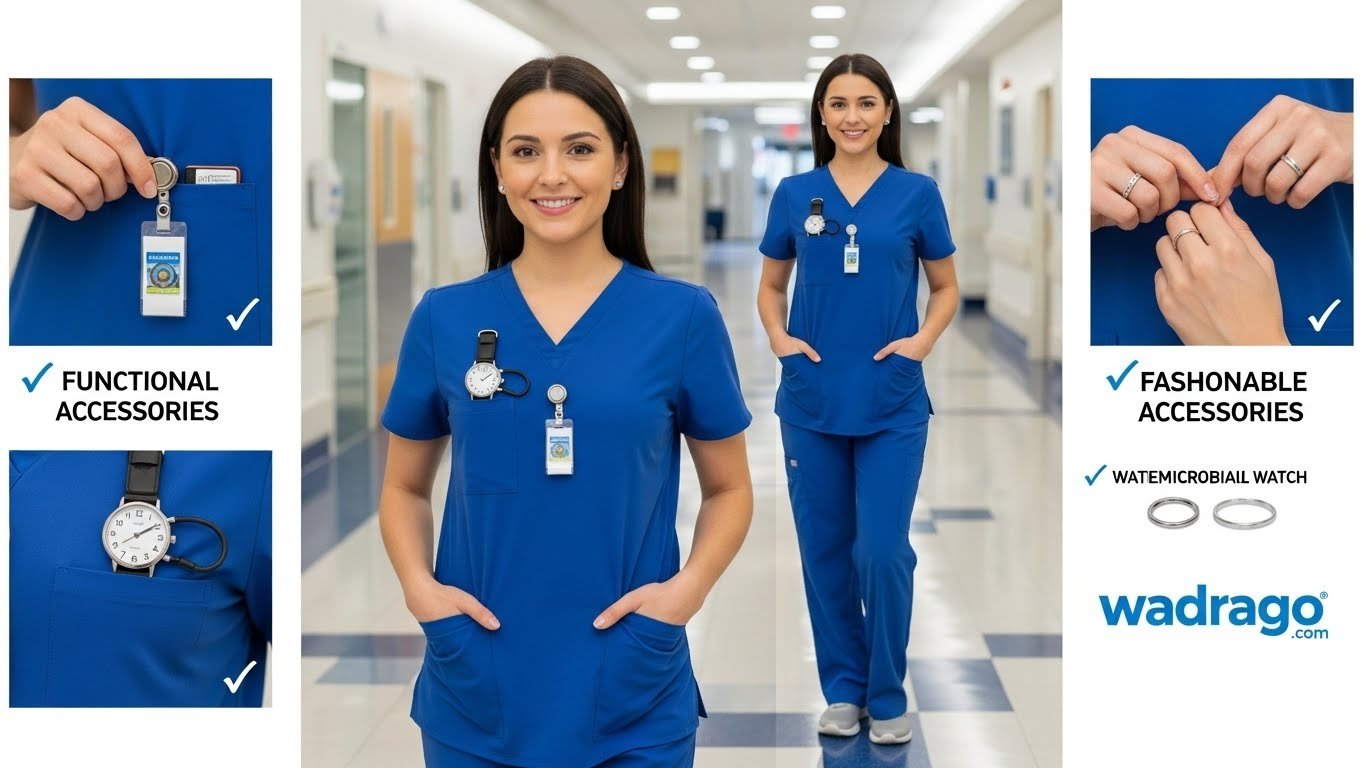

Master how to accessorize your scrubs with hospital-approved jewelry, functional watches, and stylish badge reels. Expert nursing tips for staying safe and fashionable at work.
Introduction
It’s 6:45 AM, and you’re rushing through the hospital corridors for morning report when a patient’s family member stops you. “Excuse me, are you a nurse?” they ask, squinting at your badge that’s flipped backward on your lanyard—again. You fumble with it while simultaneously checking your watch to see if you have time to grab that pre-shift coffee. Sound familiar?
After a decade of nursing across emergency departments, pediatric units, intensive care, and general medical floors, I’ve learned that the accessories we wear aren’t just about looking polished. They’re essential tools that help us deliver safe, efficient patient care while maintaining our professional identity. The challenge? Finding that sweet spot between functionality, infection control compliance, and yes—personal style.
Hospital dress codes exist for crucial reasons related to patient safety, infection prevention, and professional standards. Yet within those guidelines, there’s room to express your personality and optimize your workday efficiency. Whether you’re a new grad nurse preparing for your first shift or a seasoned healthcare professional looking to refresh your work wardrobe, understanding how to accessorize scrubs properly can make those demanding twelve-hour shifts more comfortable and confidence-boosting.

In this comprehensive guide, I’ll share evidence-based strategies for accessorizing your scrubs without compromising patient safety or violating facility policies. You’ll discover which accessories are hospital-appropriate, how to choose items that enhance rather than hinder your workflow, and practical tips from years of frontline healthcare experience.
Table of Contents
Understanding Hospital Dress Code Requirements for Accessories
Before we dive into specific accessory recommendations, it’s essential to understand why healthcare facilities maintain strict dress codes and what those policies typically include.
Why Healthcare Dress Codes Matter
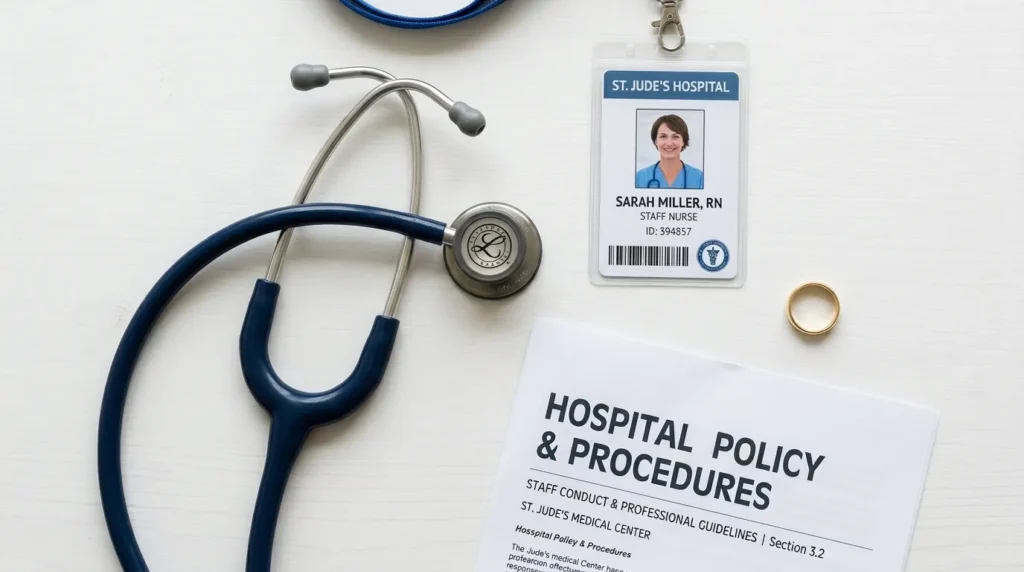
Hospital dress codes serve multiple purposes beyond aesthetics, including maintaining hygiene and infection control, ensuring patient trust and confidence, promoting professionalism throughout the facility, and supporting staff safety during patient care activities. Nursing dress codes are designed to keep both nurses and patients safe from physical harm, with jewelry restrictions aimed at preventing injuries during bedside care.
In my years working in acute care settings, I’ve witnessed how something as seemingly innocent as a dangling necklace can become a hazard when leaning over a patient’s bed, or how a ring can tear gloves during sterile procedures. These policies aren’t arbitrary—they’re rooted in decades of healthcare safety research.
Common Accessory Restrictions Across Healthcare Facilities
While specific policies vary by institution, most hospitals share similar guidelines for accessories:
Jewelry Limitations: Most healthcare settings require minimal jewelry to prevent safety hazards and maintain hygiene, with simple, unobtrusive pieces like small stud earrings or wedding bands being acceptable, while large, dangling items that could catch on objects or gloves should be avoided. Body piercing jewelry must not present safety or infection control hazards, and jewelry on visible body parts should be understated, small, and kept to a minimum.
Watch and Wristband Requirements: Healthcare workers need reliable timepieces, but traditional wristwatches raise infection control concerns. Skin under rings may be more heavily colonized with microorganisms than other hand areas, and wrist jewelry may prevent proper handwashing technique and skin drying (NCBI).
Badge Display Standards: ID badges must be worn at all times, and lanyards and badge-pulleys in patient care areas should only display hospital logos or hospital-affiliated messaging.
Fragrance Policies: Strong odors or excessive use of perfumes or cologne are inappropriate in healthcare settings, as patients and staff may have sensitivities or allergies
The Infection Control Perspective
One of the most critical aspects of accessory selection involves infection prevention. Studies show that healthcare workers wearing finger rings had tenfold higher median hand bacterial counts compared to those who abstained from wearing jewelry, with bacterial counts increasing stepwise with each additional ring PubMed Central. Healthcare-associated infections affect an estimated five to ten percent of hospitalized patients in Canada, with pathogens transmitted through direct or indirect contact, often with healthcare workers as the conduit.
During the COVID-19 pandemic, these concerns became even more pronounced. Jewelry may act as fomites, and SARS-CoV-2 shows the longest surface viability on stainless steel, a common jewelry material, while rings may inhibit proper handwashing technique, PubMed Central.
The Science Behind Accessory Safety in Healthcare
Understanding the medical rationale behind dress code policies helps us make informed decisions about which accessories truly serve our needs without compromising patient safety.
Hand Hygiene and Jewelry: What Research Tells Us

The World Health Organization considers hand hygiene—handwashing using soap and water or disinfectant hand rub—to be an important process in preventing pathogen transmission by contact, but questions exist regarding how wearing hand or wrist jewelry and nail polish may impact adequate hand disinfection.
The research findings are compelling. In a study of 564 cultures from surgical ICU nurses’ hands, individuals wearing finger rings had significantly higher bacterial counts than those without jewelry, and jewelry edges may create skin micro-tears subject to secondary infections, according to PubMed Central.
From my ICU experience, I’ve seen firsthand how meticulous hand hygiene becomes challenging with multiple rings or bracelets. During one particularly busy night shift, a colleague’s intricate ring caught on her glove during an emergent intubation, tearing it and potentially exposing her to bloodborne pathogens. That incident reinforced why our unit eventually adopted a “plain wedding band only” policy.
Strangulation and Entanglement Risks
Long hair should be tucked away, and jewelry such as earrings or necklaces that can be pulled should be avoided to prevent being grabbed by someone, CDC. Lanyards can pose a strangulation risk if they become entangled or if a patient grabs them, though retractable lanyard badge reels with breakaway clasps offer a safer alternative as they’re designed to detach when pulled with sufficient force.
I learned this lesson during my psychiatric nursing rotation when a confused patient suddenly grabbed my lanyard during an assessment. Thankfully, it had a breakaway clasp that immediately released, preventing injury. Not all nurses are so fortunate—this scenario occurs more often than you might think, particularly in emergency departments, pediatrics, and behavioral health units.
Cross-Contamination Through Lanyards
Staphylococcus aureus cultures from name badge lanyards were phenotypically and genotypically indistinguishable from the wearer’s nasal carrier strains. Lanyards had a mean age of 22 months, with poor hygiene, as only nine percent had ever been laundered, and molecular analysis showed that 26 percent of S. aureus nasal carriers shared an indistinguishable strain on their lanyard.
This research shocked many healthcare professionals when published. Those fabric lanyards we wear daily can harbor dangerous pathogens for months—or even years—if never cleaned. The study concluded that lanyards should not be recommended for staff in frontline clinical care.
Hospital-Appropriate Jewelry: What You Can Wear
Now that we understand the restrictions and their rationale, let’s explore which jewelry pieces you can safely incorporate into your work attire.
Earrings: The Safest Jewelry Option
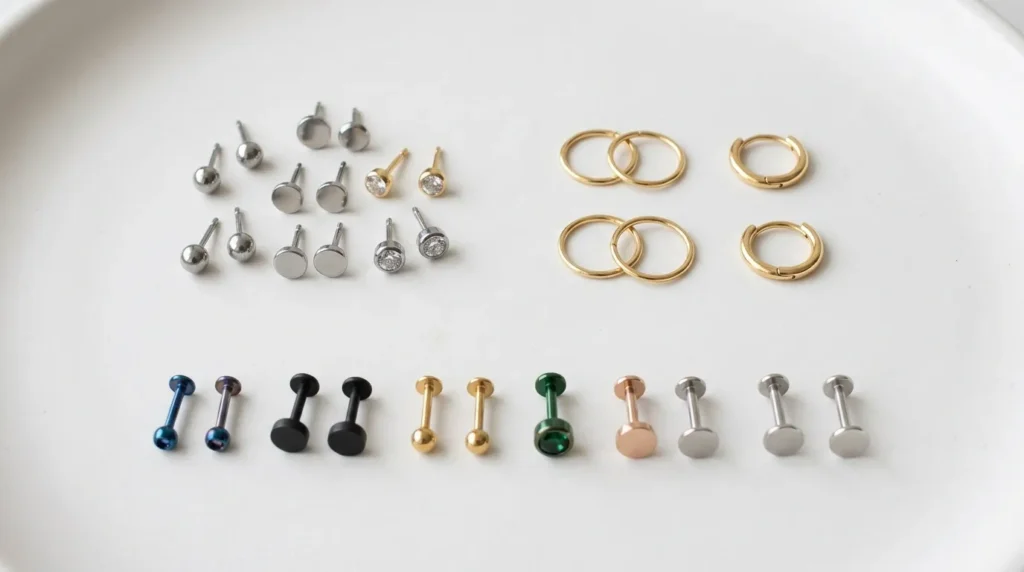
All earrings should be small and non-dangling to avoid snagging, and should be secured with a backing to prevent them from falling out and contaminating surfaces or open wounds. Dangling jewelry, including earrings, is not permitted due to safety concerns, but stud earrings are permitted in most clinical settings.
Recommended Earring Styles:
- Simple metal or gemstone studs (typically under 6mm diameter)
- Small hoops that sit close to the earlobe (usually 10-15mm maximum)
- Flat-back labret studs for additional piercings
- Hypoallergenic materials like surgical steel, titanium, or 14k gold
Styles to Avoid:
- Dangling or chandelier earrings
- Large hoops exceeding one inch in diameter
- Earrings with moving parts or charms
- Heavy statement pieces that could snag on stethoscopes
From my experience, I prefer small titanium studs because they’re lightweight enough that I forget I’m wearing them during long shifts, yet they add a subtle personal touch without violating any policies.
Rings: Proceed with Caution
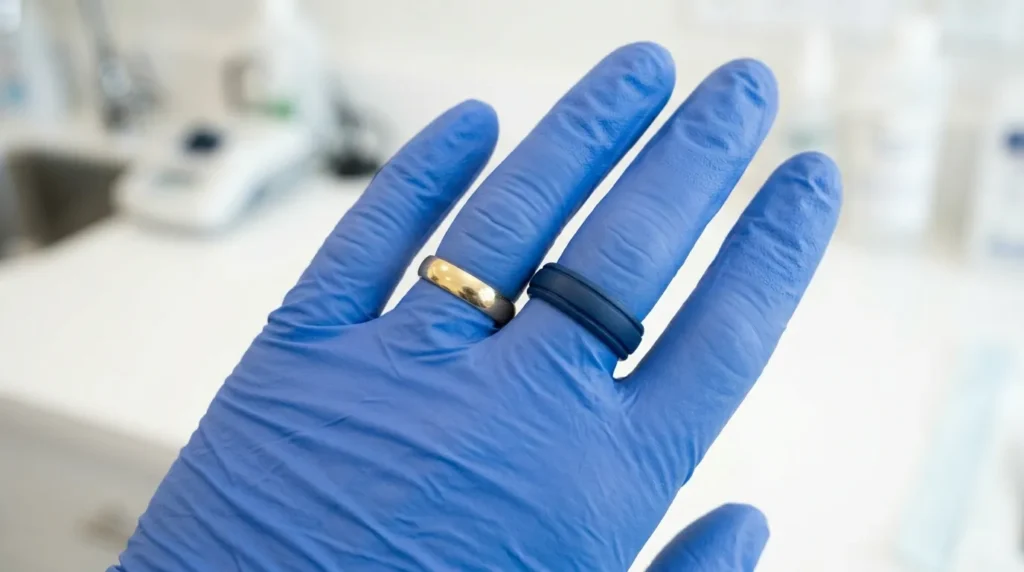
Ring policies vary significantly between facilities and even between departments within the same hospital. Some healthcare organizations limit staff to a maximum of two rings for infection control purposes, Columbushosp.
Generally Acceptable Ring Options:
- Simple wedding bands or engagement rings with smooth settings
- Flat-profile rings without protruding stones or designs
- Silicone rings designed for healthcare workers
Rings to Avoid at Work:
- Multiple stacked rings
- Rings with large or sharp gemstone settings
- Textured or ornate designs with crevices that harbor bacteria
- Any rings that interfere with glove donning
Many nurses have switched to medical-grade silicone rings for work. These flexible rings break away under pressure (preventing degloving injuries), are easy to clean, come in various colors and styles, and don’t interfere with glove integrity. During my ER years, I witnessed a degloving injury when a nurse’s metal ring caught on equipment—an incident that convinced many of us to switch to silicone alternatives for clinical shifts.
Necklaces: A Higher-Risk Accessory
Most facilities discourage or prohibit necklaces in direct patient care areas due to infection control and safety concerns. If your facility permits them, choose wisely.
Safer Necklace Choices:
- Short chains (16-18 inches) that don’t dangle when leaning over patients
- Smooth metal chains without pendants
- Medical alert jewelry when medically necessary
- Pieces that can be tucked completely inside your scrub top
Necklaces to Avoid:
- Long chains that swing freely
- Necklaces with large pendants or charms
- Religious medals worn outside scrubs (check facility policies)
- Anything with rough textures or sharp edges
Honestly, I stopped wearing necklaces to work years ago after repeatedly having them fall forward into sterile fields or dangle uncomfortably when assessing patients. The hassle outweighed any aesthetic benefit.
Bracelets and Watches: Special Considerations
Traditional bracelets are generally prohibited in most clinical settings due to hand hygiene requirements. However, watches deserve their own category as functional accessories.
Approved Watch Options:
- Fob watches clipped to scrubs (increasingly popular for infection control)
- Waterproof silicone band watches that can withstand frequent handwashing
- Smartwatches with smooth, cleanable bands
- Pocket watches on retractable reels
We’ll explore watch options in greater detail in the next section, as they’re essential tools rather than purely decorative accessories.
Functional Watches: Your Most Important Accessory
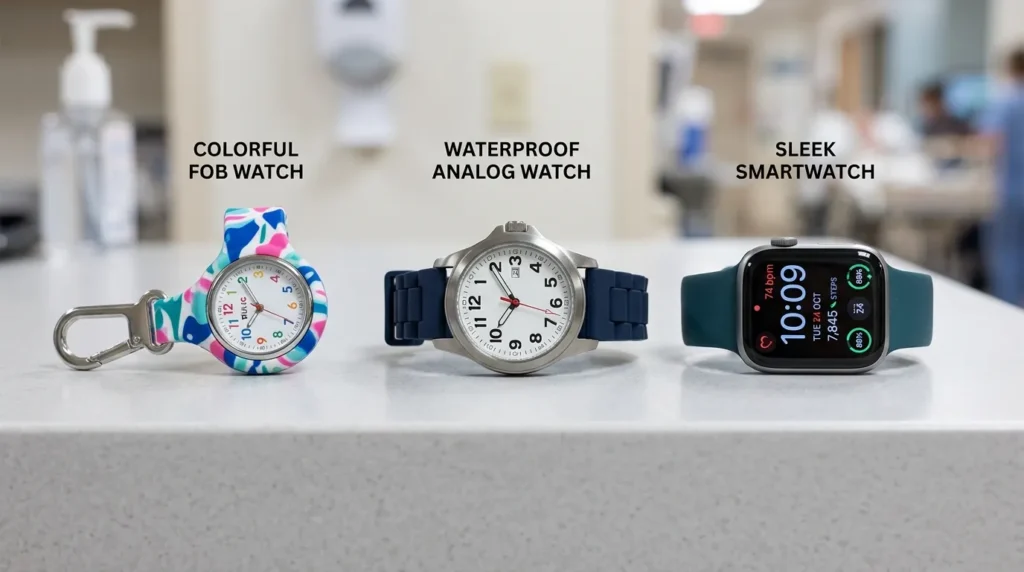
Nurses rely on watches as essential tools for effective patient care and time management, using them for accurate medication administration, punctuality, precise timing for medical procedures, monitoring vital signs accurately, and managing complex patient schedules.
Why Nurses Need Reliable Timepieces
Throughout my nursing career, I’ve used my watch countless times each shift to count respiratory rates, time medication administration, document event timelines during codes, measure apical pulses for a full minute, and track procedure durations. A reliable watch isn’t optional—it’s as essential as your stethoscope.
Key Features for Healthcare Watches
Water Resistance: As a nurse, handwashing becomes a frequent ritual that is an essential infection control measure, so a waterproof feature is not a nice-to-have but rather a must-have feature. Look for watches rated at least IP67 or higher, which can withstand frequent water exposure.
Luminosity for Night Shifts: In the nursing profession, you’ll likely have to read your watch in various lighting conditions, including poorly-lit rooms or during night shifts, so opting for a timepiece with high luminosity or a backlight function is invaluable. Watches with backlights or luminous hands are beneficial for shift work, especially night shifts.
Second Hand or Digital Seconds Display: Most facilities require watches with clearly visible seconds for taking manual vital signs. Choose analog watches with contrasting second hands or digital displays that show seconds prominently.
Durability: Choose a watch that can withstand daily wear and tear, as a resilient and shock-resistant watch is always a good investment for any active healthcare professional.
Easy to Clean: Smooth surfaces without crevices where fluids and pathogens can accumulate are essential. Avoid leather bands that can’t be properly disinfected.
Top Watch Recommendations for Nurses
Fob/Lapel Watches: These clip-on watches have become increasingly popular in healthcare settings because they eliminate wrist jewelry infection control concerns. Fob watches are made from resin, which is super durable and easy to clean, and are available in designs that glow in the dark, which is super handy for night shift nurses. They attach to your scrub top with a pin or clip, keeping time visible without interfering with hand hygiene.
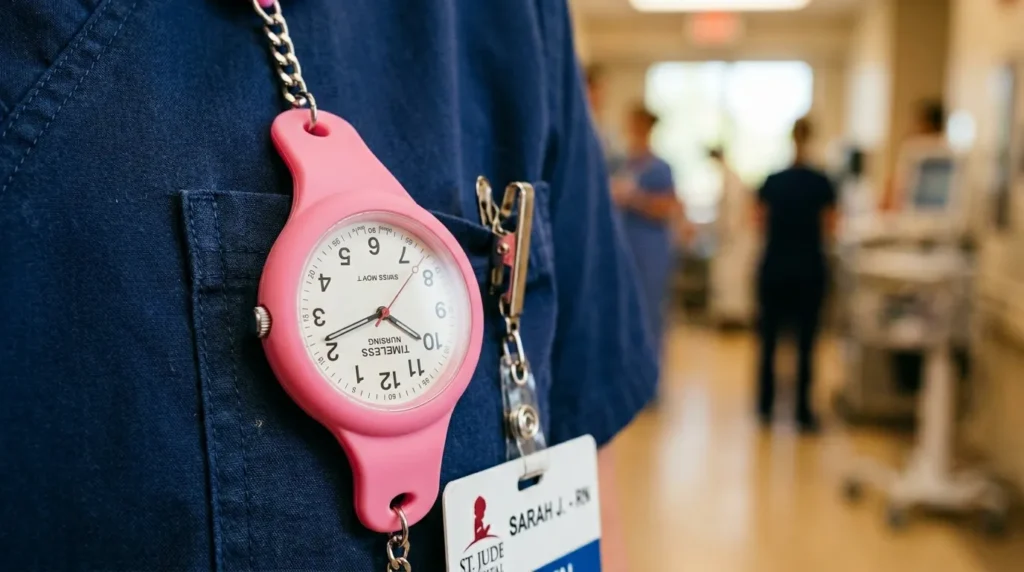
Silicone Band Watches: Speidel’s Scrub Watch features a silicone band that is easy to clean and resistant to bacteria, with a luminous dial and hands ensuring readability in low-light conditions, available in various colors to match any scrub uniform.
Classic Analog Options: The Timex Easy Reader Watch features large, easy-to-read numbers and an Indiglo night-light, making checking time during night shifts a breeze. Nurses often opt for Timex’s Indiglo series, which boasts a night-light feature, and the Ironman series, known for water resistance, a countdown timer, and alarm functions ideal for a nurse’s daily routine.
Smartwatch Options: The Apple Watch Series 8 features a crystal clear Always-On Retina display, easy to read in any position, is crack and dust-resistant, plus water resistant, making it perfect for nurses washing their hands frequently, and provides access to thousands of apps on the App Store. While more expensive, smartwatches offer additional health monitoring features and the ability to set medication reminders.
Budget-Friendly Choices: Casio offers an array of durable and reliable timepieces suitable for the nursing profession, with many models under $30 that meet all essential nursing watch requirements.
My Personal Watch Journey
I started nursing school with an inexpensive Walmart watch that lasted exactly two months before water damage rendered it useless. Next, I invested in a Timex Easy Reader with an Indiglo backlight—that watch served me faithfully for three years through ER rotations and ICU shifts. Eventually, I switched to a silicone fob watch that clips to my scrub pocket, eliminating any concerns about wrist jewelry policies while keeping time easily accessible. For my current role, I use an Apple Watch with a sport band that I can quickly wipe down with alcohol between patients.
Badge Reels and ID Holders: Safe and Stylish Options
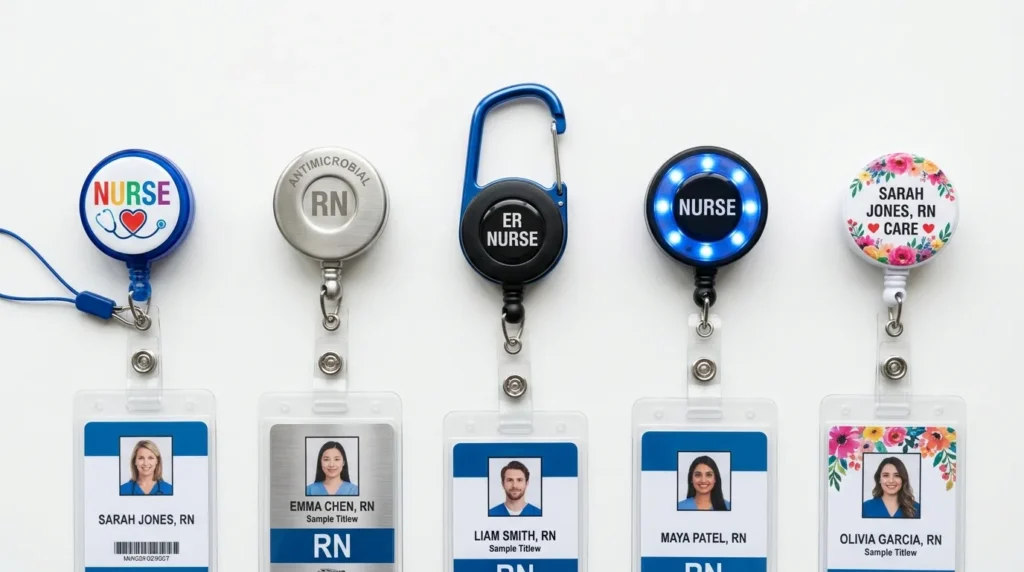
Badge reels are essential accessories for nurses, serving both functional and safety purposes by keeping identification badges, keys, and small tools accessible while ensuring they do not interfere with patient care activities.
Why Badge Reels Trump Traditional Lanyards
In healthcare environments, lanyards can easily come into contact with patients, surfaces, or contaminants, creating a potential source of transmission of harmful pathogens to other patients, staff, and family members. Wearing a lanyard around the neck can be uncomfortable during long shifts, and the lanyard can pose a safety risk if it gets caught on equipment or if a patient grabs it.
The research on lanyard contamination is concerning enough that many progressive healthcare facilities have banned them entirely in clinical areas. Badge reels offer a cleaner, safer alternative.
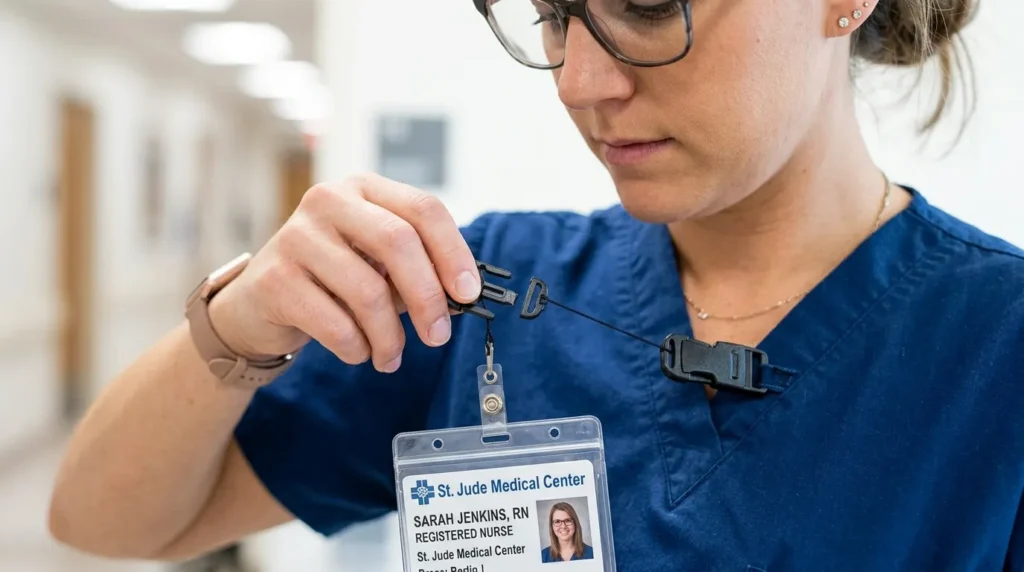
Essential Features for Nurse Badge Reels
Retractable Cord Length: Standard nurse badge reels typically feature a retractable cord extending up to 34 inches, allowing nurses to swipe ID cards or access tools without removing the reel from their uniforms. This length accommodates most badge readers while preventing excessive dangling that could contaminate surfaces.
No-Twist Design: When looking for an excellent nurse badge reel, research if the product description mentions a no-twist design or twist-free end fitting, as owning a badge reel that easily gets caught and twisted could pose a potential safety threat if snagged on equipment while working.
Quick-Release Mechanism: Nurses who work in emergency rooms or psychiatric wards know that patients may pull medical staff by their lanyards, making a quick-release system essential in situations where badges need to detach in an emergency.
Antimicrobial Materials: Antimicrobial badge reels are treated with substances that inhibit the growth of bacteria and other microbes, making them ideal for infection control in healthcare settings.
Attachment Versatility: Look for badge reels with multiple attachment options, such as alligator clips for V-neck scrub tops, belt clips for scrub pants waistbands, or carabiner clips for belt loops or pockets.
Types of Badge Reels for Different Nursing Specialties
Standard Retractable Reels: Standard badge reels come in a variety of designs, including plain colors, fun patterns, and customizable options where you can add your name, logo, or image, typically costing between $5 and $15. These work well for most nursing roles and offer the broadest design selection.
Heavy-Duty Models: For nurses who frequently access locked medication rooms, supply closets, and secured areas throughout their shift, heavy-duty badge reels with reinforced cords and stronger springs prevent premature breakage. Heavy-duty badge reels provide robustness and can handle heavier loads, but may be bulkier and more expensive.
Carabiner Badge Reels: Carabiner badge reels offer versatility in attachment options, making them ideal when considering comfort and how you prefer to carry your badge. These clip onto belt loops, D-rings on scrub pants, or utility loops, keeping your badge secure yet easily accessible.
Specialty LED Badge Reels: Specialty badge reels include those with built-in LED lights, which can be useful for nurses working in dimly lit areas or during night shifts. While more expensive, these prove invaluable when checking patient wristbands in darkened rooms or reading medication labels in low light.
Where to Attach Your Badge Reel Safely
Most facilities require badges displayed above the waist with no lanyards allowed, and many nurses clip their badges to the V-neck collar at the base of their scrub top. Other safe attachment points include scrub top pocket flaps, waistband of scrub pants, and belt loops using carabiner-style reels.
Avoid attaching badges to locations where they’ll dangle into sterile fields or come into frequent contact with patients during care activities.
Other Functional Accessories That Enhance Your Workday
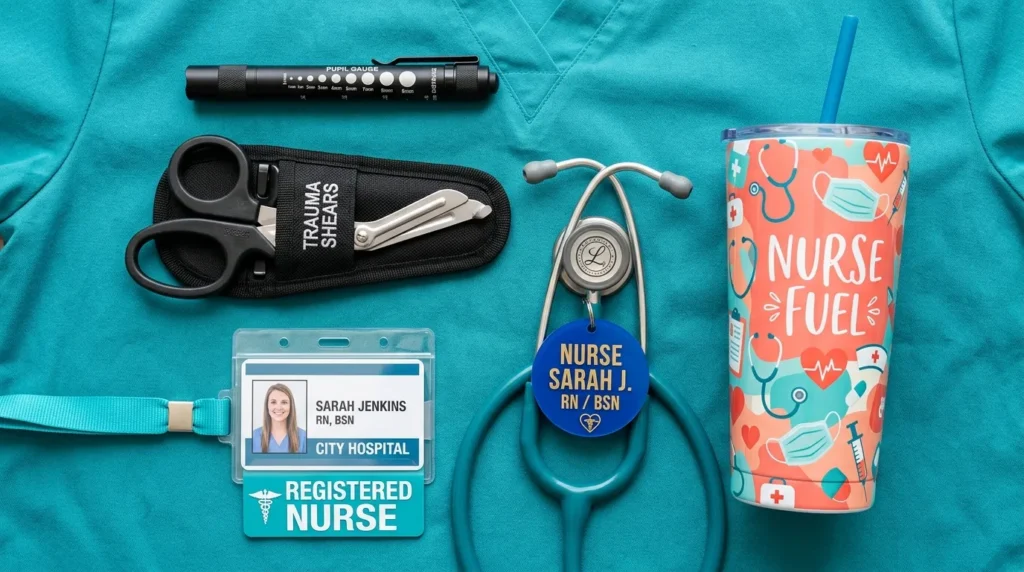
Beyond jewelry, watches, and badge reels, several other accessories can make your nursing shifts more efficient and comfortable.
Stethoscope Identification Tags
In shared workspaces, stethoscopes have a habit of walking away. Personalized stethoscope tags help identify your equipment while adding a touch of personality. Choose tags that clip securely to the tubing without interfering with acoustics. Some tags include writable surfaces for your name, while others feature fun designs or motivational quotes.
Compression Socks: The Unsung Hero
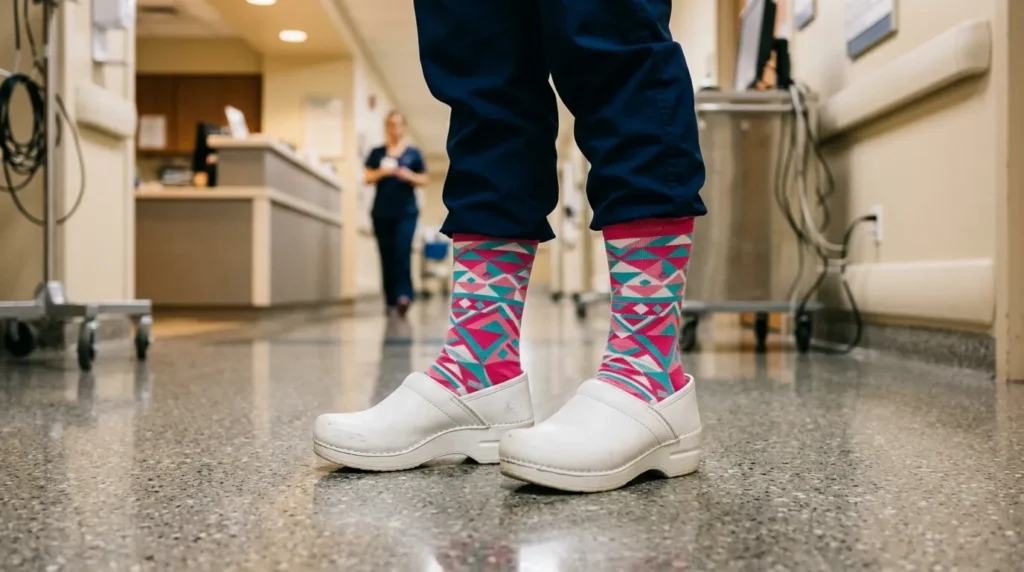
Compression socks support circulation during long hours on one’s feet. While technically clothing rather than accessories, compression socks deserve mention as they significantly impact comfort during twelve-hour shifts. Modern compression socks come in fun patterns and colors that peek out above your nursing shoes, allowing subtle personal expression while providing genuine health benefits.
Choose graduated compression stockings rated 15-20 mmHg for general use, or consult with your healthcare provider about higher compression levels if you experience significant leg swelling or have venous insufficiency.
Penlight with Pupil Gauge
A quality penlight is indispensable for neurological assessments. Look for models with sturdy pocket clips that won’t fall out when you bend over, bright LED lights that don’t die mid-shift, and built-in pupil gauges for quick reference. Many nurses personalize their penlights with colored tape or engraving to prevent them from disappearing into colleagues’ pockets.
Trauma Shears Holster
If you work in emergency, critical care, or surgical areas, a dedicated holster for trauma shears keeps them accessible without adding bulk to your pockets. Choose holsters with secure retention systems that prevent shears from falling out during rapid movement.
Badge Buddy Attachments
Custom-printed badge buddies offer a convenient and organized way to display important information such as job titles, certifications, and access levels, eliminating the need for multiple badges while enhancing professionalism. These plastic attachments slide onto your badge and can include information like your department, specialty certifications, or preferred pronouns.
Personalized Tumblers and Water Bottles
A personalized tumbler for nurses is a practical way to keep drinks hot or cold and can be customized to match your style or feature your name. Staying hydrated during busy shifts is crucial for maintaining energy and cognitive function, yet many nurses admit to forgetting to drink water. A distinctive, personalized tumbler makes your water bottle easy to identify in break rooms and serves as a visual reminder to hydrate.
Common Accessory Mistakes Nurses Make
Even experienced nurses sometimes fall into accessory traps that compromise safety, professionalism, or comfort. Here are mistakes I’ve witnessed (and sometimes made myself) throughout my career.
Wearing Fabric Lanyards Without Regular Laundering
Remember that research showing 91 percent of lanyards had never been laundered? Don’t be part of that statistic. If your facility allows lanyards in your work area, choose antimicrobial materials or commit to weekly laundering of fabric lanyards. Better yet, switch to easily cleanable badge reels made from wipeable materials.
Forgetting to Consider Patient Populations
An accessory appropriate for a general medical floor might be dangerous in behavioral health or pediatrics. Nurses know their work environment presents many situations where badge reels can get caught, including bed frames, poles holding intravenous solutions, medication carts, monitors, and vital signs measurement devices. Assess your specific work environment’s unique risks.
In pediatrics, avoid anything small and detachable that could become a choking hazard. In psychiatric settings, eliminate anything that could be grabbed and used to harm you or the patient. In the OR, follow the strictest jewelry restrictions even if you’re only occasionally circulating.
Choosing Fashion Over Function
That beautiful rose gold bracelet watch might look stunning, but if the leather band retains moisture and can’t be properly disinfected, it’s not appropriate for patient care areas. Similarly, decorative badge reels that don’t retract smoothly or have weak clips will frustrate you dozens of times per shift.
Overlooking the Cleaning Requirements
Silicone watch bands, badge reels, and stethoscope accessories all need regular cleaning. Create a routine to wipe down these items with approved disinfectant wipes at the end of each shift. Your watch band, in particular, contacts countless surfaces throughout your workday and should be considered contaminated.
Ignoring Facility-Specific Policies
What was acceptable at your nursing school clinical site might violate your employer’s dress code. Always review your facility’s specific accessory policies before your first shift. When in doubt, err on the side of caution and ask your manager or educator for clarification.
Wearing Accessories That Distract You
Smart watches with constant notifications, overly tight compression socks that require frequent adjustment, or badge reels with weak springs that don’t retract properly create unnecessary distractions. Your accessories should fade into the background, supporting your work rather than demanding attention.
Expert Tips from a Registered Nurse: Making Accessories Work
After ten years and thousands of clinical hours, I’ve developed strategies for maximizing the benefits of work accessories while staying compliant with healthcare regulations.
Create an “Accessory Routine”
Just as you have routines for starting and ending your shift, develop habits around your accessories. My routine includes wiping down my watch band with an alcohol wipe at shift’s end, checking that my badge reel clips securely before leaving home, ensuring my penlight battery is charged, and having backup accessories in my locker.
Invest in Quality, Not Quantity
One excellent badge reel that retracts smoothly for three years beats five cheap reels that break within months. The same applies to watches. Calculate the cost per use rather than focusing solely on the upfront price. That $80 quality watch worn daily for five years costs less than replacing $20 watches every six months.
Keep Backup Accessories in Your Locker
Murphy’s Law applies fully in healthcare. The shift you forget your watch is when you’ll need to manually count respiratory rates on five patients. I keep backup items in my locker, including an inexpensive but functional watch, spare badge reel, extra penlight with fresh battery, and basic stud earrings in case my regular ones cause irritation.
Match Accessories to Your Shift Type
Your accessory needs differ between day and night shifts. Night shift nurses need watches with superior backlighting, badge reels with LED features for low-light badge reading, and perhaps a small clip-on flashlight. Day shift workers might prioritize different features. Consider having separate “day” and “night” accessory sets optimized for each environment.
Coordinate with Your Scrub Colors
While function trumps fashion, there’s no reason you can’t have both. Modern badge reels, watch bands, and compression socks come in every color imaginable. Coordinating your accessories with your scrub colors creates a polished, put-together appearance that enhances your professional image.
Test New Accessories During Easier Shifts
Don’t try out a new badge reel attachment style during your first day on a new unit or when floating to an unfamiliar department. Test new accessories during regular shifts on your home unit when you can troubleshoot issues without added stress.
Consider Seasonal Adjustments
Summer shifts might mean choosing a lighter watch band or shorter badge reel cord to minimize heat and sweat. Winter shifts could accommodate layering scrub jackets, requiring adjustments in where you clip your badge reel for easy access despite extra layers.
Cost vs. Value: Accessory Investment Guide
Healthcare workers often feel pressure to purchase expensive accessories marketed specifically to nurses. Let’s break down what’s worth the investment and where you can save money without sacrificing quality.
Budget-Friendly Accessories (Under $20)
Basic Badge Reels: Standard retractable badge reels without special features typically cost $5-15 and serve most nurses perfectly well. Focus on solid construction over cute designs that cost more.
Entry-Level Watches: Reliable brands like Casio and Timex offer waterproof watches with second hands starting around $15-30. These budget options often outlast watches costing three times as much.
Simple Stud Earrings: Hypoallergenic studs don’t require designer price tags. Titanium or surgical steel studs suitable for 12-hour shifts can be found for under $20 at many retailers.
Mid-Range Investments ($20-80)
Quality Watches: Investing $40-80 in a purpose-built nurse watch from brands like Speidel or a durable Timex often provides better value than cheaper alternatives you’ll replace repeatedly.
Antimicrobial Badge Reels: Spending $15-25 on badge reels with antimicrobial properties makes sense given infection control concerns and the frequency with which you’ll touch and handle this item.
Compression Socks: Quality graduated compression socks typically cost $15-40 per pair. Given their impact on leg health and comfort during long shifts, this investment pays dividends in reduced fatigue and lower risk of venous problems.
Premium Options ($80+)
Smartwatches: Apple Watches, Samsung Galaxy watches, and Fitbit models range from $200-800. These offer additional features beyond timekeeping, including fitness tracking, heart rate monitoring, medication reminders, and communication capabilities. Consider whether these extras justify the cost for your personal situation.
Designer Silicone Rings: While basic silicone rings cost $10-30, designer medical-grade silicone rings can reach $50-150. Unless the enhanced aesthetics significantly matter to you, budget options perform identically from a safety standpoint.
Where to Save and Where to Splurge
Splurge On: Watches you’ll use daily for years, properly fitted compression socks with graduated compression, and antimicrobial badge reels that reduce infection risk.
Save On: Decorative badge reel designs (function matters more than patterns), backup accessories kept in your locker, and basic stud earrings that meet safety requirements.
Comparison Table: Accessory Investment Guide
| Accessory Type | Budget Option | Mid-Range Option | Premium Option | Best Value Recommendation |
| Badge Reel | $5-10 Standard reel | $15-25 Antimicrobial reel | $30+ Custom LED reel | Mid-range antimicrobial |
| Watch | $15-30 Basic digital or analog | $40-80 Purpose-built nurse watch | $200+ Smartwatch | Mid-range nurse watch or fob watch |
| Compression Socks | $10-15 Basic graduated compression | $20-35 Medical-grade with style options | $50+ Designer compression | Mid-range medical-grade |
| Stethoscope ID Tag | $5-8 Basic clip tag | $10-15 Personalized engraved | $20+ Custom designed | Budget basic tag |
| Penlight | $5-10 Basic LED | $15-25 Medical-grade with pupil gauge | $30+ Specialty diagnostic | Mid-range medical-grade |
How to Request Reasonable Accommodations
Some nurses require specific accessories for medical or religious reasons that may not align with standard dress code policies. Understanding how to request accommodations protects both your rights and maintains positive relationships with employers.
Medical Accommodations
If you need specific accessories for medical reasons, such as a medical alert bracelet for diabetes or a specific type of compression wear for lymphedema, your facility should accommodate these needs. Request a meeting with your manager and employee health or human resources. Provide documentation from your healthcare provider explaining the medical necessity. Discuss how the accommodation can be implemented while maintaining infection control and safety standards.
Religious Accommodations
Healthcare facilities should make reasonable accommodations to dress and grooming standards for medical and religious reasons, unless the accommodation poses an undue hardship or a risk to the safety or health of the individual or others. Memorial Healthcare System. Religious jewelry such as crosses, Stars of David, or other faith symbols typically can be accommodated if worn under scrubs or in ways that don’t interfere with patient care.
Documenting Your Request
Submit accommodation requests in writing, include relevant supporting documentation, suggest specific solutions that address both your needs and safety concerns, and be prepared to discuss alternative options if your first choice isn’t feasible.
Most healthcare employers want to support their staff and will work collaboratively to find solutions that respect your needs while maintaining patient safety standards.
Staying Current with Evolving Dress Code Trends
Healthcare fashion continues evolving, with industry trends toward more individual expression within safety parameters, increased focus on sustainable and antimicrobial materials, recognition of diverse cultural and religious needs, and adoption of technology-integrated accessories.
The demand for medical scrubs in 2024 that meet rigorous hygiene and comfort standards while aligning with healthcare industry trends is higher than ever. Uniform Advantage with many facilities, relaxing strict color codes, and embracing more personalized uniform options. This shift extends to accessories, where forward-thinking hospitals recognize that allowing appropriate personal expression improves staff morale and retention without compromising safety.
The Rise of Antimicrobial Accessories
One of the most significant trends in healthcare accessories involves antimicrobial treatments. Manufacturers now offer badge reels, watch bands, and even stethoscope tubing with built-in antimicrobial properties that inhibit bacterial growth. While these products cost slightly more, they align with healthcare’s increasing focus on infection prevention at every level.
During my recent transition to a new unit, I noticed our facility now recommends antimicrobial badge reels in the orientation packet—something that didn’t exist when I started nursing. This shift reflects growing awareness that every surface healthcare workers touch matters in the chain of infection transmission.
Technology Integration
Smartwatches have moved from controversial to commonplace in many healthcare settings. Initial concerns about infection control have been addressed through wipeable sport bands and regular disinfection protocols. These devices now serve multiple functions beyond timekeeping, including medication reminders via discreet vibrations, fitness tracking to encourage healthcare worker wellness, communication capabilities for team coordination, and health monitoring features that some hospitals incorporate into workplace wellness programs.
Some progressive facilities even issue standardized smartwatches to clinical staff, pre-loaded with facility-specific apps for medication references, clinical calculators, and secure messaging systems.
Sustainable and Ethical Accessories
Healthcare workers increasingly seek accessories made from sustainable materials, produced through ethical labor practices, designed for longevity rather than disposability, and recyclable at the end of life. This consciousness reflects nursing’s holistic approach to health, considering environmental factors alongside individual patient care.
Several companies now specialize in eco-friendly nurse accessories, from badge reels made from recycled plastics to organic cotton compression socks. While sometimes pricier, these options resonate with healthcare professionals who recognize the connection between environmental health and public health.
Putting It All Together: Your Accessory Action Plan
Let’s synthesize everything we’ve covered into a practical action plan for accessorizing your scrubs professionally and safely.
Step 1: Review Your Facility’s Specific Policies
Before purchasing anything, obtain a copy of your facility’s dress code policy. Many hospitals now include this in employee handbooks accessible through their intranet. Pay attention to department-specific variations—OR and procedural areas typically have stricter requirements than general medical floors.
If policies seem unclear, don’t guess. Email your manager or educator with specific questions. It’s better to ask before wearing something than to face awkward corrections during your shift.
Step 2: Assess Your Work Environment’s Unique Needs
Consider your specific nursing specialty when selecting accessories. Emergency department nurses need breakaway badge reels due to unpredictable patient behavior. ICU nurses require watches with clear second hands for frequent vital sign assessments. Pediatric nurses should avoid small, detachable items that curious little hands might grab. OR nurses must follow the strictest jewelry restrictions. Psychiatric nurses need quick-release mechanisms on all wearable items.
Your work environment dictates which accessories enhance your practice versus which create hazards. I learned this lesson when transferring from general medicine to the ER—accessories that worked perfectly well on a quiet medical floor became genuine safety concerns in the chaos of emergency care.
Step 3: Start with the Essentials
Build your accessory collection around three core items: a reliable watch (fob, traditional, or smartwatch, based on your preference and facility policy), a quality badge reel with appropriate safety features, and appropriate jewelry that complies with infection control guidelines.
These essentials form your foundation. Additional accessories like personalized penlights, stethoscope tags, and decorative compression socks can be added gradually as you identify specific needs and preferences.
Step 4: Establish a Cleaning Routine
Your accessories contact countless surfaces during each shift, making them potential vectors for pathogen transmission. Create a non-negotiable routine for cleaning items like wiping down watch bands with alcohol wipes after each shift, laundering fabric accessories weekly, disinfecting badge reels regularly, and replacing items when they show wear or damage that prevents effective cleaning.
I keep a container of disinfectant wipes in my locker specifically for accessory cleaning. Taking 60 seconds at shift’s end to wipe down my watch and badge reel has become as automatic as discarding my used pen.
Step 5: Evaluate and Adjust
After wearing your selected accessories for a few weeks, honestly assess whether they’re working. Do they interfere with any aspects of patient care? Are you frequently adjusting, fixing, or fighting with them? Do they create any safety concerns you didn’t anticipate? Are they comfortable throughout an entire 12-hour shift?
Don’t be afraid to abandon accessories that aren’t serving you well, regardless of how much you spent or how cute they looked when you ordered them. Function always trumps fashion in healthcare settings.
Step 6: Build a Backup System
Murphy’s Law applies universally in nursing. The day you desperately need to time something is the day your watch battery dies. Keep backup essentials in your work locker to prevent accessory emergencies from derailing your shift.
My backup kit includes an inexpensive but functional watch, spare badge reel, extra penlight, basic pair of compression socks, and simple stud earrings. This redundancy has saved me more times than I can count.
Special Considerations for Student Nurses
If you’re still in nursing school, accessory decisions involve additional factors beyond what working nurses consider.
Meeting Clinical Site Requirements
Each clinical rotation may have different expectations. Some teaching hospitals maintain extremely strict dress codes for students, while others mirror their staff policies. Always clarify requirements before your first day at a new clinical site. Don’t assume what worked at your previous rotation will be acceptable at the next.
I recommend keeping your student clinical accessory collection minimal and ultra-conservative. Simple stud earrings or none at all, a basic watch with a second hand, and a standard badge reel without elaborate decorations ensure you’ll meet requirements at even the strictest facilities. Save the fun, personalized accessories for after graduation, when you know your employer’s specific policies.
Budget Constraints
Student nurses rarely have disposable income for expensive accessories. Focus your limited budget on one quality watch that will last through school and into your first nursing job. Everything else can be basic and budget-friendly. That $300 Apple Watch can wait until you’re earning a nurse’s salary.
Your clinical instructors and preceptors won’t judge you on designer accessories—they’ll evaluate your clinical skills, critical thinking, and professionalism. A $15 Casio watch serves those ends as effectively as a luxury timepiece.
Building Professional Habits Early
The accessory habits you develop during nursing school often persist throughout your career. If you establish patterns of minimal, functional accessories and regular cleaning routines now, these practices become automatic by the time you’re working independently. Students who push boundaries with inappropriate jewelry or neglect cleaning protocols struggle to adjust when employed in facilities with stricter enforcement.
Acknowledgments
This article was written by Abdul-Muumin Wedraogo, a registered nurse with 10 years of clinical experience in emergency departments, pediatric units, intensive care units, and general medical wards. The medical information has been reviewed for accuracy based on current evidence-based practices and guidelines from the Centers for Disease Control and Prevention (CDC), World Health Organization (WHO), Occupational Safety and Health Administration (OSHA), and professional nursing organizations, including the American Nurses Association (ANA) and Emergency Nurses Association (ENA).
Disclaimer: This content is for informational purposes only and should not replace professional medical advice or your facility’s specific dress code policies. Always consult with your healthcare employer’s human resources department, infection control team, or occupational health services for guidance on appropriate workplace attire and accessories. Individual facility policies may vary significantly from the general recommendations provided here. The author assumes no liability for policy violations or workplace issues arising from the implementation of suggestions in this article.
Special thanks to the nursing communities on social media platforms who shared their experiences with various accessory products and helped identify common pain points in the healthcare workplace fashion. Thanks also to the infection control specialists who reviewed the safety recommendations for accuracy.
Frequently Asked Questions (FAQs)
Can nurses wear rings to work in hospitals?
Ring policies vary by facility, but most healthcare settings permit simple wedding bands or plain rings without protruding designs. Research shows that healthcare workers wearing finger rings had tenfold higher median hand bacterial counts compared to those without jewelry, and bacterial counts increased with each additional ring worn PubMed Central. Many nurses now choose medical-grade silicone rings as safer alternatives that reduce infection risk while allowing them to wear symbols of commitment. Always check your specific facility’s policy, as some units, like operating rooms, may prohibit all rings regardless of style.
What type of watch is best for nurses working 12-hour shifts?
The best watch for nurses should be waterproof (at least IP67 rated) to withstand frequent handwashing, feature a clearly visible second hand for timing vital signs and procedures, include backlighting or luminous features for night shift visibility, and have a durable, easily cleaned band material like silicone or metal. A waterproof feature is not a nice-to-have but rather a must-have feature for nurses since handwashing becomes a frequent ritual that is an essential infection control measure NursingEducation. Fob watches that clip to scrubs are increasingly popular as they eliminate wrist jewelry infection control concerns entirely. Budget-friendly options from Casio and Timex often perform as well as expensive alternatives.
Are fabric lanyards safe for nurses to wear?
Fabric lanyards pose significant infection control risks in healthcare settings. Research found that Staphylococcus aureus cultures from name badge lanyards were indistinguishable from the wearer’s nasal carrier strains, lanyards had a mean age of 22 months, with poor hygiene as only nine percent had ever been laundered, and 26 percent of S. aureus nasal carriers shared an indistinguishable strain on their lanyard. Additionally, lanyards create strangulation risks if grabbed by confused or agitated patients. Retractable badge reels made from wipeable, antimicrobial materials provide a safer alternative that’s easier to keep clean and poses fewer safety hazards.
Can nurses wear dangling earrings at work?
Most healthcare facilities prohibit dangling earrings due to safety concerns. All earrings should be small and non-dangling to avoid snagging, and should be secured with a backing to prevent them from falling out and contaminating surfaces or open wounds, Nursejournal.org. Dangling earrings can catch on equipment, be grabbed by patients, or fall into sterile fields during procedures. Small stud earrings or tiny hoops that sit close to the earlobe are typically acceptable in most clinical settings. When choosing earrings for work, prioritize hypoallergenic materials that you can comfortably wear throughout long shifts.
How often should I clean my work accessories?
Healthcare accessories should be cleaned with the same frequency and attention as other potentially contaminated items. Watch bands, badge reels, and stethoscope accessories should be wiped down with approved disinfectant wipes at the end of every shift, particularly if you work in high-acuity or isolation areas. Fabric items like lanyard attachments should be laundered weekly if your facility permits them. Badge reels made from metal or plastic should be wiped down daily. Develop a routine cleaning habit—I keep disinfectant wipes in my locker and clean my watch band and badge reel before leaving work each day. Replace accessories when they develop cracks, crevices, or damage that prevents thorough cleaning.
Are smartwatches appropriate for nursing work?
Smartwatches have become increasingly accepted in healthcare settings when used appropriately. They offer advantages like medication reminders through discreet vibrations, fitness tracking to monitor your own health during demanding shifts, easy-to-read time displays, and multiple timer functions. However, they require special considerations, including regular disinfection with approved cleaners that won’t damage electronics, sport bands that can withstand frequent handwashing, silencing notifications to avoid disrupting patient care, and compliance with facility policies about personal electronic devices. Some hospitals now issue standardized smartwatches to staff, while others restrict them in certain areas. Always verify your facility’s specific policy before wearing a smartwatch to work.
What should I do if my facility’s dress code conflicts with my religious beliefs?
Healthcare facilities are required to make reasonable accommodations for religious practices unless doing so creates undue hardship or safety risks. Healthcare facilities should make reasonable accommodations to dress and grooming standards for medical and religious reasons, unless the accommodation poses an undue hardship or a risk to the safety or health of the individual or others. Memorial Healthcare System. If you need to wear religious jewelry or head coverings, request a meeting with your manager and human resources. Bring documentation explaining the religious significance and suggest specific accommodations that maintain patient safety—for example, wearing religious medallions tucked inside scrubs or using hijab styles secured away from patient care areas. Most employers work collaboratively to find solutions that respect both faith traditions and infection control requirements.
Do expensive nurse watches perform better than budget options?
Not necessarily. While premium watches often offer superior craftsmanship and longer warranties, budget-friendly options from reputable brands like Casio and Timex frequently meet all functional requirements for nursing work. Casio offers an array of durable and reliable timepieces suitable for the nursing profession. The key features nurses need—water resistance, visible second hand, backlighting, and durability—are available across price ranges. A $20 Casio may outlast a $100 fashion watch that lacks proper water resistance. Focus on essential features rather than brand names. That said, if you use your watch dozens of times per shift, investing in a mid-range option ($40-80) often provides the best balance of quality and value.
Can I wear compression socks in colors that don’t match my scrubs?
Yes, and many nurses intentionally choose fun, colorful compression socks as a way to express personality while gaining health benefits. Compression socks support circulation during long hours on one’s feet, Knya. Since compression socks typically peek out only slightly above your shoes, they don’t significantly impact your overall professional appearance. Many companies now manufacture compression socks in fashionable patterns, bright colors, and themed designs specifically marketed to healthcare workers. As long as your compression socks meet any hosiery-related sections of your dress code (some facilities specify closed-toe footwear requirements that extend to visible socks), you have significant freedom in choosing styles that make you smile during long shifts.
What are the most important safety features for badge reels in high-risk units?
For nurses working in emergency departments, psychiatric units, or areas with higher patient safety risks, badge reels should include a quick-release mechanism that detaches when pulled with force to prevent strangulation or assault injuries, a no-twist retractable cord that won’t snag on equipment, antimicrobial material that inhibits bacterial growth, and a heavy-duty construction that withstands frequent, forceful extensions. In healthcare environments where patients may pull medical staff by their lanyards, a quick-release system is essential in situations where badges need to detach in an emergency. Some nurses in these settings prefer badge reels attached to belt loops or pants waistbands rather than shirt collars, as this positioning is harder for patients to grab. Always prioritize safety features over decorative elements when working in unpredictable clinical environments.
Conclusion: Accessorizing with Purpose

Learning how to accessorize scrubs appropriately represents more than following rules—it demonstrates your commitment to evidence-based practice, infection control, and professional standards. The accessories you choose each day impact your efficiency, safety, comfort, and professional image.
After ten years in nursing, I’ve come to view my work accessories as essential tools rather than optional add-ons. My watch isn’t jewelry; it’s a medical instrument I use dozens of times per shift. My badge reel isn’t a decoration; it’s a safety device that keeps my identification accessible while minimizing contamination risks. Even my choice to wear or not wear rings reflects my understanding of infection control principles and commitment to patient safety.
The good news? You can absolutely express your personality, maintain comfort, and enhance functionality while staying completely compliant with hospital dress codes. The key lies in understanding why policies exist, choosing accessories that serve genuine purposes, and maintaining them properly throughout their use.
Start with the essentials: a reliable watch, a quality badge reel, and minimal, appropriate jewelry. Build your collection gradually as you identify specific needs within your nursing specialty. Clean your accessories diligently, replace them when worn, and never hesitate to ask questions about your facility’s specific policies.
Remember, the most fashionable nurse is one who confidently delivers excellent patient care without distraction or safety concerns from inappropriate accessories. When you’ve mastered that balance, you’ll look—and feel—professionally put together, regardless of whether you’re wearing designer accessories or budget basics.
What’s your go-to nursing accessory that makes your shifts easier? Share your recommendations in the comments below, and don’t forget to subscribe to our newsletter for more practical tips from experienced nurses who’ve been exactly where you are now.
Stay safe, stay comfortable, and remember: every shift is an opportunity to provide excellent care while looking professionally polished in the process.
Medical References
Centers for Disease Control and Prevention. (2024). Hand hygiene in healthcare settings. Retrieved from https://www.cdc.gov/hand-hygiene/
Fagernes, M., & Lingaas, E. (2021). Factors interfering with the microflora on hands: A regression analysis of samples from 465 healthcare workers. Journal of Advanced Nursing, 77(4), 1906-1915.
Hautemaniere, A., Cunat, L., Diguio, N., Hartemann, P., & Hunter, P. R. (2010). Factors determining poor practice in alcoholic gel hand rub technique in French healthcare workers. Journal of Infection and Public Health, 3(1), 25-34.
Hoffman, P. N., Cooke, E. M., McCarville, M. R., & Emmerson, A. M. (1985). Micro-organisms isolated from skin under wedding rings worn by hospital staff. British Medical Journal, 290(6463), 206-207.
Kotsanas, D., Scott, C., Gillespie, E. E., Korman, T. M., & Stuart, R. L. (2008). What’s hanging around your neck? Pathogenic bacteria on identity badges and lanyards. Medical Journal of Australia, 188(1), 5-8.
National Institute for Occupational Safety and Health. (2024). Healthcare workers’ safety and health. U.S. Department of Health and Human Services, Centers for Disease Control and Prevention. Retrieved from https://www.cdc.gov/niosh/topics/healthcare/
Occupational Safety and Health Administration. (2024). Healthcare workplace safety. U.S. Department of Labor. Retrieved from https://www.osha.gov/healthcare
Salisbury, D. M., Hutfilz, P., Treen, L. M., Bollin, G. E., & Gautam, S. (1997). The effect of rings on microbial load of health care workers’ hands. American Journal of Infection Control, 25(1), 24-27.
Trick, W. E., Vernon, M. O., Hayes, R. A., Nathan, C., Rice, T. W., Peterson, B. J., … & Weinstein, R. A. (2003). Impact of ring wearing on hand contamination and comparison of hand hygiene agents in a hospital. Clinical Infectious Diseases, 36(11), 1383-1390.
World Health Organization. (2024). Hand hygiene: Why, how, and when? WHO Guidelines on Hand Hygiene in Health Care. Retrieved from https://www.who.int/publications/
Wongworawat, M. D., & Jones, S. G. (2007). Influence of rings on the efficacy of hand sanitization and residual bacterial contamination. Infection Control & Hospital Epidemiology, 28(3), 351-353.
Related Articles You May Find Helpful
Nursing Technology Guide: Smart Devices in Nursing Workflow Without Burnout
Step-by-Step Guide to Using Smart Watches for Vital Signs Reminders: Nurses Guide 101.
Apple Watch vs Garmin for Nurses & Doctors: Which Smartwatch Wins This Battle in Hospitals (2026)?
Best Smartwatches for Nurses in 2026: Features That Actually Matter
Apple Watch Series 10 vs Series 9 For Nurses: Health Features Best Comparison for Nurses and Healthcare Professionals
How to Read Your Apple Watch ECG PDF: A Nurse’s Walkthrough(2026)
Best Badge Reels That Don’t Break: 2-Year Testing by an ER/ICU Nurse (2026 Guide)
The Best Work Bags for Nurses: Tested for Durability by 10 years of Experience RN
10 Best Designer Tote Bags for Female Nurses: Professional and Spacious Options That Actually Work