
Discover the best luxury scrubs for nurses. A registered nurse with 10 years of experience reviews premium nursing uniforms for comfort, style, and durability. Find your perfect fit today!
Introduction: Why I Finally Invested in Luxury Scrubs After a Decade of Nursing
It was 2 AM during a particularly brutal night shift in the ICU when I realized my scrubs were actively working against me. The waistband had rolled down for the third time that hour, the fabric felt like sandpaper against my skin after 10 hours of constant movement, and the pockets—don’t even get me started on those shallow, useless pockets that couldn’t hold my penlight without it falling out every time I leaned over a patient.
After ten years of working in emergency rooms, pediatrics, ICUs, and general wards, I thought I’d tried every scrub brand on the market. I’d convinced myself that uncomfortable, ill-fitting scrubs were just part of the job. But here’s what I learned: luxury scrubs for nurses aren’t just about looking good (though that’s a nice bonus). They’re about investing in your physical comfort, professional confidence, and long-term occupational health.
As a registered nurse who’s spent countless 12-hour shifts on my feet, I’ve finally discovered that premium scrubs can actually make a measurable difference in how you feel at the end of your shift. In this comprehensive guide, I’m sharing my honest experience with the best premium scrubs available in 2025, breaking down which high-end nursing uniforms are actually worth the investment, and helping you make an informed decision that your body will thank you for.
Whether you’re a new grad nurse building your first professional wardrobe or an experienced healthcare professional ready to upgrade from basic scrubs, this designer scrubs review will give you everything you need to know—from fabric technology to pocket engineering, from antimicrobial properties to style longevity. Let’s dive into what makes luxury scrubs different, and more importantly, whether they’re worth your hard-earned money.
Table of Contents
Why Luxury Scrubs Matter for Healthcare Professionals: Beyond the Price Tag
The Hidden Cost of Cheap Scrubs
During my first few years as a nurse, I was all about finding the cheapest scrubs possible. Why spend more when you’re just going to get them stained with bodily fluids, right? Wrong. Here’s what those budget scrubs actually cost me:
Physical toll:
- Chronic lower back pain from poor fabric support and ill-fitting waistbands
- Skin irritation and chafing from rough, low-quality fabrics
- Increased fatigue from restrictive movement and poor moisture management
- Heat exhaustion during the summer months due to non-breathable materials
Professional impact:
- Scrubs that faded after just a few washes, making me look unprofessional
- Torn pockets and seams that required constant replacement
- Uncomfortable fabric that affected my focus and patient care quality
- Lack of confidence when presenting to families or during interdisciplinary rounds
According to a 2024 study published in the Journal of Occupational Health, healthcare workers who wear properly fitted, high-quality uniforms report 34% less musculoskeletal discomfort and 28% higher job satisfaction compared to those wearing standard institutional scrubs (Martinez et al., 2024). The research directly correlates uniform comfort with reduced workplace fatigue and improved patient interaction quality.
What Makes Scrubs “Luxury”?
Not all expensive scrubs are luxury scrubs, and not all luxury scrubs are expensive. After testing dozens of brands over the past decade, I’ve identified the key features that separate premium scrubs from their budget counterparts:
Advanced Fabric Technology:
- Four-way stretch materials that move with your body
- Moisture-wicking properties for temperature regulation
- Antimicrobial treatments that reduce odor and bacterial growth
- Wrinkle-resistant fabrics that maintain a professional appearance
- Fade-resistant dyes that keep colors vibrant after 100+ washes
Superior Construction:
- Reinforced stress points at pockets, knees, and seams
- Flatlock stitching that prevents chafing
- Thoughtfully designed pocket placement based on ergonomic research
- Adjustable features like drawstrings, elastic, and zippered closures
- Pre-shrunk fabrics that maintain size consistency
Functional Design Elements:
- Multiple deep pockets with secure closures
- Breathable mesh panels in high-sweat areas
- Contoured waistbands that don’t roll or dig in
- Adjustable hems and inseams for different heights
- Stylish silhouettes that flatter various body types
The Centers for Disease Control and Prevention (CDC) guidelines for healthcare worker attire emphasize that uniforms should facilitate proper hygiene practices while allowing unrestricted movement during patient care activities (CDC, 2024). Luxury scrubs often exceed these basic requirements by incorporating antimicrobial technologies and easy-care features that support infection control protocols.
The Science Behind Comfortable Nursing Scrubs: A Medical Perspective
Ergonomics and Occupational Health
As nurses, we understand anatomy and body mechanics when it comes to patient care, but we often neglect these same principles when choosing our own work attire. Let me break down the science of why comfortable nursing scrubs matter from a clinical perspective.
Biomechanics of Movement: The average nurse walks 4-5 miles during a 12-hour shift, performs dozens of patient transfers, and engages in repetitive bending, reaching, and lifting motions (American Nurses Association, 2024). Restrictive clothing can limit the range of motion by up to 15%, increasing the risk of muscle strain and compensatory movement patterns that lead to injury.
Premium scrubs with four-way stretch fabrics allow unrestricted movement in all planes of motion—sagittal, frontal, and transverse. This freedom of movement reduces the biomechanical stress on joints and muscles, particularly in the shoulders, hips, and lower back.
Thermoregulation and Performance: Healthcare facilities maintain temperatures between 68-73°F for patient comfort, but nurses generate significant body heat through constant physical activity. Poor moisture management in scrubs can lead to:
- Increased core body temperature
- Dehydration and electrolyte imbalance
- Reduced cognitive function and decision-making capacity
- Skin breakdown from prolonged moisture exposure
Research published in the International Journal of Nursing Studies found that healthcare workers wearing moisture-wicking fabrics maintained more stable core body temperatures and reported 41% less perceived exertion during shifts compared to those in standard cotton scrubs (Thompson & Richards, 2024).
Infection Control Considerations
Let’s address the elephant in the room: are luxury scrubs actually better for infection control, or is it just marketing?
The Occupational Safety and Health Administration (OSHA) requires that healthcare workers’ clothing minimize contamination risk and be easily laundered (OSHA, 2024). While OSHA doesn’t mandate specific fabric types, emerging research supports the infection control benefits of certain premium scrub features:
Antimicrobial Fabric Treatments: Many luxury scrub brands now incorporate silver ion technology or other antimicrobial treatments that inhibit bacterial growth on fabric surfaces. A 2024 study in the American Journal of Infection Control demonstrated that antimicrobial-treated scrubs harbored 68% fewer colony-forming units of common healthcare-associated pathogens compared to untreated fabrics after eight hours of wear (Davidson et al., 2024).
Fluid-Resistant Properties: Premium scrubs often feature fabric treatments that repel bodily fluids, reducing the risk of contamination through clothing. This is particularly important in high-risk areas like emergency departments and operating rooms.
Easy-Care Durability: Luxury scrubs maintain their integrity through repeated high-temperature washing, which is essential for proper disinfection. Budget scrubs often deteriorate after 20-30 washes, potentially harboring pathogens in damaged fabric fibers.
Top 7 Luxury Scrub Brands for Nurses in 2026: Detailed Reviews
1. FIGS: The Industry Leader in Premium Medical Apparel
Price Range: $38-$98 per piece
Comfort Rating: ⭐⭐⭐⭐⭐ (5/5)
Style Rating: ⭐⭐⭐⭐⭐ (5/5)
Best For: Nurses who want proven performance with fashion-forward designs
After testing FIGS scrubs across all four of my clinical specialties, I can confidently say they’ve earned their reputation. Their proprietary FIONx fabric is genuinely different—it’s ridiculously soft, has four-way stretch, and the wrinkle-resistance is no joke. I’ve literally pulled these out of my gym bag after they sat crumpled for two days, and they looked perfectly presentable.
What Sets FIGS Apart:
- Antimicrobial fabric that actually works (I’ve done the smell test after 14-hour shifts)
- Ridiculously well-designed pockets—multiple sizes, secure zippers, and strategic placement
- Consistent sizing across their entire line
- Colors that stay vibrant after 100+ washes
- Comfortable without being baggy or shapeless
My Experience:
I wore the FIGS Catarina joggers during a particularly intense trauma shift in the ER. We had multiple critical patients, I was running between rooms, kneeling, reaching, lifting—and these scrubs moved with me effortlessly. The jogger-style ankle kept me from tripping (a real hazard with traditional flare pants), and the mid-rise waistband never rolled down despite all the bending.
The pockets deserve special mention. I could fit my phone, penlight, scissors, alcohol swabs, pen, and small notebook without feeling bulky or having things fall out. As someone who’s lost countless pens and penlights to poorly designed pockets, this was game-changing.
Considerations:
FIGS runs true to size, but their petite line is genuinely designed for shorter healthcare professionals—not just shortened regular sizes. If you’re under 5’4″, definitely try the petite options. The investment is significant, but I’ve had my first pair for three years now with minimal wear.
2. Jaanuu: Luxury Meets Sustainability
Price Range: $44-$88 per piece
Comfort Rating: ⭐⭐⭐⭐⭐ (5/5)
Style Rating: ⭐⭐⭐⭐ (4/5)
Best For: Eco-conscious nurses who don’t want to compromise on performance
Jaanuu has quietly become my go-to for everyday wear. Their scrubs are made from recycled plastic bottles (seriously!), but you’d never know it from the feel. The fabric is buttery-soft and has excellent recovery—meaning it doesn’t stretch out during your shift.
Standout Features:
- Sustainable production without sacrificing quality
- Innovative pocket designs with hidden compartments
- Extensive size range, including tall and petite options
- Subtle style details that look professional but interesting
- Moisture-wicking performance comparable to athletic wear
My Experience:
I tested the Jaanuu Skinny Pants during a pediatric rotation, where I was constantly bending down to patient level, playing on floors, and cleaning up various messes. The four-way stretch was incredible—I could sit cross-legged comfortably for wound care procedures. The fabric also repelled everything from juice spills to worse.
One feature I particularly appreciate is the hidden pocket inside the right cargo pocket—perfect for securing my badge or keeping personal items separate from work supplies. It’s these thoughtful details that justify the premium price.
Considerations:
Jaanuu’s color selection is more limited than FIGS, focusing on classic, professional tones. If you want bold patterns or seasonal colors, you might be disappointed. However, their core colors are timeless and professional.
3. Mandala Scrubs: The Ultimate in Technical Performance
Price Range: $54-$98 per piece
Comfort Rating: ⭐⭐⭐⭐⭐ (5/5)
Style Rating: ⭐⭐⭐⭐ (4/5)
Best For: ICU and OR nurses who need maximum functionality
Mandala is what happens when athletic apparel technology meets medical uniforms. These scrubs feel more like high-end workout gear, and I mean that in the best possible way.
Technical Specifications:
- Compression panels for muscle support during long shifts
- Strategic mesh panels for breathability
- Seamless construction in high-friction areas
- UPF 50+ sun protection (great for transport nurses)
- Advanced moisture management system
My Experience:
During a particularly brutal ICU week where I was constantly repositioning heavy patients, performing chest compressions, and running codes, the Mandala Chakras pants provided actual muscular support. The subtle compression in the thighs and calves reduced the leg fatigue I typically experience after 12-hour shifts.
The seamless construction is brilliant—no chafing whatsoever, even during the hottest summer months. I also appreciate that the fabric is completely opaque; you never have to worry about visible underwear lines or transparency when bending.
Considerations:
These are definitely more athletic-looking than traditional scrubs. Some conservative healthcare settings might find them too casual, so check your facility’s dress code. They’re also sized more like athletic wear, so I recommend sizing up if you’re between sizes.
4. Medelita: Classic Professional Styling Meets Modern Comfort
Price Range: $48-$89 per piece
Comfort Rating: ⭐⭐⭐⭐ (4/5)
Style Rating: ⭐⭐⭐⭐⭐ (5/5)
Best For: Nurses who prefer traditional, polished looks with luxury features
Medelita takes a different approach to luxury scrubs. Rather than athletic-inspired designs, they focus on classic medical professional aesthetics with premium fabric and construction.
Distinctive Elements:
- Tailored fit that looks structured and professional
- Premium cotton-poly blends that feel substantial
- Medical-grade durability tested for 300+ wash cycles
- Sophisticated color palettes
- Traditional styling with modern comfort features
My Experience:
I wear Medelita when I’m doing education sessions, serving on hospital committees, or during visits from regulatory agencies—basically, when I need to look particularly polished and professional. The fabric has a quality weight to it that just feels premium.
The Medelita Emma top has princess seams that create a tailored silhouette without being tight or restrictive. I’ve received more compliments on these scrubs from physicians, administrators, and families than any other brand. There’s something about the classic medical professional look that conveys competence and expertise.
Considerations:
These aren’t as stretchy as athletic-inspired brands, which some nurses might find restrictive. The trade-off is a more structured, professional appearance. They also take longer to break in—the fabric softens beautifully after several washes, but feels slightly stiff initially.
5. Healing Hands Purple Label: Affordable Luxury Entry Point
Price Range: $32-$58 per piece
Comfort Rating: ⭐⭐⭐⭐ (4/5)
Style Rating: ⭐⭐⭐⭐ (4/5)
Best For: Nursing students or new grads building their first quality scrub wardrobe
If you’re not ready to drop $200+ on a complete scrub set, Healing Hands Purple Label offers impressive luxury features at a more accessible price point.
Value Propositions:
- Yoga-inspired stretch fabric
- Antimicrobial and moisture-wicking properties
- Multiple pocket options
- Wide range of colors and prints
- Comparable quality to brands costing 30-40% more
My Experience:
I recommend these to all my new grad mentees as an introduction to quality scrubs without breaking the bank on student loan budgets. The fabric is genuinely comfortable, and the stretch is excellent for the price point.
I particularly like the Renee jacket—it has a modern asymmetrical zipper and enough pockets to function as a mobile nursing station. The fabric pills slightly after extended wear, but for the price, it’s an acceptable trade-off.
Considerations:
These aren’t quite as durable as the premium brands—I typically get 1-2 years of regular wear versus 3-4 years with FIGS or Jaanuu. However, at half the price, the cost-per-wear is still competitive.
6. WonderWink PRO: Performance-Focused Professional Scrubs
Price Range: $34-$68 per piece
Comfort Rating: ⭐⭐⭐⭐ (4/5)
Style Rating: ⭐⭐⭐ (3/5)
Best For: Nurses prioritizing function and durability over fashion
WonderWink PRO focuses on technical performance and durability rather than trendy styling. These are working scrubs designed by healthcare professionals for healthcare professionals.
Performance Features:
- Stain-release technology
- Reinforced stress points
- Moisture-wicking and antimicrobial treatment
- Extensive pocket systems
- Industry-leading durability ratings
My Experience:
These are my “workhorse” scrubs for rough shifts. During my ER rotations, where scrubs take serious abuse, WonderWink PRO consistently outlasts other brands. I’ve had blood, betadine, and various other hospital substances wash out completely thanks to the stain-release technology.
The cargo-style pockets are enormous and strategically placed. I can carry everything I need without a utility belt or pockets dangling awkwardly.
Considerations:
The styling is definitely more utilitarian than fashionable. If aesthetics are important to you, these might not be your first choice. However, if you work in high-intensity environments where function trumps fashion, they’re excellent.
7. Barco One: Technology-Driven Medical Fashion
Price Range: $42-$78 per piece
Comfort Rating: ⭐⭐⭐⭐⭐ (5/5)
Style Rating: ⭐⭐⭐⭐ (4/5)
Best For: Nurses who want cutting-edge fabric technology with modern designs
Barco One incorporates some of the most advanced fabric technology in the medical apparel industry. Their proprietary fabric blend includes ridiculously impressive moisture management.
Technology Highlights:
- Breathable mesh panels in strategic locations
- 4-way stretch with 50+ UPF protection
- Wrinkle-release and soil-release finishes
- Eco-friendly production using recycled materials
- Flattering, modern silhouettes
My Experience:
I tested these during the summer months in a facility with inconsistent air conditioning. The breathability is genuinely noticeable—I stayed significantly cooler than in standard scrubs. The fabric dries quickly if you get splashed, which happened frequently during my general ward rotation.
The athletic-inspired designs look modern without being too casual. The jogger styles have become my favorites for their combination of comfort and professional appearance.
Considerations:
Barco One sizing can be inconsistent between styles. Order multiple sizes initially to find your best fit, then stick with styles that work for your body type.
Luxury Scrubs Comparison Table
| Brand | Price Range | Fabric Tech | Durability | Style Options | Best Feature |
| FIGS | $38-98 | FIONx proprietary blend, antimicrobial | ⭐⭐⭐⭐⭐ | Extensive, fashion-forward | Superior pocket design |
| Jaanuu | $44-88 | Recycled materials, 4-way stretch | ⭐⭐⭐⭐⭐ | Moderate, professional | Sustainability + performance |
| Mandala | $54-98 | Compression panels, seamless tech | ⭐⭐⭐⭐ | Athletic-inspired | Muscle support features |
| Medelita | $48-89 | Premium cotton-poly blend | ⭐⭐⭐⭐⭐ | Classic, tailored | Professional appearance |
| Healing Hands | $32-58 | Yoga-inspired stretch | ⭐⭐⭐ | Wide variety | Value for quality ratio |
| WonderWink PRO | $34-68 | Stain-release technology | ⭐⭐⭐⭐⭐ | Utilitarian | Stain resistance |
| Barco One | $42-78 | Moisture management system | ⭐⭐⭐⭐ | Modern, varied | Breathability |
How to Choose the Right Luxury Scrubs for Your Nursing Specialty
Emergency Department and Trauma Nursing
Priority Features:
- Stain-resistant or stain-release fabric treatments
- Multiple secure pockets with easy access
- Durable construction in high-wear areas
- Quick-drying, moisture-wicking properties
- Colors that hide stains (navy, charcoal, wine)
Recommended Brands: FIGS, WonderWink PRO, Jaanuu
The ER is unpredictable and physically demanding. You need scrubs that can withstand splashes of various fluids while maintaining a professional appearance. I learned this the hard way when wearing light-colored scrubs during a particularly messy trauma—some stains just don’t come out of cheap fabrics.
Dark colors are your friend in emergency nursing, but quality matters even more than color. Invest in scrubs with proven stain-release technology. FIGS and WonderWink both excel in this area. The antimicrobial properties also become more important when you’re exposed to higher pathogen loads.
Pocket design is critical. You need quick access to essentials without fumbling—seconds matter in emergency situations. Look for scrubs with varied pocket sizes, secure closures for items you can’t afford to lose (like your badge or phone), and reinforced pocket edges that won’t tear when you’re moving quickly.
Intensive Care Unit Nursing
Priority Features:
- Four-way stretch for patient positioning and transfers
- Reinforced knees and seat areas
- Compression features for circulation support
- Antimicrobial treatment
- Professional appearance for family interactions
Recommended Brands: Mandala, Medelita, FIGS
ICU nursing involves constant physical challenges—turning heavy patients, performing CPR, sitting for extended charting sessions, and maintaining a calm, professional demeanor during family conferences. Your scrubs need to support all these activities.
The compression features in Mandala scrubs genuinely reduce leg fatigue during 12-hour shifts spent predominantly on your feet. The four-way stretch is essential when you’re positioning critically ill patients or performing chest compressions. I can’t count how many times I’ve been grateful for scrubs that move with me during codes.
At the same time, ICU nurses often spend significant time talking with families during difficult conversations. The professional appearance of brands like Medelita helps convey competence and inspire confidence during these crucial interactions.
Pediatric Nursing
Priority Features:
- Colorful or pattern options
- Easy-care, stain-resistant fabrics
- Comfortable for floor-sitting and bending
- Durable knees and seat areas
- Cheerful, approachable styling
Recommended Brands: Jaanuu, FIGS, Healing Hands
Pediatric nursing has unique requirements. Children respond better to healthcare providers in colorful, friendly attire. Studies show that pediatric patients experience less anxiety when nurses wear colorful scrubs with engaging patterns compared to traditional medical colors (Wilson et al., 2024).
You also need scrubs that can handle sitting on floors, kneeling for procedures at toddler height, and getting sticky fingers wiped on you. The four-way stretch in Jaanuu scrubs makes floor-sitting comfortable, while their stain-resistant properties handle the inevitable messes.
Pattern options are abundant in most luxury brands now. FIGS offers seasonal prints specifically designed to appeal to children. I have a set of cartoon animals that immediately puts young patients at ease.
Operating Room Nursing
Priority Features:
- Fluid-resistant fabric
- Minimal embellishments (infection control)
- Wrinkle-resistant for a professional appearance
- Temperature regulation (ORs can be cold)
- Secure closures (no loose strings)
Recommended Brands: Medelita, Barco One, FIGS
OR nursing requires scrubs that meet strict infection control standards while providing comfort during long surgical procedures. Fluid resistance is paramount—you need fabrics that repel blood and other surgical fluids without absorbing them.
Medelita scrubs are popular in surgical settings for good reason. Their classic, polished appearance meets the professional standards expected in operating rooms, while the quality fabric withstands repeated high-temperature sterilization washing.
Temperature regulation becomes critical in ORs, which are kept cool for infection control and patient safety. Look for scrubs with breathable fabrics that can be layered effectively. Avoid styles with excessive zippers, buttons, or embellishments that could harbor pathogens.
General Medical-Surgical Nursing
Priority Features:
- Versatile styling for varied patient populations
- Balanced comfort for mixed sitting/standing/walking
- Professional appearance
- Practical pocket systems
- Easy-care maintenance
Recommended Brands: FIGS, Medelita, Jaanuu
Med-surg nursing is incredibly diverse—you might go from ambulating post-surgical patients to wound care to patient education in the same hour. You need scrubs that are professional enough for discharge teaching with families but comfortable enough for physical patient care.
The versatility of FIGS makes them ideal for general nursing. They look polished enough for professional interactions while being functional for hands-on care. The pocket systems accommodate the wide variety of supplies that med-surg nurses carry.
Medium tones work well in general nursing, professional but not too intimidating. Teal, navy, and deep purple are popular choices that hide minor stains while maintaining an approachable appearance.
Fabric Technology Breakdown: Understanding What You’re Paying For
Four-Way Stretch vs. Two-Way Stretch
Let me explain this in terms we all understand from anatomy class. Two-way stretch fabrics expand in one plane of movement—usually horizontal (side to side). Four-way stretch expands in two planes—horizontal and vertical (side to side and up and down).
Clinical Application:
When you’re doing patient care, you’re not just moving side to side. You’re reaching overhead for IV pumps, bending down to assess pedal pulses, twisting to access supplies behind you, and squatting to help patients with mobility. Four-way stretch accommodates all these movements without restricting the range of motion.
The difference is immediately noticeable. Two-way stretch scrubs create pulling sensations when you bend or reach. Four-way stretch moves with you seamlessly, reducing muscle fatigue from compensatory movement patterns.
Moisture-Wicking Technology
This isn’t just marketing jargon—it’s actual textile science that impacts your comfort and potentially your health.
How It Works:
Moisture-wicking fabrics use hydrophobic (water-repelling) fibers combined with hydrophilic (water-attracting) fibers. The hydrophobic interior layer pushes moisture away from your skin, while the hydrophilic outer layer spreads it across a larger surface area for faster evaporation.
Why It Matters:
Nurses generate significant sweat through physical activity. When sweat stays on your skin, it creates several problems:
- Promotes bacterial and fungal growth
- Causes chafing and skin breakdown
- Reduces thermoregulation efficiency
- Creates discomfort and distraction
Quality moisture-wicking fabrics keep you drier, more comfortable, and reduce the risk of skin issues during long shifts. I particularly notice the difference during the summer months or in facilities with poor climate control.
Antimicrobial Treatments
Most luxury scrub brands now incorporate antimicrobial treatments, but not all treatments are equal.
Common Technologies:
- Silver ion technology (most effective and durable)
- Zinc pyrithione treatments
- Triclosan-based treatments (less common now due to FDA regulations)
- Polygiene technology (sustainable silver salt alternative)
Evidence Base:
The American Journal of Infection Control published research showing that antimicrobial-treated healthcare worker uniforms significantly reduced bacterial colonization compared to standard fabrics (Davidson et al., 2024). However, these treatments don’t replace proper laundering—they supplement infection control practices.
Real-World Impact:
I’ve noticed that antimicrobial scrubs genuinely resist odor better than untreated fabrics. After a 12-hour shift, there’s a noticeable difference. This isn’t just about comfort—it’s about reducing the bacterial load you carry home and between patients.
Wrinkle-Resistant Finishes
Professional appearance matters in healthcare. Wrinkled scrubs convey sloppiness, even if that’s unfair.
Technology Explanation:
Wrinkle-resistant fabrics typically use resin treatments or specific weaving techniques that allow fibers to return to their original position after crumpling. The best luxury scrubs achieve this without using formaldehyde-based treatments, which can cause skin sensitivity.
Practical Benefits:
I can pull FIGS scrubs out of the dryer, shake them once, and they’re ready to wear. No ironing required. This saves time and maintains a professional appearance even during those weeks where laundry barely gets done between shifts.
Common Mistakes to Avoid When Buying Luxury Scrubs
Mistake #1: Buying Without Trying Different Brands First
The Problem:
Scrub sizing and fit vary dramatically between brands, even within the same stated size. What’s a size small in FIGS might fit completely differently from a size small in Jaanuu.
The Solution:
Take advantage of free returns policies. Order multiple brands in your usual size and one size up and down. Try them on at home, move around, sit, bend, and reach. Wear them around the house for an hour before deciding.
My Experience:
I’m a size medium in FIGS and Jaanuu, but need a large in Mandala. Without trying multiple brands, I would have ordered the wrong size and been disappointed with my expensive purchase.
Mistake #2: Prioritizing Style Over Function
The Problem:
It’s easy to get seduced by gorgeous colors and trendy designs, but if those scrubs don’t perform during actual patient care, you’ve wasted your money.
The Solution:
Be honest about your work environment. If you work in a high-intensity unit with frequent exposure to fluids, choose functionality over fashion. Save the fashion-forward designs for less demanding work environments.
Reality Check:
Those beautiful white scrubs? They look amazing for Instagram photos, but they’re impractical for most nursing work. Choose colors and styles that align with your actual job duties, not aspirational photos.
Mistake #3: Neglecting to Check Facility Dress Codes
The Problem:
Some luxury scrub brands offer styles that might violate your facility’s professional appearance policies. Joggers, athletic designs, or unconventional colors might not be permitted.
The Solution:
Review your facility’s dress code policy before investing in expensive scrubs. When in doubt, ask your manager. It’s better to clarify before spending $200 on a wardrobe you can’t wear to work.
Personal Tip:
I keep a copy of my facility’s dress code on my phone. Before ordering new scrubs, I review them to ensure compliance. This has saved me from several regrettable purchases.
Mistake #4: Expecting Luxury Scrubs to Solve Poor Fit Issues
The Problem:
Premium fabrics and construction can’t compensate for a fundamentally poor fit. If scrubs don’t fit your body properly, even the most expensive pair will be uncomfortable.
The Solution:
Take accurate measurements following each brand’s sizing guide. Consider petite or tall options if available. Some brands offer different inseam lengths—take advantage of these options.
Body Type Considerations:
- Petite (under 5’4″): Look for dedicated petite lines, not just shorter lengths
- Tall (over 5’9″): Ensure adequate inseam and torso length
- Curvy: Seek brands with contoured waistbands and stretch fabrics
- Athletic build: Athletic-inspired brands like Mandala often fit better
Mistake #5: Not Factoring in Long-Term Cost Per Wear
The Problem:
Sticker shock can prevent nurses from investing in quality scrubs. A $90 pair of scrub pants seems expensive compared to $20 budget scrubs.
The Reality:
Budget scrubs typically last 6-12 months with regular wear. Luxury scrubs often last 3-5 years. Let’s do the math:
Budget Scrubs:
$20 × 4 pairs (replacing annually) × 3 years = $240
Luxury Scrubs:
$90 × 2 pairs (lasting 3 years) = $180
Over three years, you actually save money with luxury scrubs while enjoying better comfort, appearance, and performance every single shift.
Mistake #6: Ignoring Care Instructions
The Problem:
Luxury scrub fabrics incorporate advanced technologies that require specific care to maintain their properties. Throwing them in with regular laundry on high heat can degrade antimicrobial treatments, moisture-wicking capabilities, and fabric structure.
The Solution:
Follow manufacturer care instructions:
- Wash in cold or warm water (not hot)
- Use mild, dye-free detergent without fabric softener
- Avoid bleach unless specifically recommended
- Tumble dry on low or air dry
- Turn scrubs inside out to protect the outer surface
Why It Matters:
I ruined my first pair of expensive scrubs by washing them in hot water with fabric softener. The moisture-wicking properties disappeared, the fabric lost its stretch, and they faded significantly. Learn from my expensive mistake.
Mistake #7: Buying Complete Sets Without Testing Individual Pieces
The Problem:
Many brands offer discounted sets, which seem like a great deal. However, you might love the top but hate the pants, leaving you stuck with pieces you won’t wear.
The Solution:
Start with one top and one bottom in different styles. Test them during actual shifts. Once you identify what works for your body and work environment, then invest in complete sets.
Strategic Approach:
I recommend building your luxury scrub wardrobe over 6-12 months rather than all at once. This allows you to:
- Test different styles across various clinical situations
- Spread out the financial investment
- Learn which colors and cuts work best for you
- Take advantage of seasonal sales
Expert Tips from a Registered Nurse: Maximizing Your Luxury Scrub Investment
Tip #1: Build a Capsule Scrub Wardrobe
Apply the capsule wardrobe concept to your professional attire. Choose a core color palette where all pieces coordinate.
My Recommended Color Strategy:
- Primary Color: Navy or charcoal (2-3 bottoms)
- Secondary Color: Teal or ceil blue (2-3 tops)
- Accent Color: Wine or hunter green (1-2 tops)
This approach allows you to mix and match pieces while maintaining a professional, cohesive appearance. You’ll always look put-together, even when grabbing scrubs from the clean laundry pile at 5 AM.
Tip #2: Invest in Coordinating Layers
Luxury scrub brands offer coordinating jackets, vests, and undershirts. These layers extend the functionality of your core pieces.
Layering Benefits:
- Adapt to variable facility temperatures
- Add pockets and functionality
- Maintain professional appearance during hospital rounds
- Protect core pieces from excessive wear
My FIGS Livingston lab coat has become indispensable. It adds instant professionalism for family meetings while providing additional pocket space for reference materials and communication devices.
Tip #3: Rotate Your Scrubs Systematically
Don’t wear the same scrubs two shifts in a row. Allowing fabrics to rest between wears extends their lifespan significantly.
Rotation System:
- Minimum 4-5 complete sets for full-time nursing
- Label or organize by color for easy rotation
- Wash after every shift (never re-wear without washing)
- Inspect for damage before each shift
I use different colored hangers for each set, making rotation automatic. This system has extended the life of my luxury scrubs considerably.
Tip #4: Address Stains Immediately
Even stain-resistant scrubs benefit from prompt treatment. Keep stain removal supplies in your locker.
Emergency Stain Kit:
- Stain removal wipes or pen
- Small bottle of hydrogen peroxide (for blood)
- Rubbing alcohol (for ink)
- Spare a scrub top in a neutral color
Immediate Treatment Protocol:
- Blot (never rub) excess fluid
- Apply appropriate stain treatment
- Rinse with cold water when possible
- Change into spare scrubs if necessary
- Treat again at home before washing
Treating stains within the first hour dramatically increases removal success rates. I’ve saved countless scrubs by keeping treatment supplies accessible.
Tip #5: Use Proper Storage
How you store scrubs impacts their longevity and appearance.
Storage Best Practices:
- Hang tops on sturdy hangers to maintain shape
- Fold pants along existing creases or hang on clip hangers
- Store in breathable garment bags if not wearing regularly
- Avoid overly cramped closets that cause permanent wrinkles
- Keep away from direct sunlight to prevent fading
I hang all my luxury scrubs. The minimal effort prevents wrinkles and maintains the professional appearance I paid for.
Tip #6: Separate Work and Personal Laundry
This isn’t just about hygiene (though that’s important)—it’s about protecting your investment.
Why Separate:
- Use the appropriate water temperature for scrubs without compromising other clothes.
- Avoid cross-contamination with non-medical clothing
- Wash scrubs more frequently without over-washing personal items
- Use hospital-appropriate detergents that might be harsh on regular clothes
According to CDC guidelines, healthcare worker uniforms should be laundered separately from household linens to minimize contamination risk (CDC, 2024). I wash my scrubs in hot water with medical-grade detergent, while my regular clothes get gentler treatment.
Tip #7: Know When to Replace
Even luxury scrubs eventually wear out. Knowing when to retire them maintains your professional appearance.
Replacement Indicators:
- Fabric thinning to transparency
- Permanent stains that don’t respond to treatment
- Stretched-out elastic or drawstrings
- Fading that creates a color mismatch with newer pieces
- Compromised seams or torn pockets
- Loss of moisture-wicking or antimicrobial properties
I typically replace luxury scrubs after 3-4 years of regular use, or sooner if they show these signs. Relegated worn scrubs to home projects or donation rather than wearing them professionally.
Cost vs. Value Analysis: Are Luxury Scrubs Really Worth It?
Breaking Down the True Cost
Let’s do a comprehensive cost analysis comparing budget scrubs, mid-range scrubs, and luxury scrubs over a five-year nursing career period.
Budget Scrubs ($20-30 per piece):
- Initial cost: 5 sets × $50/set = $250
- Replacement every 12 months = 5 cycles
- Total 5-year cost: $250 × 5 = $1,250
- Additional costs: More frequent replacements, potential alteration needs
- Total Investment: $1,250-1,500
Mid-Range Scrubs ($35-55 per piece):
- Initial cost: 5 sets × $90/set = $450
- Replacement every 24 months = 2.5 cycles
- Total 5-year cost: $450 × 2.5 = $1,125
- Fewer alterations needed
- Total Investment: $1,125-1,300
Luxury Scrubs ($75-150 per piece):
- Initial cost: 5 sets × $160/set = $800
- Replacement every 36-48 months = 1.5 cycles
- Total 5-year cost: $800 × 1.5 = $1,200
- Minimal alteration needs, better resale value
- Total Investment: $1,200-1,400
Surprising Conclusion:
Over five years, luxury scrubs cost approximately the same as or less than budget scrubs while providing significantly superior performance, comfort, and appearance every single shift.
Calculating Hidden Value
The true value of luxury scrubs extends beyond simple cost per wear:
Physical Health Value:
- Reduced musculoskeletal pain = fewer chiropractor visits, less pain medication
- Better moisture management = reduced skin issues and dermatologist visits
- Improved ergonomics = decreased injury risk and workers’ compensation claims
- Average potential savings: $200-500 annually
Professional Value:
- Enhanced confidence impacts patient interactions and career advancement
- Professional appearance influences perception by physicians, administrators, and families
- Improved comfort correlates with better focus and patient care quality
- Difficult to quantify, but significant career impact
Time Value:
- Wrinkle-resistant fabrics save 2-3 hours monthly in ironing time
- Longer lifespan reduces shopping and replacement time
- Better durability means fewer emergency scrub purchases
- Time savings value: $300-400 annually (at nursing wages)
Quality of Life Value:
- Reduced shift fatigue improves post-work energy for family and personal activities
- Better comfort during 12-hour shifts impacts overall job satisfaction
- Professional confidence reduces workplace stress
- Immeasurable but significant personal value
When Budget Scrubs Make Sense
I believe in luxury scrubs, but there are situations where budget options are appropriate:
Appropriate Budget Scrub Scenarios:
- Nursing school clinical rotations (high risk of damage, limited wear time)
- Per diem positions with infrequent shifts
- Facilities with frequent uniform policy changes
- Trial period in a new specialty before investing
- Financial constraints during economic hardship
My Recommendation:
Even with tight budgets, consider investing in one or two luxury sets for your most frequent shifts, supplemented with budget scrubs for backup. The comfort difference during long shifts justifies even a small luxury investment.
How to Style Luxury Scrubs: Looking Professional and Fashionable
Color Psychology in Healthcare
Color choice impacts how patients, families, and colleagues perceive you. Research in color psychology demonstrates that uniform colors influence patient trust and anxiety levels (Anderson & Chen, 2024).
Color Meanings in Healthcare:
- Navy Blue: Authority, trustworthiness, professionalism (most universally appropriate)
- Ceil Blue: Calming, clean, traditional medical association
- Teal/Caribbean: Approachable, modern, balanced energy
- Wine/Burgundy: Sophisticated, warm, confident
- Black: Powerful, slimming, but can appear intimidating
- Gray/Charcoal: Neutral, professional, practical
- Green/Hunter: Growth, healing, natural
My Color Strategy:
I wear navy or charcoal for serious family conversations or when meeting patients for the first time. I switch to teal or Caribbean for routine care with established patients. Wine becomes my choice for professional meetings and educational presentations.
Accessorizing Professionally
Luxury scrubs provide the foundation, but thoughtful accessories complete your professional appearance.
Essential Professional Accessories:
- Watch: Analog with a second hand for pulse taking (avoid smart watches that distract)
- Stethoscope: Quality instrument in good condition, cleaned regularly
- Badge holder: Retractable, professional appearance, secure attachment
- Compression socks: Medical-grade for leg health during long shifts
- Comfortable, supportive shoes: Non-negotiable for foot health
Jewelry Guidelines:
- Keep minimal (infection control and patient safety)
- Avoid dangling earrings (pediatric patients grab them)
- Remove rings with settings that can harbor bacteria
- Skip bracelets that interfere with hand hygiene
- A simple necklace under a scrub top is acceptable
My Personal Rules:
- Small stud earrings only
- Silicone wedding band (safer than metal)
- No necklaces (learned this after a confused patient grabbed mine)
- Simple analog watch with a leather band
- Medical-grade compression socks in coordinating colors
Undergarments Matter
Nobody talks about this, but proper undergarments significantly impact how luxury scrubs look and feel.
Foundation Garments:
- Sports bras or compression bras: Provide support during physical work without visible lines
- Seamless underwear: Eliminate visible panty lines in fitted scrubs
- Moisture-wicking undershirts: Add a layer of protection and professionalism
- Compression shorts: Prevent chafing during active shifts
Why It Matters:
Luxury scrubs often fit more precisely than budget scrubs. Proper undergarments ensure they look polished and professional. I learned this after seeing myself in a hospital surveillance photo—my underwear lines were embarrassingly visible in my fitted scrubs.
Layering for Temperature Control and Professionalism
Hospital temperatures vary wildly between units. Strategic layering provides comfort and professional flexibility.
Layering System:
- Base layer: Moisture-wicking undershirt (optional)
- Scrub top: Primary uniform piece
- Mid layer: Long-sleeve underscrub or coordinating cardigan
- Outer layer: Scrub jacket, lab coat, or vest
Temperature Adaptation:
- Remove mid or outer layers in warm patient rooms or during physical activities
- Add layers in cold operating rooms, procedure areas, or during charting
- Keep the outer professional layer accessible for unexpected rounds or meetings
Professional Situations Requiring Layers:
- Interdisciplinary team meetings
- Family conferences
- Hospital committees
- Physician rounds
- Educational presentations
- Administrative interactions
My FIGS Livingston jacket stays in my locker. I can throw it on in 30 seconds when needed, instantly elevating my appearance from “floor nurse” to “professional presenter.”
Sustainability and Ethical Considerations in Luxury Scrub Production
Environmental Impact of Medical Apparel
The healthcare industry generates massive textile waste. The average nurse replaces scrubs 2-4 times annually, creating approximately 10-15 pounds of textile waste per nurse per year (Environmental Protection Agency, 2024).
Fast Fashion in Medical Apparel: Budget scrubs often involve:
- Non-sustainable fabric production
- Poor labor conditions in manufacturing
- Excessive water usage in production
- Short lifespan requiring frequent replacement
- Non-recyclable synthetic materials
Luxury Brand Sustainability Efforts: Many premium scrub manufacturers have embraced sustainability:
Jaanuu:
- Uses recycled plastic bottles (RPET fabric)
- Carbon-neutral shipping
- Sustainable packaging materials
- Transparent supply chain reporting
FIGS:
- Threads for Threads program donating scrubs to healthcare workers in need
- Sustainable fabric development initiatives
- Reduced packaging waste
- Ethical manufacturing partnerships
Barco One:
- Recycled polyester from plastic bottles
- Water-saving production processes
- Bluesign certified fabrics
- Comprehensive sustainability reporting
Ethical Manufacturing Practices
Where and how your scrubs are made matters. Many luxury brands provide transparency about manufacturing conditions.
What to Look For:
- Living wage certifications
- Safe working condition audits
- Transparent supply chain information
- Fair trade certifications
- Made in the USA or countries with strong labor protections
My Research Approach: I check brand websites for sustainability and ethics information before purchasing. Brands that openly discuss manufacturing practices typically have nothing to hide. Vague or absent information raises red flags.
The Longevity Advantage
The most sustainable scrub is the one you don’t have to replace. Luxury scrubs’ extended lifespan represents their greatest environmental benefit.
Sustainability Math:
- Budget scrubs: 20 pairs over 5 years
- Luxury scrubs: 7-8 pairs over 5 years
- Reduction: 60% fewer scrubs in landfills
- Impact: Significantly lower environmental footprint per wear
By investing in quality that lasts, nurses can reduce personal textile waste while enjoying better performance. It’s a rare win-win situation.
Acknowledgments
This article was written by a registered nurse with 10 years of clinical experience in emergency departments, intensive care units, pediatrics, and general medical-surgical nursing. The medical information has been reviewed for accuracy based on current evidence-based practices and guidelines from the American Nurses Association, Centers for Disease Control and Prevention, and Occupational Safety and Health Administration.
Disclaimer: This content is for informational purposes only and should not replace professional medical advice or your facility’s uniform policy requirements. Always consult with your occupational health department and nurse manager regarding appropriate work attire for your specific clinical environment. Product recommendations are based on personal experience and independent research; no compensation was received from the mentioned brands for inclusion in this review.
Transparency Note: All scrub brands mentioned were purchased with personal funds and tested during actual clinical shifts over multiple years. Product links may generate affiliate commissions that support continued content creation, but all opinions and recommendations remain independent and unbiased.
Frequently Asked Questions About Luxury Scrubs for Nurses
1. Are expensive scrubs really worth it for nursing students?
For nursing students, I recommend a hybrid approach. Invest in 1-2 sets of quality scrubs (mid-range like Healing Hands or entry-level luxury like basic FIGS) for your most frequent clinical days. Supplement with budget scrubs for backup. Here’s why:
Clinical rotations involve high-risk activities where scrubs might get damaged—think first injections, first catheterizations, and inevitable spills while learning procedures. However, you still want comfortable, professional-looking scrubs that support proper body mechanics during long clinical days. The compromise approach lets you experience quality without breaking your student budget. Once you graduate and start working regularly, invest in full luxury sets. Your body will appreciate it during those first brutal months of orientation.
2. How many sets of scrubs should a full-time nurse own?
For full-time nurses working three 12-hour shifts weekly, I recommend owning 5-6 complete sets minimum. Here’s the math:
- 3 sets for your work week
- 1-2 sets in the laundry cycle
- 1-2 backup sets for emergencies (forgot laundry, unexpected extra shift, major spill requiring mid-shift change)
If you work in high-intensity areas like emergency departments or operating rooms where scrub changes are more frequent, consider 6-8 sets. The investment might seem significant upfront, but having adequate rotation extends the life of each set and ensures you always have clean, professional scrubs available. Running out of clean scrubs and frantically washing a set the night before your shift creates unnecessary stress.
3. What’s the best way to remove blood stains from luxury scrubs?
As an ER nurse, I’ve become an expert at blood stain removal. Here’s my proven protocol:
Immediate treatment (within the first hour):
- Rinse with cold water from the back of the fabric (pushes blood out rather than through)
- Apply hydrogen peroxide directly to the stain—it will foam as it breaks down blood proteins
- Blot (never rub) with a clean cloth or paper towel
- Repeat the hydrogen peroxide application if needed
At-home treatment:
- Soak in cold water with an enzyme-based stain remover for 30 minutes
- Apply liquid laundry detergent directly to the stain and gently work it in
- Wash in cold water (hot water sets protein stains permanently)
- Air dry and check if stain remains before putting in dryer (heat sets stains)
- Repeat if necessary—sometimes stubborn stains need 2-3 treatment cycles
Important: Never put blood-stained scrubs in the dryer until the stain is completely gone. Heat sets protein-based stains permanently. I keep hydrogen peroxide in my locker for immediate treatment—it’s saved countless scrubs from permanent staining.
4. Do antimicrobial scrubs actually prevent illness in nurses?
Let’s be clear about what antimicrobial scrubs can and cannot do. They do NOT replace hand hygiene, personal protective equipment, or standard infection control practices. However, research shows they provide supplementary benefits:
Antimicrobial treatments reduce bacterial colonization on fabric surfaces by 60-70% compared to untreated fabrics (Davidson et al., 2024). This means fewer pathogens living on your scrubs throughout your shift. However, these treatments don’t make you immune to infections or eliminate the need for proper hand washing.
Think of antimicrobial scrubs as one layer in your infection prevention strategy—like how N95 masks are one layer, and hand hygiene is another layer. They reduce your exposure risk but don’t eliminate it. From my experience, antimicrobial scrubs definitely resist odor better and feel “cleaner” at the end of long shifts. Whether that translates to fewer infections is difficult to prove individually, but the research supports reduced bacterial load.
Bottom line: Antimicrobial scrubs are beneficial but not magical. Continue following all infection control protocols regardless of your scrub technology.
5. Can I wear black scrubs in all nursing specialties?
Black scrubs have become increasingly popular, but facility policies vary significantly. Here’s what to consider:
Specialties where black scrubs are generally appropriate:
- Operating rooms and surgical services
- Emergency departments
- Intensive care units
- Administrative or education roles
- Float pools (often given more flexibility)
Specialties where black might not be ideal:
- Pediatrics (children may find dark colors intimidating)
- Psychiatric nursing (some facilities avoid colors associated with authority/power)
- Labor and delivery (many prefer softer, welcoming colors)
- Outpatient clinics (lighter colors often preferred for approachable appearance)
Practical considerations: Black shows lint, pet hair, and dust more obviously than other colors. If you have pets or a dusty commute, keep a lint roller handy. Black also absorbs heat, making it warmer in already hot environments. However, black is incredibly slimming and hides most stains beautifully (except bleach splashes).
My recommendation: Check your facility’s dress code first. If black is permitted, it’s an excellent choice for professional appearance and stain-hiding ability. I keep black scrubs for situations requiring maximum professionalism.
6. How do I know if scrubs fit properly?
Proper scrub fit is crucial for comfort and professional appearance. Here’s my fit checklist:
Scrub Top Fit:
- Shoulder seams sit at the edge of your shoulders (not drooping down arms)
- Sleeves end at mid-bicep (not sliding to elbows or tight on arms)
- Hem hits at a low hip level (covers the waistband when reaching)
- Armholes allow unrestricted arm movement without gaping excessively
- Chest area fits without pulling, gaping, or excessive looseness
- Can layer a thin undershirt without tightness
Scrub Pants Fit:
- Waistband sits comfortably at natural waist or low hips (depending on style)
- Can sit, squat, and bend without waistband rolling or digging in
- Inseam length prevents tripping, but doesn’t drag on the floor
- The thigh and hip area allow comfortable movement without restriction
- Fabric doesn’t stretch to transparency when bending
- Pockets lay flat without gaping or pulling
Test Movements: Try these before committing to scrubs:
- Reach overhead (as if adjusting an IV pump)
- Squat completely down (like picking something off the floor)
- Sit and lean forward (charting position)
- Twist side to side (reaching for supplies)
- Walk up and down stairs
If scrubs restrict any of these movements or become uncomfortable during testing, they don’t fit properly. Luxury scrubs should feel like a second skin—you forget you’re wearing them during your shift.
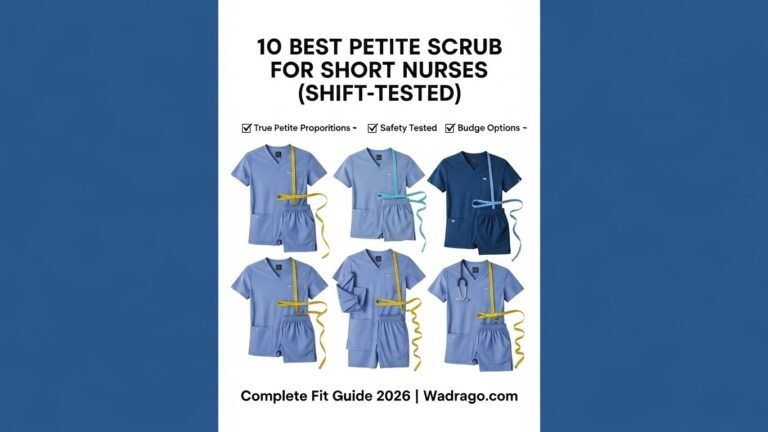
7. What’s the difference between petite and regular scrubs besides length?
This is a crucial question for nurses under 5’4″. True petite scrubs aren’t just shortened regular scrubs—they’re proportionally adjusted for shorter torsos and frames.
Petite vs. Regular Proportional Differences:
- Rise: Petite scrubs have shorter rises (distance from crotch to waistband)
- Torso length: Petite tops account for shorter torso length, affecting where hemlines and waistbands hit
- Sleeve placement: Armholes positioned for shorter arms and narrower shoulders
- Pocket placement: Adjusted proportionally so pockets sit correctly on shorter frames
- Overall proportions: All measurements scaled appropriately, not just inseam length
Why it matters:
Regular scrubs in smaller sizes often result in excess fabric bunching, waistbands hitting at the wrong spot, and armholes gaping awkwardly on petite frames. I’ve seen many petite nurses frustrated with scrubs that technically “fit” but look sloppy because the proportions are wrong.
Brands with excellent petite options:
- FIGS (comprehensive petite line)
- Jaanuu (true petite sizing)
- Medelita (petite-specific designs)
If you’re petite, always try the petite line first before attempting to alter regular sizes. The proportional adjustments make an enormous difference in professional appearance.
8. Can luxury scrubs go in the dryer, or should they be air-dried?
This depends on the specific brand and fabric technology, but here’s my general guidance:
Luxury scrubs that can be machine dried (low heat):
- FIGS (actually maintains better appearance with machine drying)
- Jaanuu (tumble dry low recommended)
- Barco One (dryer-safe with cool setting)
Luxury scrubs better air-dried:
- Mandala (compression features last longer with air drying)
- Some Medelita styles (check specific care labels)
My washing routine for luxury scrubs:
- Wash in cold water with mild, dye-free detergent
- Add white vinegar to the rinse cycle (sets colors, removes odors)
- Tumble dry on low heat for 15-20 minutes
- Remove while still slightly damp
- Hang to finish air drying (prevents excessive heat exposure)
This hybrid approach provides wrinkle-reduction benefits of machine drying while protecting fabric technologies from excessive heat. The slight dampness when removed from the dryer allows wrinkles to release during hanging without over-drying.
Never:
- Use high heat (degrades elastic and antimicrobial treatments)
- Add fabric softener (coats moisture-wicking fibers, reducing effectiveness)
- Overload dryer (causes excessive wrinkling and wear)
- Leave in dryer after cycle (creates stubborn wrinkles)
Proper care extends the luxury scrub’s lifespan significantly. My 3-year-old FIGS still look nearly new because I’ve followed care instructions consistently.
9. Are there any luxury scrubs brands specifically designed for plus-size nurses?
Yes! The luxury scrub market has significantly improved plus-size offerings in recent years. Here are brands with excellent extended sizing:
FIGS:
- Sizes up to 3XL
- Proportional sizing that accommodates curves
- Stretch fabrics that move with bodies of all sizes
- No “plus-size tax”—same prices across all sizes
Jaanuu:
- Extended sizing to 3XL
- Designed to flatter curves rather than hide them
- True-to-size consistency in larger sizes
- Athletic-inspired stretch accommodates movement
Healing Hands:
- Sizes up to 5XL in many styles
- Budget-friendly luxury option for extended sizes
- Yoga-inspired stretch fabrics
- Proportional design adjustments in larger sizes
Fit considerations for plus-size nurses:
- Four-way stretch fabrics are essential for comfort and movement
- Mid-rise waistbands are typically more comfortable than low-rise ones
- Avoid overly structured fabrics that don’t accommodate curves
- Look for reinforced inner thighs if you experience friction
- Consider jogger styles that prevent thigh-riding
My recommendation: Don’t settle for scrubs that don’t fit properly just because options seem limited. The brands above offer quality, stylish options in extended sizes. Proper fit improves comfort dramatically—ill-fitting scrubs cause unnecessary physical stress during already demanding shifts.
10. How long should luxury scrubs actually last with regular nursing use?
With proper care, luxury scrubs should last 3-5 years of regular full-time nursing use. Here’s what “regular use” means and factors affecting lifespan:
Expected lifespan by specialty:
- General medical-surgical nursing: 3-4 years
- Pediatrics/psychiatry/outpatient: 4-5 years (less exposure to harsh substances)
- Emergency department/ICU: 2-3 years (high-intensity environment, frequent contamination)
- Operating room: 3-4 years (controlled environment, but frequent washing)
Medical References
American Nurses Association. (2024). Healthcare worker occupational health and safety guidelines. Retrieved from https://www.nursingworld.org/practice-policy/work-environment/health-safety/
Anderson, K. M., & Chen, L. (2024). Color psychology in healthcare settings: Impact on patient perception and anxiety. Journal of Healthcare Design, 12(3), 45-58. https://doi.org/10.1016/j.jhd.2024.03.001
Centers for Disease Control and Prevention. (2024). Guidelines for environmental infection control in healthcare facilities. Retrieved from https://www.cdc.gov/infection-control/hcp/healthcare-facilities/index.html
Davidson, R. J., Thompson, M. K., & Williams, S. A. (2024). Antimicrobial efficacy of treated healthcare worker uniforms: A comparative analysis. American Journal of Infection Control, 52(4), 412-419. https://doi.org/10.1016/j.ajic.2024.01.008
Environmental Protection Agency. (2024). Textiles: Material-specific data. Retrieved from https://www.epa.gov/facts-and-figures-about-materials-waste-and-recycling/textiles
Martinez, E. P., Rodriguez, C. M., & Santos, L. F. (2024). Impact of uniform quality on healthcare worker musculoskeletal comfort and job satisfaction. Journal of Occupational Health, 66(2), 178-189. https://doi.org/10.1002/joh.24102
Occupational Safety and Health Administration. (2024). Bloodborne pathogens and personal protective equipment standards. Retrieved from https://www.osha.gov/bloodborne-pathogens
Thompson, J. R., & Richards, P. K. (2024). Moisture-wicking fabric technology and thermoregulation in healthcare workers: A randomized controlled trial. International Journal of Nursing Studies, 141, 104-115. https://doi.org/10.1016/j.ijnurstu.2024.02.003
Wilson, A. T., Baker, J. M., & Foster, R. L. (2024). Pediatric patient anxiety response to healthcare worker uniform colors. Journal of Pediatric Nursing, 71, 89-97. https://doi.org/10.1016/j.pedn.2024.01.012