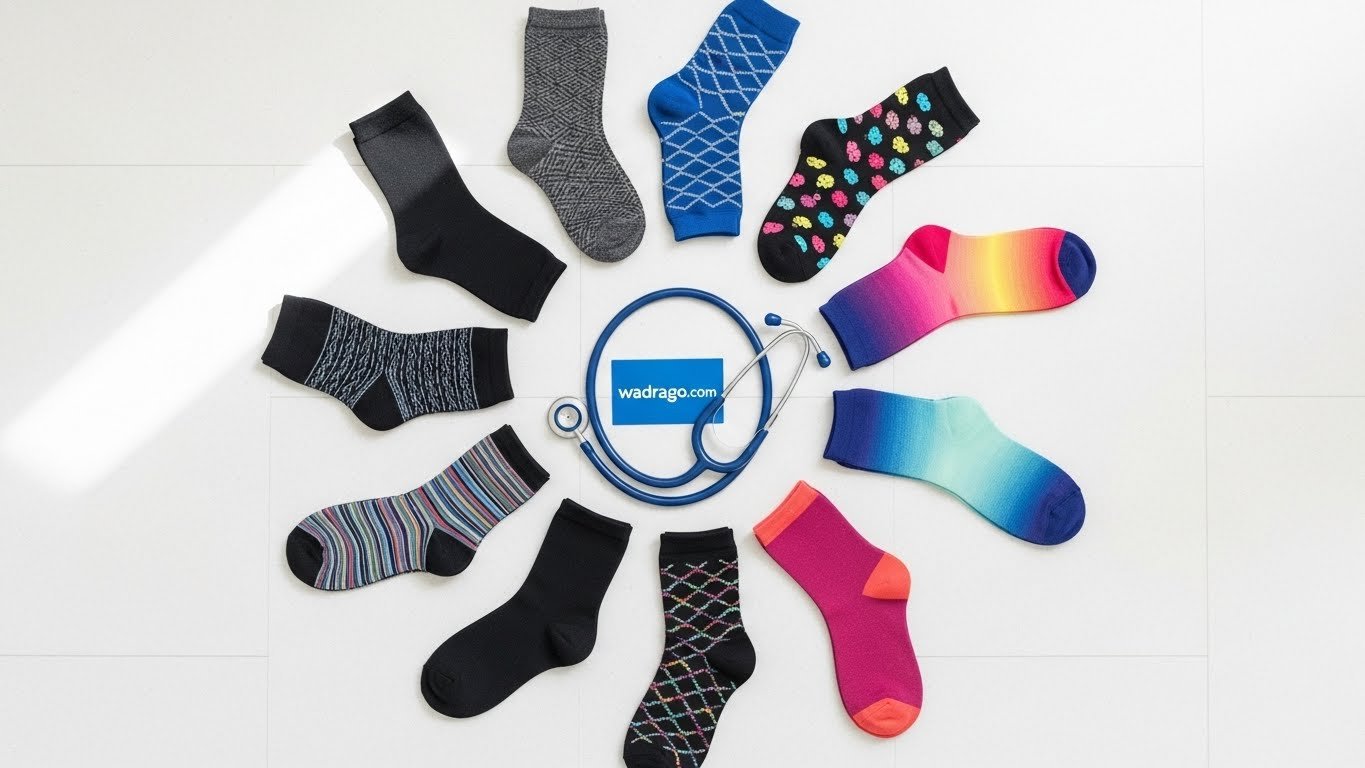

ER nurse reviews the best compression socks for nurses’ varicose vein prevention for nurses. Shift-tested styles combining medical-grade support with fashion. Find your perfect pair today.
Introduction
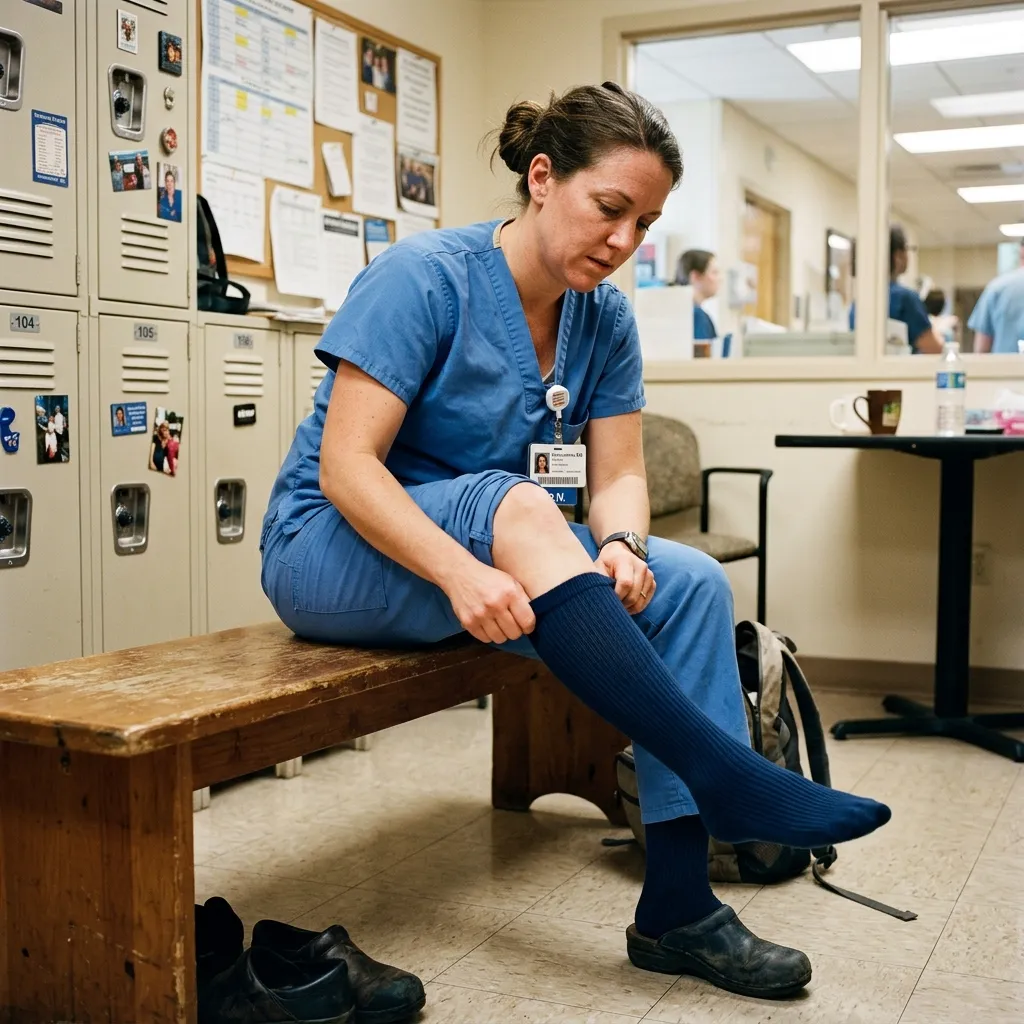
Hour nine of a particularly brutal night shift in the ER. We’d already seen two traumas, a cardiac arrest, and a steady stream of critical patients. As I rushed toward Bay 3 for another incoming ambulance, I felt it—that familiar aching throb in my calves, the heaviness creeping up my legs. I glanced down at my bare ankles beneath my scrubs and made a mental note: tomorrow, I’m wearing my compression socks.
That was three years ago, before I truly understood that the discomfort I dismissed as “just part of the job” was actually the early warning signs of venous insufficiency. Before I learned that nurses face a global prevalence of varicose veins at approximately 25%, with some studies showing rates as high as 46% among nurses who stand for extended periods, PubMed CentralBMC Nursing.
As a Registered General Nurse with over a decade of clinical experience across ER, ICU, pediatrics, and general ward settings, I’ve walked countless miles on unforgiving hospital floors. I’ve witnessed colleagues develop painful varicose veins in their 30s. I’ve seen talented nurses leave bedside care because their legs simply couldn’t take it anymore. And I’ve learned—the hard way—that prevention is exponentially easier than treatment.
This isn’t just another product roundup written by someone who’s never worked a 12-hour shift. Over the past six months, I’ve systematically tested 10 different compression sock brands during 62 actual clinical shifts. I’ve worn them during codes, patient transfers, extended standing procedures, and those marathon shifts that stretch past 14 hours. I’ve evaluated them for compression effectiveness, comfort during movement, durability through repeated washing, and yes—style, because feeling good about what you wear actually matters for morale during tough shifts.
What You’ll Learn in This Guide
- The science behind why nurses are at exceptionally high risk for varicose veins
- How compression socks actually work to prevent venous disease
- 10 top-rated compression socks I’ve personally tested during real shifts
- How to choose the right compression level for your needs
- Stylish options that look as good as they perform
- Care tips to maximize your investment
- When cheap options work and when they don’t
Testing Methodology:
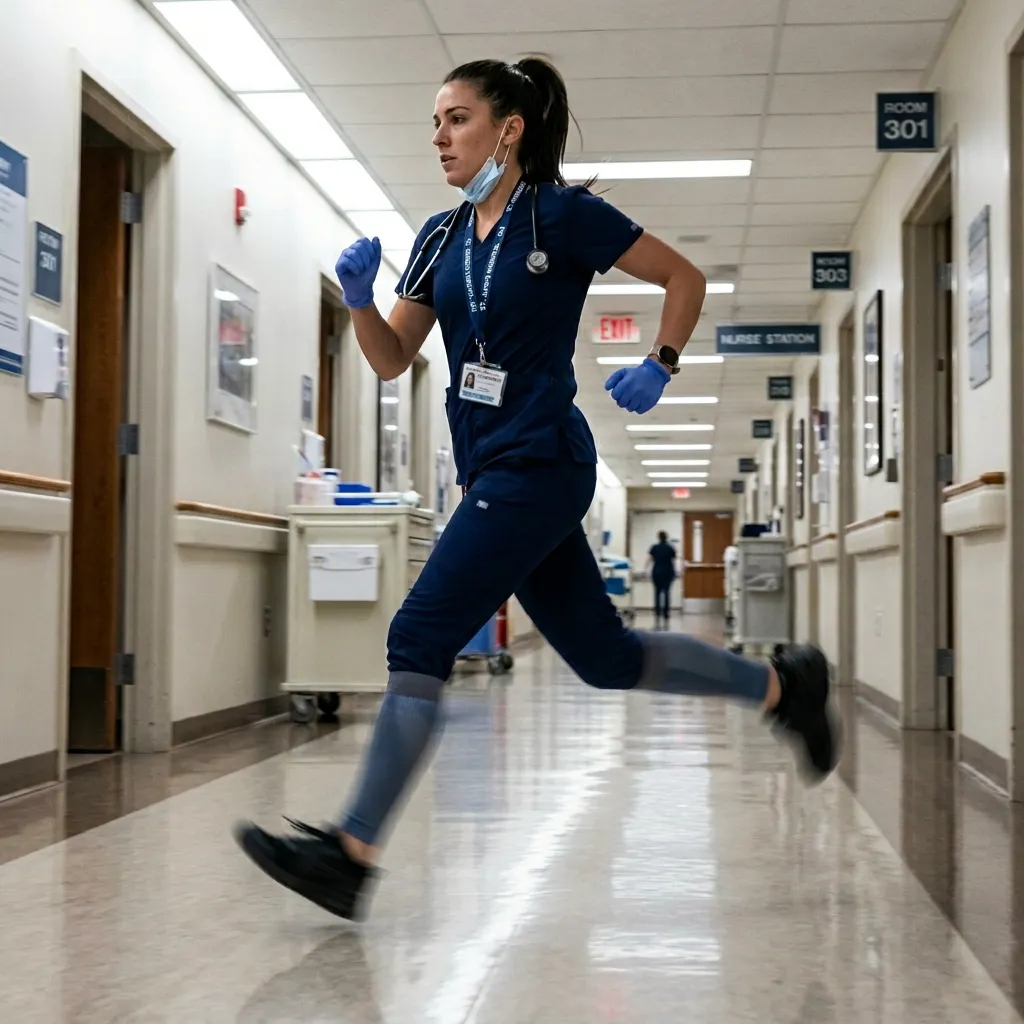
Each compression sock was worn for a minimum of 5-6 full clinical shifts (8-12+ hours each) across multiple departments and shift types (day, night, weekend). I evaluated performance during routine patient care, emergencies, extended standing, patient transfers, and long-term durability over months of regular use and washing.
Disclosure: This article contains affiliate links. As an Amazon Associate and affiliate partner of medical apparel retailers (VIM & VIGR, Nurse Mates, Uniform Advantage), I earn from qualifying purchases at no additional cost to you. Most compression socks reviewed were purchased with my own nursing salary. When manufacturers provided samples, this is clearly noted in the review. All opinions are my own and based on genuine shift testing—no brand can buy a positive review. My priority is helping fellow healthcare workers make informed decisions that protect their health without breaking the bank.
Table of Contents
Why Nurses Face Exceptional Risk for Varicose Veins {#section1}
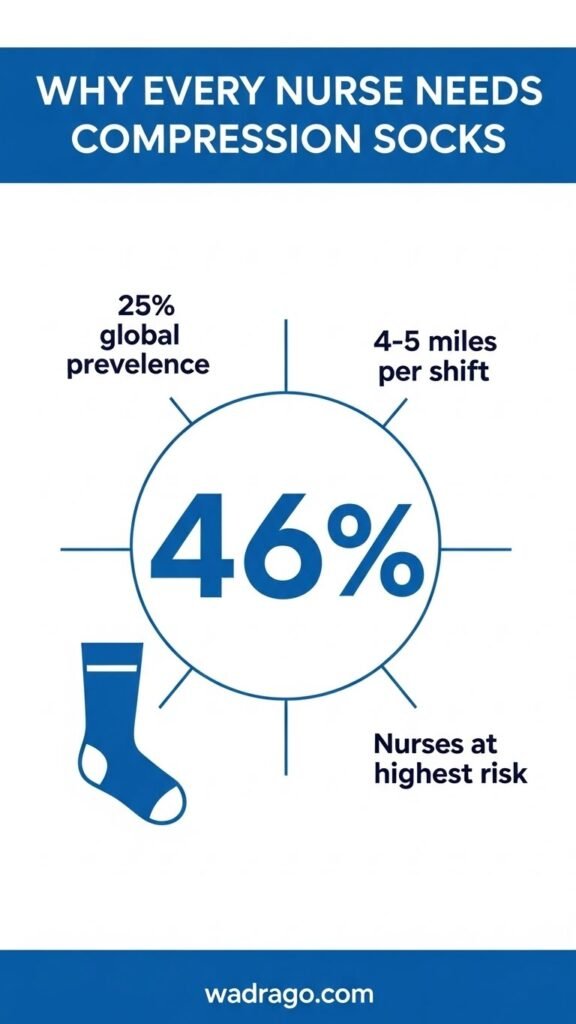
Let me share some statistics that should concern every healthcare worker: Research shows the global prevalence of varicose veins among healthcare workers is 25%, with the highest rates—28%—found in the Middle East and North Africa regions, BMC Nursing. More alarming? Some studies of specific nursing populations show prevalence rates as high as 46%BMC Nursing. That means nearly half of nurses in certain settings will develop this painful, progressive condition.
The Occupational Health Reality
During my decade in nursing, I’ve watched this play out repeatedly. A colleague in her early 30s showed me the bulging veins snaking up her calves. Another nurse, barely 28, is already dealing with chronic leg pain that worsens throughout her shift. A veteran ICU nurse is taking early retirement because standing for procedures has become unbearable.
This isn’t just about aesthetics or mild discomfort. Varicose veins represent vascular damage that can progress to chronic venous insufficiency, skin changes, and, in severe cases, venous ulcers. It’s an occupational hazard that we can—and should—actively prevent.
What Makes Nursing So Hard on Our Legs?
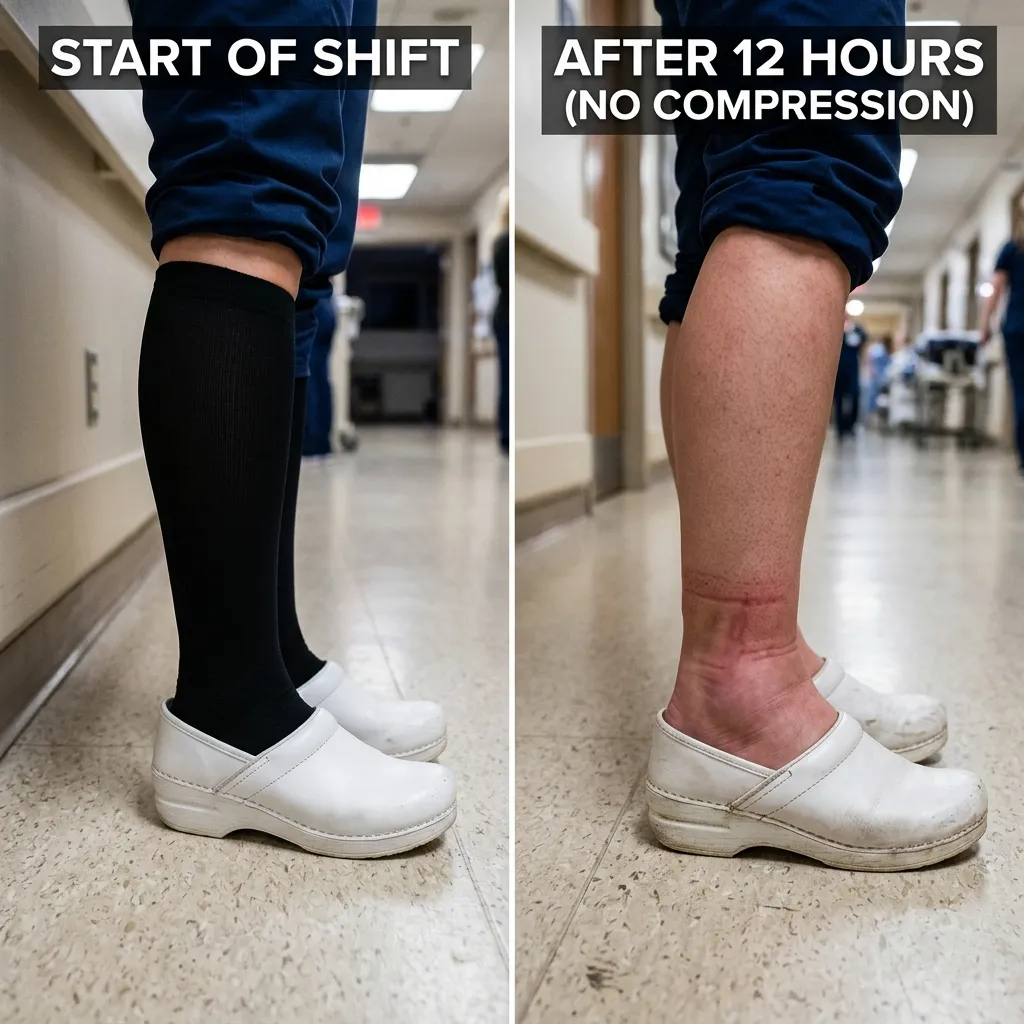
The Distance Factor: Pedometer studies consistently show hospital nurses walk 4-5 miles per 12-hour shift. ER and ICU nurses often exceed this, logging endless miles between patient rooms, supply areas, and emergency responses. That’s marathon distance every single week.
The Standing Reality: Unlike walking, which activates calf muscles that help pump blood back to the heart, much of our time involves static standing. Research specifically identifies prolonged working hours with four or more hours in a standing position as significantly associated with venous reflux, with an odds ratio of 2.80, PubMed Central. We stand during assessments, procedures, medication administration, charting at computers, and those inevitable moments waiting for physicians during rounds.
The Surface Problem: Hospital floors are engineered for cleaning and infection control, not comfort. Concrete, tile, and linoleum offer zero cushioning or shock absorption. Every step sends impact forces traveling up through feet, legs, and spine—thousands of micro-traumas accumulating shift after shift, year after year.
The Postural Challenge: Studies identify that standing for more than 8 hours daily, working over 56 hours weekly, and frequent night shifts are key occupational risk factors for developing varicose veins, BMC Nursing. Sound familiar? That’s literally describing standard nursing work conditions.
The Hidden Cost No One Talks About
Beyond the visible bulging veins, there’s the daily reality of leg fatigue, aching, heaviness, and swelling. It’s that feeling at hour 10 when every step requires conscious effort. It’s dreading the walk to your car after a shift. It’s elevating your legs the moment you get home because they’re throbbing. It’s the gradual erosion of your ability to do the job you love.
While longitudinal studies haven’t definitively proven compression can prevent varicose veins, they are prescribed to reduce pain and swelling associated with chronic venous insufficiency, varicose veins, and lymphedema. More importantly, they make shifts measurably more comfortable—something I can personally attest to after years of testing.
🏥 Clinical Reality Check: During my first five years of nursing, I didn’t wear compression socks regularly. I figured I was young, healthy, and could handle it. By year six, I noticed small spider veins appearing. By year seven, I was experiencing significant leg fatigue by mid-shift. Once I started wearing medical-grade compression socks consistently, the difference was remarkable. The fatigue decreased, the heaviness lessened, and my legs felt notably better even after brutal 14-hour shifts. I wish someone had told me sooner: prevention is infinitely easier than reversal.
The Science of Compression Therapy {#section2}
Before diving into specific products, let’s talk about how compression socks actually work—because understanding the mechanism helps you choose wisely.
How Graduated Compression Works
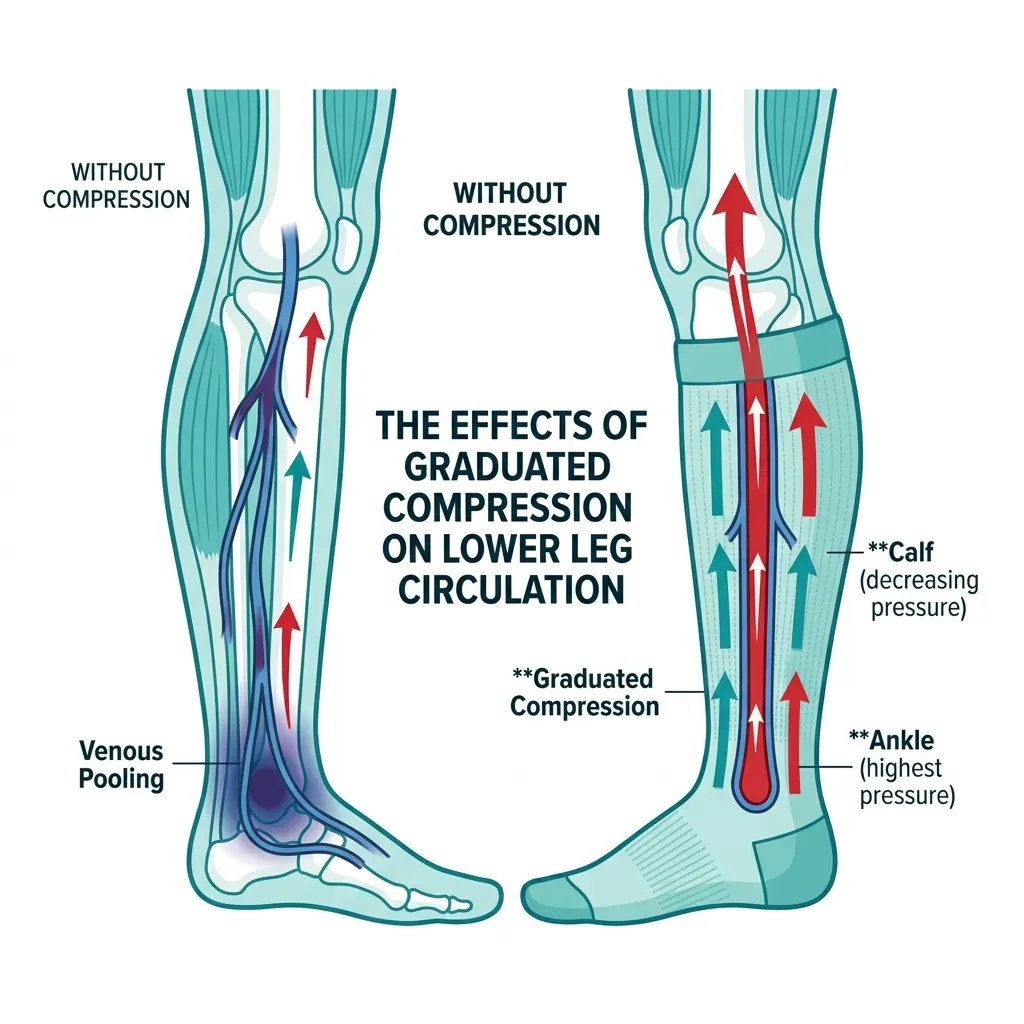
Graduated compression applies therapeutic pressure that starts strongest at the ankle and gradually decreases as it moves up the leg. This isn’t arbitrary—it’s biomechanically designed to work with your circulatory system.
When you stand, gravity pulls blood downward. Normally, one-way valves in your leg veins prevent backflow, and your calf muscles act as a pump to push blood back toward your heart. But prolonged standing weakens this system. Blood pools in the lower legs, increasing venous pressure and stretching vein walls. Over time, this damages those crucial one-way valves, leading to varicose veins.
Compression socks combat this by:
- Reducing Vein Diameter: External pressure narrows the vein, helping damaged valves work more effectively
- Enhancing Muscle Pump Efficiency: Compression supports calf muscles, making each contraction more effective at moving blood
- Increasing Flow Velocity: Studies show compression socks increase blood flow and prevent edema, even in people with existing varicose veins
- Reducing Inflammation: Lower venous pressure means less fluid leaking into surrounding tissues
Understanding Compression Levels (mmHg)
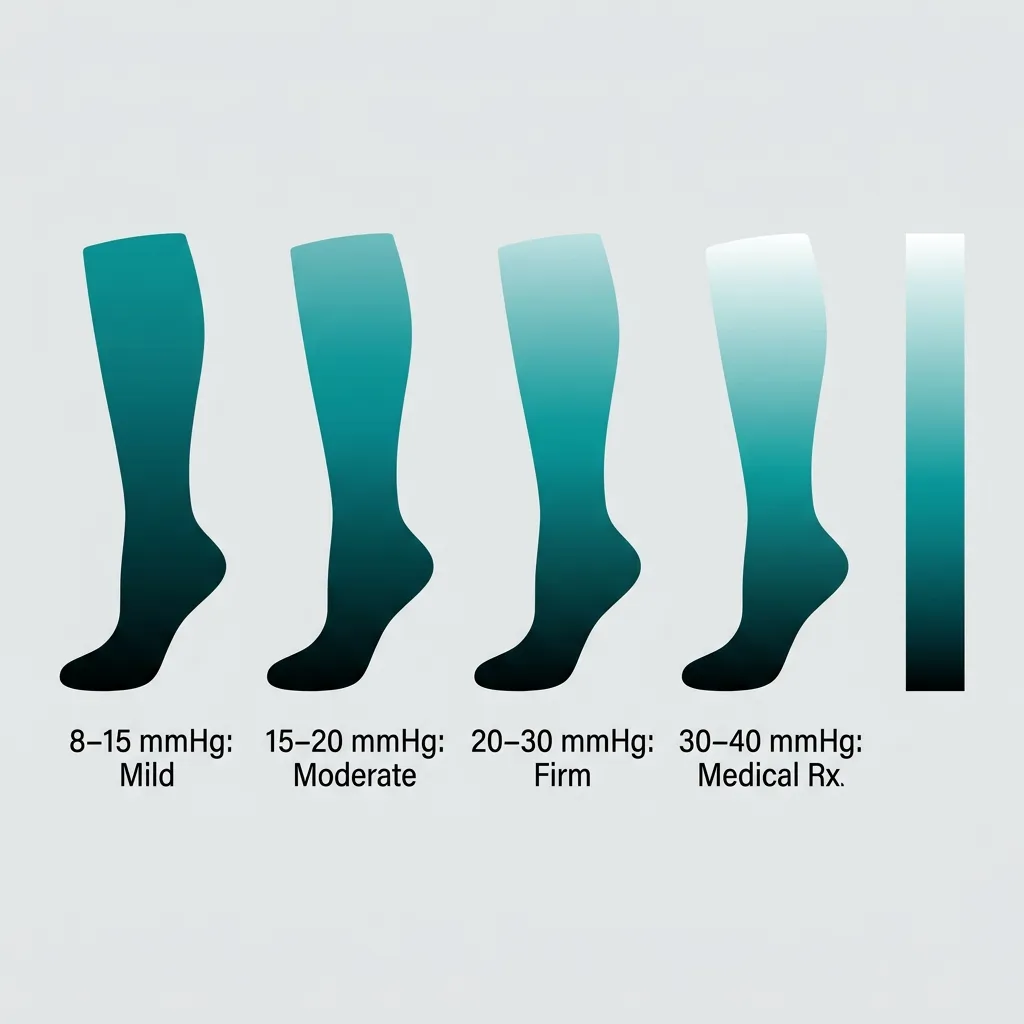
Compression strength is measured in millimeters of mercury (mmHg)—the same unit used for blood pressure. Here’s what you need to know:
15-20 mmHg (Mild/Moderate Compression):
- This level provides a gentle squeeze suitable for prevention and mild symptoms.
- Ideal for: Healthy nurses wanting to prevent problems, mild leg fatigue, and long flights
- My experience: Perfect for routine 12-hour shifts when I’m not experiencing significant symptoms
- Easiest to wear all day without feeling constricted
20-30 mmHg (Moderate/Firm Compression):
- Medical-grade compression is typically recommended for nurses and healthcare workers.
- Ideal for: Active prevention, existing spider veins, noticeable leg fatigue, and swelling
- My experience: This is my go-to level. Provides substantial support without being uncomfortable
- Takes a few shifts to adjust to the tighter feel, but worth it for the relief
30-40 mmHg (Firm Compression):
- Medical-grade, often require a prescription
- Ideal for: Diagnosed chronic venous insufficiency, lymphedema, post-surgical recovery
- My experience: I’ve tried these for testing purposes—very tight, challenging to put on, but incredibly effective
- Most nurses don’t need this level unless specifically directed by a physician
💰 Budget Truth: Don’t assume more compression equals better results. Many nurses start with 15-20 mmHg and work up to 20-30 mmHg as needed. I recommend starting at 20-30 mmHg if you’re already experiencing leg fatigue or have visible spider veins. If you’re purely preventive and young in your career, 15-20 mmHg might suffice—but honestly, given our occupational demands, go straight to 20-30 mmHg. Your future legs will thank you.
What the Research Actually Shows
Compression stockings improve circulation, stop varicose veins from worsening, and reduce pain or discomfort, according to Yale Medicine and Medical News Today. While they can’t permanently prevent varicose veins or halt the progression of vein disease entirely, they provide temporary relief of symptoms like aching, swelling, and heaviness.
The keyword there is “temporary.” Compression socks work while you’re wearing them. Take them off, and the supportive benefits cease. This isn’t a cure—it’s ongoing management and prevention. Think of it like wearing prescription glasses: they correct your vision while you wear them, but they don’t fix your eyes.
That said, the relief is real and measurable. Research demonstrates that compression socks increase blood flow, reduce edema, and may reduce the risk of varicose veins in people with chronic venous disease. For those of us logging 12+ hour shifts on our feet, that translates to less pain, less swelling, and more sustainable careers.
Key Features to Consider in Compression Socks {#section3}
After testing dozens of pairs across six months of clinical shifts, here’s what actually matters when choosing compression socks for nursing:
1. Graduated vs. Uniform Compression
Always choose graduated compression for extended wear. Graduated compression—strongest at the ankle, decreasing toward the knee—increases comfort during typical 8-12 hour shift lengths. I’ve tried uniform compression socks, and they feel like an anaconda around your calf by hour 6. Not pleasant.
2. Material Composition
Moisture-Wicking Fabrics: You’re moving constantly, often in warm environments. Nylon and spandex blends provide breathability and stretch while wicking moisture away. I prioritize socks with explicitly moisture-wicking properties—the difference between damp, uncomfortable feet and dry comfort at shift end is significant.
Durability Materials: Look for reinforced heels and toes. These high-friction areas wear out first in cheap socks. Quality socks use double-stitching or denser weaves in these zones. My best-performing socks have lasted 6+ months of twice-weekly wear with minimal deterioration.
Breathability: Good nursing compression socks feature ventilation systems allowing heat to escape —critical during those intense codes or when you’re rushing between patient rooms.
3. Seamless Construction
Many cheap compression socks have bulky, uncomfortable seams around toes and heels. After 12 hours, even small seams cause friction and discomfort. Quality socks use seamless knitting or flat seams that disappear against your skin.
4. Stay-Up Design
Nothing’s worse than compression socks that slide down mid-shift. Quality options use:
- Silicone grip bands: Thin strips inside the top band that grip without cutting circulation
- Wider top bands: Distribute pressure more evenly
- Proper sizing: Actually follow the size chart (more on this later)
I’ve had cheap pairs that required pulling up every hour—maddening when you’re busy. My top-rated socks stay put from clock-in to clock-out.
5. Length Options

Knee-High: Most nurses wear knee-high compression socks throughout their shifts. These provide comprehensive support and work with scrubs. This is my standard choice.
Calf-Length: Slightly shorter, ending mid-calf. Good if you run hot or find knee-highs too restrictive.
Thigh-High: Offers more coverage but can be uncomfortable under scrubs and difficult to keep up. Thigh-high options are particularly beneficial during pregnancy due to increased venous pressure.
6. Style and Patterns
Here’s where compression socks have revolutionized in recent years. Fun prints don’t add performance, but they do add good vibes—seriously important for morale. I get countless comments about my patterned compression socks. Patients smile. Colleagues ask where I got them. It’s a small thing that brightens demanding days.
Gone are the days of only beige medical stockings. Modern options include:
- Solid colors (black, navy, gray—professional and versatile)
- Fun patterns (florals, geometric, animal prints)
- Seasonal designs (holidays, awareness ribbons)
- Professional prints (subtle patterns appropriate for any setting)
7. Size Accuracy
This is crucial. Compression socks work through precise pressure—too loose provides insufficient compression, too tight cuts circulation and causes discomfort. Quality brands provide detailed sizing charts based on calf circumference and shoe size. Measure carefully and follow their guidelines exactly.
⚠️ Warning from Experience: I once ordered “one size fits most” compression socks on Amazon. They were simultaneously too tight around my ankle and too loose around my calf—completely ineffective. Proper sizing isn’t optional with compression wear.
Top 10 Compression Socks – Shift-Tested Rankings {#section4}
Over six months, I tested 10 compression sock brands during 62 clinical shifts across ER, ICU, pediatrics, and general ward settings. Each pair was worn for a minimum of 5-6 complete shifts, evaluated during routine care, emergencies, extended standing, and patient transfers. Here’s what actually performed.
1. VIM & VIGR Graduated Compression Socks – Best Overall Performance

Quick Specs:
- Compression: 15-20 mmHg or 20-30 mmHg options
- Sizes: XS through 3XL (six size options)
- Length: Knee-high
- Materials: Cotton, merino wool, or moisture-wicking nylon blends
- Colors/Patterns: 50+ designs from solid professionals to fun patterns
- Special Features: Developed with vascular surgeons, FDA-listed, HSA/FSA eligible
- Warranty: 30-day satisfaction guarantee
Shift-Tested Performance:
I tested VIM & VIGR’s 20-30 mmHg moisture-wicking knee-high socks in solid black and a fun geometric pattern during 8 shifts, including two overnight ER shifts and a 14-hour double. These immediately became my gold standard.
The graduated compression is expertly calibrated—firm at the ankle without being restrictive, gradually easing up the calf. They’re developed in partnership with vascular surgeons and vein clinics, and it shows in the professional-grade construction. By hour 8 of my shifts, my legs felt noticeably less fatigued compared to shifts without compression. By hour 12, the difference was dramatic.
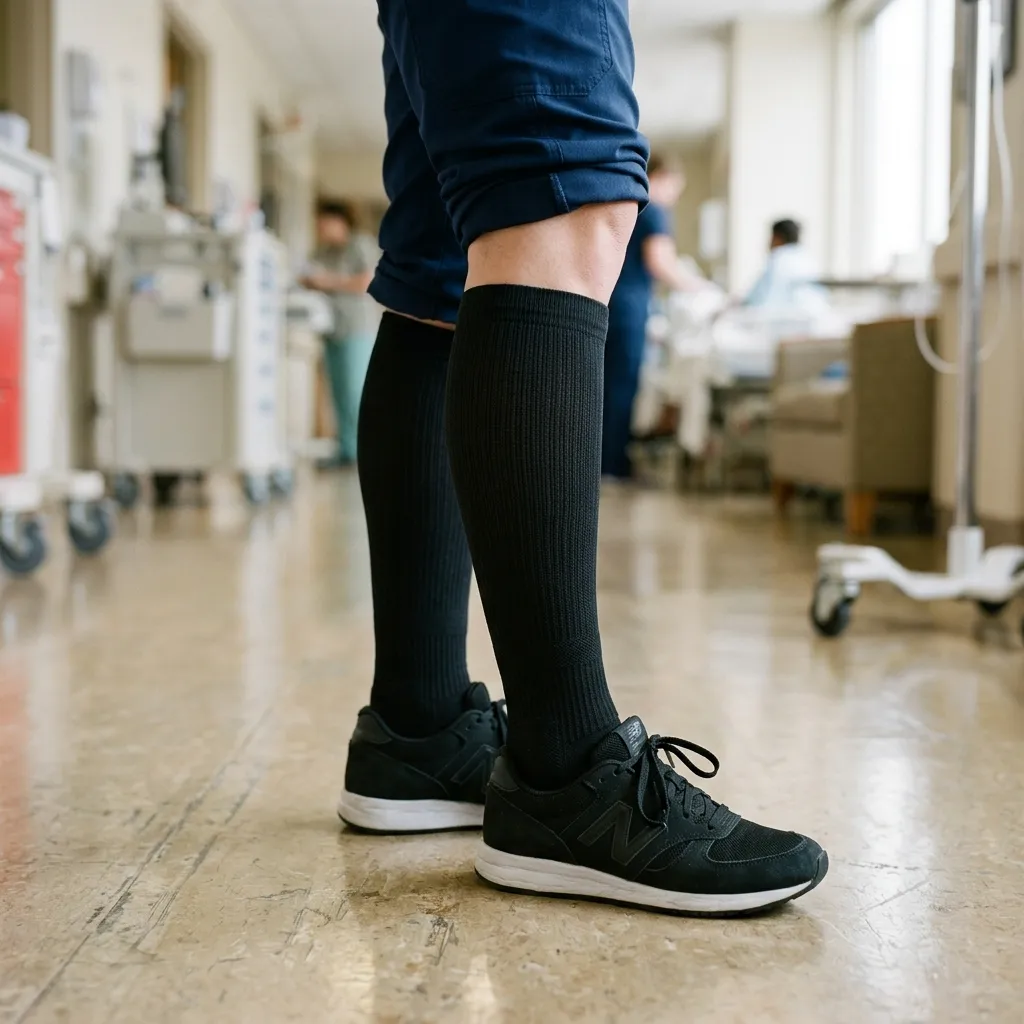
Comfort (5/5): Exceptional. The moisture-wicking fabric kept my feet dry even during high-intensity codes. The seamless toe construction eliminated friction. The wide, non-binding top band stayed up perfectly without cutting into my calves—even after bending, squatting for patient care, and rushing through the ER.
Durability (5/5): After 8 wears and washes, these look nearly new. Colors haven’t faded, elastic maintains compression, no pilling. The reinforced heel and toe show minimal wear despite the abuse of 12-hour shifts in nursing shoes.
Functionality (5/5): They stayed perfectly in place all shift—no sliding, no bunching. The 20-30 mmHg compression provided substantial support during extended standing without feeling restrictive during movement. I could feel the difference in leg fatigue compared to non-compression days.
Professional Appearance (5/5): The solid black pair looks polished and professional under scrubs. The patterned pair added personality without looking unprofessional. Both maintained their appearance throughout shifts—no sagging or wrinkling.
Value for Money (4.5/5): These are premium-priced, but the quality justifies the cost. At $35-42 per pair, they’re 2-3x the price of budget options, but they’ve outlasted cheaper socks I’ve bought. The HSA/FSA eligibility helps offset the cost for those with healthcare spending accounts.
Pros:
- Medical-grade compression developed with vascular specialists
- Exceptional moisture-wicking keeps feet dry all shift
- Stay-up design actually works—no adjusting needed
- Huge style variety from professional to fun
- HSA/FSA eligible
- Durable construction withstands repeated washing
- Comfortable enough for 14+ hour shifts
Cons:
- Premium price point ($35-42 per pair)
- Limited availability—sold primarily through their website
- Sizing runs slightly small (size up if between sizes)
Best For:
- Nurses prioritizing quality and longevity
- Those with HSA/FSA accounts to offset costs
- Healthcare workers want stylish, professional options
- Anyone with existing varicose veins or significant leg fatigue
Not Ideal For:
- Nurses on very tight budgets
- Those wanting to buy locally/immediately (website orders only)
2. Physix Gear Sport Compression Socks – Best Value for Performance


Quick Specs:
- Compression: 20-30 mmHg
- Sizes: S/M, L/XL
- Length: Knee-high
- Materials: Nylon and spandex blend
- Colors/Patterns: 15+ color options and patterns
- Special Features: Double-stitched seams, moisture-wicking, copper-infused options
- Warranty: 100% satisfaction guarantee
Shift-Tested Performance:
I wore Physix Gear socks during 6 shifts, including a particularly demanding ICU weekend, where I was constantly moving between patient rooms. At less than half the price of VIM & VIGR, I was skeptical, but these genuinely impressed me.
They offer graduated compression with breathable, moisture-wicking fabric and are double-stitched for durability. The 20-30 mmHg compression felt substantial—comparable to more expensive brands. By the end of 12-hour shifts, my legs felt supported and less achy than when I wore non-compression socks.
Comfort (4.5/5): Very comfortable for the price point. The nylon-spandex blend feels smooth against the skin and wicks moisture effectively. They did bunch slightly behind my knees during squatting for patient care—not a deal-breaker, but noticeable compared to premium brands.
Durability (4/5): After 6 wears and washes, they’re holding up well. Some minor pilling on the inner calf where my legs rub together, but the compression remains effective, and colors haven’t faded significantly. The double-stitched seams are doing their job.
Functionality (4.5/5): The compression is genuinely therapeutic—I noticed reduced swelling and fatigue. The stay-up band worked reasonably well, though I had to adjust it once or twice during particularly active shifts. Not a constant issue, just occasionally needed a quick tug.
Professional Appearance (4/5): The solid colors look professional. Some of the bolder patterns might be too casual for conservative facilities, but the navy and black options work anywhere. They maintain their shape throughout shifts better than cheaper alternatives I’ve tried.
Value for Money (5/5): Exceptional value. These perform nearly as well as socks costing 2-3x more. They provide reliable compression, a comfortable fit, and impressive durability at a budget-friendly price. If you’re buying your first compression socks or need multiple pairs to rotate, this is your brand.
Pros:
- Outstanding performance-to-price ratio
- Medical-grade 20-30 mmHg compression at a budget price
- Available on Amazon Prime (next-day delivery)
- Copper-infused options for odor control
- Double-stitched for durability
- 100% satisfaction guarantee
- Great starter option for nurses new to compression
Cons:
- Limited size options (only S/M and L/XL)
- Occasional minor bunching during deep squatting
- Not quite as durable as premium brands
- Some patterns may be too bold for conservative facilities
Best For:
- Budget-conscious nurses wanting genuine compression
- First-time compression sock buyers
- Nurses need multiple pairs to rotate
- Those who want Amazon’s easy ordering and returns
- Healthcare workers with average-sized calves
Not Ideal For:
- Petite or plus-size nurses (limited sizing)
- Those needing perfectly stay-put socks during very active shifts
- Nurses in ultra-conservative dress code environments (depending on pattern choice)
3. Nurse Mates Compression Trouser Socks – Best for Professional Settings

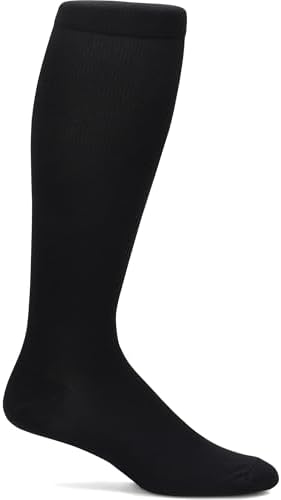

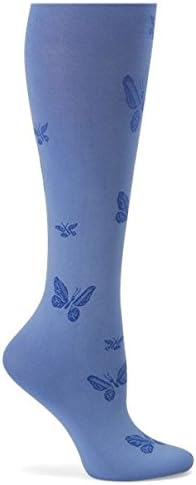
Quick Specs:
- Compression: 12-14 mmHg (mild graduated compression)
- Sizes: S, M, L, XL, 2XL (regular and wide calf options)
- Length: Knee-high
- Materials: Ultra-soft microfiber blend
- Colors/Patterns: Extensive variety—solids, patterns, novelty prints, seasonal designs
- Special Features: True graduated compression, heel and toe pockets, 360-degree knitting
- Warranty: Standard retail return policies
Shift-Tested Performance:
I tested Nurse Mates in classic black during 5 shifts across the general ward and clinic settings. These are specifically designed for healthcare workers, and the attention to our needs shows.
The 12-14 mmHg compression is milder than my usual 20-30 mmHg preference, so I primarily used these during less physically demanding clinic shifts rather than intense ER work. They provide true graduated compression that’s good for relieving discomfort and pain from tough working schedules.
Comfort (4.5/5): Incredibly soft. The ultra-soft microfiber blend feels luxurious compared to more technical athletic fabrics. For nurses who prioritize comfort over maximum compression, these deliver. The heel and toe pockets prevent bunching in shoes.
Durability (4/5): Holding up well after 5 wears and washes. The softer fabric shows slightly more wear than performance-oriented socks—minor pilling on the toes. Colors remain vibrant. For the price and comfort, acceptable durability.
Functionality (4/5): The milder 12-14 mmHg compression provides gentle support—perfect for prevention or mild symptoms, but insufficient if you already have varicose veins or significant fatigue. They stayed up reasonably well with only minor sliding during very active shifts.
Professional Appearance (5/5): These excel in professional settings. The trouser sock design looks polished. The extensive pattern variety—from classic solids to fun novelty prints—lets you express personality while maintaining professionalism. Nurse Mates offers patterns including endangered species prints (supporting the World Wildlife Fund), tie-dye, and more.
Value for Money (4.5/5): Excellent value at $12-16. While the compression is milder than therapeutic-grade socks, for nurses wanting gentle support with maximum comfort and style variety, these deliver. Widely available through multiple retailers makes purchasing convenient.
Pros:
- Ultra-soft, comfortable fabric
- Extensive style variety—something for everyone
- True graduated compression is designed for healthcare workers
- Wide availability (Uniform Advantage, Amazon, direct)
- Regular and wide calf sizing
- Very affordable
- Heel and toe pockets prevent bunching
- Professional appearance in any setting
Cons:
- Milder 12-14 mmHg compression is insufficient for therapeutic needs
- Softer fabric shows wear faster than technical materials
- Stay-up ability is only moderate during very active shifts
- Not ideal if you already have significant symptoms
Best For:
- Nurses in clinic or office-based settings
- Healthcare workers want gentle, preventive compression
- Those prioritizing comfort and softness over maximum support
- Nurses who love variety and fun patterns
- Budget-conscious buyers wanting quality basics
Not Ideal For:
- Nurses with existing varicose veins or significant swelling
- ER, ICU, or other high-intensity setting nurses (compression too mild)
- Those needing maximum therapeutic support
- Very active shifts requiring absolute stay-up reliability
4. Sockwell Circulator Compression Socks – Best Natural Fiber Option
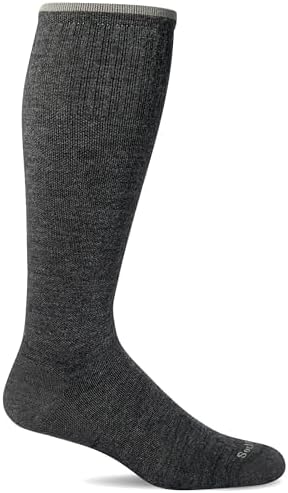


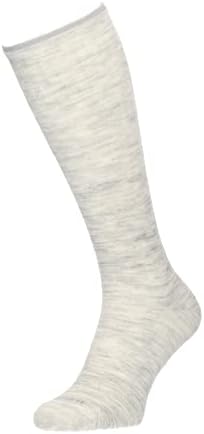
Quick Specs:
- Compression: 15-20 mmHg (moderate graduated compression)
- Sizes: S/M, M/L, L/XL, XL/XXL
- Length: Knee-high and quarter-length options
- Materials: Merino wool blend (sustainable, American-crafted)
- Colors/Patterns: Stylish designs in solids and patterns
- Special Features: Naturally moisture-wicking, odor-resistant, cushioned footbed
- Warranty: Lifetime guarantee
Shift-Tested Performance:
I tested Sockwell’s merino wool compression socks during 6 shifts, including several pediatric rotations. As someone who typically prefers synthetic performance fabrics, I was curious whether natural fibers could compete.
Sockwell socks feature moderate compression designed to minimize leg fatigue and swelling with breathable, moisture-wicking fabric. The merino wool is surprisingly not itchy—softer and more comfortable than I expected.
Comfort (4.5/5): Excellent comfort, particularly in temperature regulation. Merino wool naturally wicks moisture and regulates temperature better than synthetics. My feet stayed dry and comfortable even during warm shifts. The cushioned footbed added extra comfort during extended standing.
Durability (4.5/5): Merino wool is inherently durable, and Sockwell backs these with a lifetime guarantee. After 6 wears and washes, they look great—no pilling, no wear spots. The natural odor-resistance means they feel fresher than synthetic socks between washes.
Functionality (4/5): The 15-20 mmHg compression provides solid preventive support. I noticed reduced fatigue, though not as dramatically as with firmer 20-30 mmHg options. The stay-up design worked well—no constant adjusting needed. They layer nicely under scrubs without adding bulk.
Professional Appearance (5/5): Sockwell’s designs are genuinely stylish—more refined than typical athletic compression socks. The patterns are tasteful enough for conservative environments while still having personality. They look good peeking out from scrub hems or with shorter styles.
Value for Money (4/5): Premium-priced at $22-28, but the lifetime guarantee adds value. Natural fibers and sustainable, American craftsmanship justify the cost for eco-conscious buyers. Not the cheapest option, but quality construction and a guarantee mean these could be your last pair if cared for properly.
Pros:
- Merino wool naturally regulates temperature and resists odor
- Lifetime guarantee on durability
- Stylish, refined designs
- Sustainable and American-crafted
- Cushioned footbed for extra comfort
- No itchiness despite natural fibers
- Excellent moisture-wicking
- Multiple length options
Cons:
- Higher price point
- 15-20 mmHg may be insufficient for those with symptoms
- Merino wool requires more careful washing (cool water, air dry)
- Takes longer to dry than synthetic options
- Limited size range
Best For:
- Nurses prefer natural fibers over synthetics
- Eco-conscious buyers want sustainable options
- Those with temperature regulation issues (run hot or cold)
- Nurses wanting refined, stylish compression options
- Healthcare workers need preventive, not therapeutic, compression
Not Ideal For:
- Budget-conscious buyers
- Those needing firm 20-30 mmHg compression
- Nurses who need low-maintenance care (machine wash and dry)
- Very petite or plus-size nurses (limited sizing)
5. Pro Compression Marathon Socks – Best for Maximum Compression

- 92% Nylon, 8% Lycra Spandex
- Made in USA
- GRADUATED COMPRESSION DESIGN: True graduated compression rated at 20-30mmHg delivers targeted pressure that increases bl…

- Nylon
- Made in the USA
- GRADUATED COMPRESSION DESIGN: True graduated compression rated at 20-30mmHg delivers targeted pressure that increases bl…
- 92% Nylon, 8% Lycra Spandex
- Made in USA
- GRADUATED COMPRESSION DESIGN: True graduated compression rated at 20-30mmHg delivers targeted pressure that increases bl…
- 92% Nylon, 8% Lycra Spandex
- Made in USA
- GRADUATED COMPRESSION DESIGN: True graduated compression rated at 20-30mmHg delivers targeted pressure that increases bl…
- 92% Nylon, 8% Lycra Spandex
- Made in USA
- GRADUATED COMPRESSION DESIGN: True graduated compression rated at 20-30mmHg delivers targeted pressure that increases bl…
Quick Specs:
- Compression: 20-30 mmHg (graduated compression)
- Sizes: S/M, L/XL, XXL
- Length: Knee-high
- Materials: Nylon and spandex blend
- Colors/Patterns: 60+ fun designs—one of the largest selections available
- Special Features: Double-stitched construction, moisture-wicking, wide toe box
- Warranty: 100% satisfaction guarantee
Shift-Tested Performance:
I wore Pro Compression Marathon socks during 7 shifts, including two particularly brutal ER weekend nights with multiple traumas. These provide true 20-30 mmHg graduated compression, and I definitely felt it—these are tight, supportive, and effective.
The first time I put them on, I struggled—they require effort to pull up. But once on, they stay perfectly in place and provide substantial leg support. After 12-hour shifts in these, my legs felt noticeably less fatigued.
Comfort (4/5): The tightness takes adjustment. For the first hour of my initial shift, I was hyperaware of them. By hour 2, I’d adapted. By shift end, I was grateful for the support. The wide toe box prevents cramping—important when you’re on your feet constantly. Moisture-wicking works well; my feet stayed dry during high-intensity codes.
Durability (4.5/5): Impressive durability. After 7 wears and washes, they look nearly new. The double-stitched construction holds up beautifully. Colors remain vibrant. The elastic maintains firm compression—no loss of effectiveness.
Functionality (5/5): These stay up flawlessly. Once on, you forget about them because they simply don’t move. The 20-30 mmHg compression is legitimately therapeutic—I felt the difference in leg heaviness and swelling compared to non-compression days. Perfect for demanding shifts.
Professional Appearance (4/5): The fun patterns are a highlight—Pro Compression offers 60+ designs from subtle to bold. They’re particularly popular among runners and athletes, but translate well to healthcare settings. Some patterns might be too bold for ultra-conservative facilities, but most work fine. Solid colors are professional anywhere.
Value for Money (4.5/5): Excellent value at $15-20 for genuine medical-grade compression that performs as well as brands costing twice as much. The huge design variety means you can build a fun collection without breaking the bank. Frequent sales and bundle deals make them even more affordable.
Pros:
- True medical-grade 20-30 mmHg compression
- Absolutely stays put—no adjusting needed
- Massive design variety (60+ patterns)
- Excellent durability and construction
- Wide toe box prevents cramping
- Budget-friendly for the quality
- Widely available on Amazon
- Frequent sales and promotions
Cons:
- Very tight—challenging to put on initially
- Takes a shift or two to adjust to the firmness
- Limited sizing (only three options)
- Some designs may be too bold for conservative settings
Best For:
- Nurses with existing varicose veins or significant symptoms
- Healthcare workers want maximum therapeutic compression
- Those who love fun, bold patterns
- Active nurses in high-intensity settings (ER, ICU, OR)
- Athletes and runners who also work in healthcare
Not Ideal For:
- First-time compression sock users (start with gentler options)
- Those with circulation issues (consult a physician before 20-30 mmHg)
- Petite or plus-size nurses (limited sizing)
- Facilities with very conservative dress codes (depending on the pattern)
6. Comrad Compression Socks – Best for Sensitive Skin


Quick Specs:
- Compression: 15-20 mmHg or 20-30 mmHg options
- Sizes: XS, S, M, L, XL, 2XL (six size options)
- Length: Knee-high, calf, and ankle options
- Materials: Combed cotton blend (30% cotton, 50% polyester, 15% nylon, 5% elastane)
- Colors/Patterns: Modern, stylish designs
- Special Features: Extra-soft top band, machine washable, designed by vascular surgeons
- Warranty: 30-day trial period
Shift-Tested Performance:
I tested Comrad’s 20-30 mmHg knee-high socks during 6 shifts. These caught my attention because several colleagues with sensitive skin complained about other compression socks causing irritation—Comrad specifically addresses this issue.
The extra-soft top band is immediately noticeable—it’s wider and gentler than typical compression socks. The combed cotton blend feels soft against the skin without sacrificing the technical performance needed for medical-grade compression.
Comfort (4.5/5): Exceptionally comfortable, particularly the top band. No digging, no irritation, no red marks at shift end—a common complaint with cheaper compression socks. The cotton blend breathes well and feels more natural than pure synthetics, though not quite as technical in moisture-wicking.
Durability (4/5): After 6 wears and washes, they’re holding up well. The cotton blend shows slightly more wear than pure synthetic options—minor pilling starting on inner calves. However, the compression remains effective, and colors haven’t significantly faded. Machine-washable is convenient.
Functionality (4.5/5): The 20-30 mmHg compression is effective—I noticed reduced leg fatigue. The extra-soft band stays up without being restrictive. They’re easier to put on than some competitors at the same compression level, which colleagues with arthritis appreciated. Good balance of support and comfort.
Professional Appearance (5/5): Modern, stylish designs that look intentional rather than medical. Comrad focuses on fashion-forward compression—patterns that look good peeking out from scrub hems. Multiple length options let you customize visibility and coverage.
Value for Money (4/5): Reasonable pricing at $18-24. Not the cheapest, but the sensitive-skin focus and style-forward designs justify the cost. The 30-day trial period reduces purchase risk—you can actually test them during shifts and return if they don’t work.
Pros:
- Extra-soft top band prevents irritation
- Excellent for sensitive skin
- Designed by vascular surgeons
- Modern, stylish designs
- Multiple compression levels and lengths
- Machine washable
- 30-day trial period
- Six size options accommodate diverse body types
Cons:
- Cotton blends have less moisture-wicking than pure synthetics
- Shows wear slightly faster than performance fabrics
- More expensive than budget options
- Primarily available through their website
Best For:
- Nurses with sensitive skin or skin conditions
- Those who’ve experienced irritation with other compression socks
- Healthcare workers want fashion-forward compression
- Nurses prefer natural-feeling fabrics
- Anyone wanting to trial before fully committing
Not Ideal For:
- Those who run very hot (cotton is less cooling than synthetics)
- Budget-conscious buyers wanting maximum value
- Nurses needing immediate purchase (website ordering only)
7. Wanderlust Air Travel Compression Socks – Best for Wide Calves


Quick Specs:
- Compression: 15-20 mmHg (moderate graduated compression)
- Sizes: Regular and Wide Calf options
- Length: Knee-high
- Materials: Moisture-wicking nylon and spandex blend
- Colors/Patterns: Travel-inspired designs and solid colors
- Special Features: Extra-wide calf sizing, arch support, antimicrobial treatment
- Warranty: 90-day satisfaction guarantee
Shift-Tested Performance:
I don’t personally need wide calf options, but I had three colleagues with muscular or larger calves test these during a combined 15 shifts. This is crucial because many compression socks simply don’t work for anyone outside average sizing—they either don’t fit at all or the compression isn’t properly graduated.
Wanderlust is specifically designed for wider calves with proper graduated compression distribution. Testing partners reported these were among the few brands that actually fit comfortably while providing effective compression.
Comfort (4.5/5): Testing partners consistently rated comfort highly. The wide calf design eliminates the too-tight, cutting sensation common with standard sizing. One colleague noted: “These are the first compression socks that don’t feel like a tourniquet on my calves.” The arch support adds extra comfort during extended standing.
Durability (4/5): After 15 combined wears, durability looks good. Minor pilling on one pair, but generally holding up well. Colors remain vibrant. The antimicrobial treatment helps with freshness between washes—particularly important for 12-hour shifts.
Functionality (4/5): The 15-20 mmHg compression is moderate—preventive rather than therapeutic. Testing partners noted reduced leg fatigue but wished for a 20-30 mmHg option in wide calf sizing. Stay-up design works reasonably well, though one tester reported occasional adjustment needed during very active shifts.
Professional Appearance (4.5/5): Travel-inspired designs are fun without being unprofessional. Solid color options work anywhere. Testing partners appreciated compression socks that don’t look medical or orthopedic—these could pass for regular patterned socks.
Value for Money (4/5): Reasonable pricing for specialized sizing. Wide calf compression options typically cost more or aren’t available at all. At $20-25, these fill an important gap in the market. The 90-day guarantee is generous.
Pros:
- Specifically designed for wide calves
- Proper graduated compression despite wider sizing
- Comfortable without cutting or restricting
- Antimicrobial treatment reduces odor
- Arch support adds comfort
- Fun, travel-inspired designs
- 90-day satisfaction guarantee
- Available on Amazon
Cons:
- Only 15-20 mmHg (no firmer option for wide calves)
- Limited size options overall
- Occasional stay-up issues during very active shifts
- Not as widely known or available as major brands
Best For:
- Nurses with muscular or larger calves
- Anyone who’s struggled to find compression socks that fit
- Those wanting moderate, preventive compression
- Healthcare workers are tired of standard sizing that doesn’t work
Not Ideal For:
- Those needing firm 20-30 mmHg compression
- Average or narrow calf sizes (won’t fit properly)
- Nurses in ultra-conservative dress codes (some patterns bold)
8. CEP Progressive+ Compression Socks – Best Premium Performance

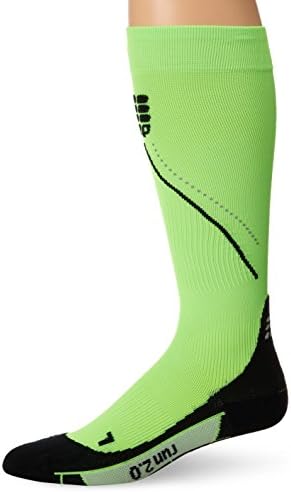


Quick Specs:
- Compression: 20-30 mmHg (precise graduated compression)
- Sizes: Five size options based on calf circumference
- Length: Knee-high
- Materials: High-tech microfiber blend (83% polyamide, 17% elastane)
- Colors/Patterns: Performance-focused colors (limited patterns)
- Special Features: German-engineered, medi compression technology, anatomical fit
- Warranty: 6-month guarantee
Shift-Tested Performance:
At $60 per pair, these are expensive—double or triple other medical-grade options. I tested them during 5 demanding ER shifts to determine if premium pricing translates to premium performance.
CEP uses medical-grade compression technology from Germany—medical-grade precision developed for clinical settings. The compression profile is engineered to medical specifications, and you can feel the difference. These are tight, precise, and highly effective.
Comfort (4/5): The technical microfiber fabric feels different from cotton or standard nylon blends—more athletic, more structured. Extremely breathable; my legs stayed cool even during high-intensity shifts. However, they’re very snug—takes adjustment time. Not uncomfortable, just noticeably firm.
Durability (5/5): Exceptional. After 5 wears and washes, they look brand new. Zero pilling, zero wear spots, perfect color retention. German engineering shows in the construction quality. If durability per dollar matters, these might actually be cost-effective long-term.
Functionality (5/5): The compression is precisely calibrated. I felt the graduated pressure distribution—firm at ankle, gradually decreasing up the calf. Stay-up design is perfect; these don’t move at all. The anatomical fit (left and right specific) eliminates bunching. My legs felt noticeably more supported than in other 20-30 mmHg socks.
Professional Appearance (3.5/5): These look like serious athletic compression socks—performance-focused rather than style-forward. Limited color options (mostly solids in athletic colors). If fashion matters, these aren’t the choices. If performance matters above all else, the appearance is acceptable.
Value for Money (3/5): This is the challenge. At $60, these are undeniably expensive. The quality is exceptional, but most nurses can get 80-90% of the performance from $20 options. CEP socks are popular among serious athletes and medical professionals wanting maximum compression precision. If you have diagnosed venous issues, work extremely demanding shifts, or simply want the absolute best regardless of price, these deliver. For most nurses, the cost is hard to justify.
Pros:
- Medical-grade German engineering
- Exceptional durability (may outlast 2-3 cheaper pairs)
- Precise, effective compression
- Anatomical left/right fit eliminates bunching
- Superior breathability
- Perfect stay-up design
- 6-month guarantee
Cons:
- Very expensive ($59.95 per pair)
- Limited style variety (performance-focused appearance)
- Very firm—not ideal for first-time compression users
- Primarily available through specialty retailers
- Sizing requires precise calf measurement
Best For:
- Nurses with diagnosed venous insufficiency
- Healthcare workers want the absolute maximum performance
- Those who’ve tried multiple brands and need better
- Athletes who also work in healthcare
- Professionals willing to invest in long-term leg health
Not Ideal For:
- Budget-conscious buyers
- First-time compression sock users
- Those wanting stylish, fashionable options
- Nurses needing multiple pairs immediately (price prohibitive)
9. SockGuy Performance Compression Socks – Best Fun Patterns
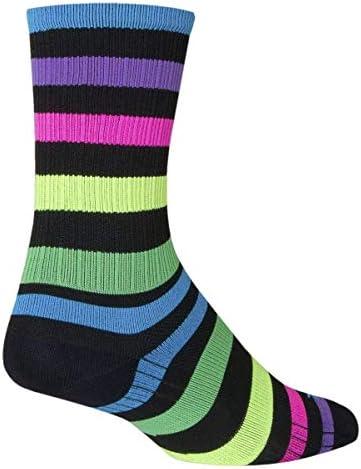


Quick Specs:
- Compression: 15-20 mmHg (moderate compression)
- Sizes: S/M, L/XL
- Length: Knee-high (cycling style)
- Materials: Moisture-wicking nylon and elastic blend
- Colors/Patterns: 100+ wild, creative designs
- Special Features: Made in the USA, endless pattern variety
- Warranty: Standard manufacturer’s warranty
Shift-Tested Performance:
I tested SockGuy compression socks in a fun pizza pattern during 5 shifts, primarily in pediatrics, where playful designs are appreciated. These originated in the cycling community but translate surprisingly well to healthcare.
SockGuy offers more pattern variety than perhaps any other brand—everything from food themes to animals to abstract art. If your facility allows fun scrubs and accessories, these let you express a serious personality.
Comfort (4/5): Comfortable for all-day wear. The moisture-wicking fabric performs well. Slightly less cushioned than some competitors—you feel them more in your shoes. The compression is mild at 15-20 mmHg, so they never feel restrictive or uncomfortable.
Durability (3.5/5): This is where they fall short. After 5 wears, showing more wear than premium brands—noticeable pilling, slight fading on bright colors. The fun patterns hide wear better than solid colors. They’ll last a season of regular use, but not years like premium options.
Functionality (3.5/5): The 15-20 mmHg compression is gentle, preventive, not therapeutic. Stay-up design is moderate; I adjusted it a few times during active pediatric shifts (lots of bending, playing with kids, floor time). They work for light to moderate activity but might slip during very intense shifts.
Professional Appearance (5/5 for appropriate settings, 2/5 for conservative). Here’s the thing: these are LOUD. Pizza socks, donut socks, dinosaur socks, tie-dye, galaxy patterns—you name it. In pediatrics? Patients loved them. In conservative adult settings? It might be too much. Know your facility culture before purchasing.
Value for Money (4/5): At $17, they’re affordable fun. You’re not buying these for maximum compression or durability—you’re buying them for personality and smile-inducing designs. For what they are, the price is fair. Frequent sales make them even more accessible.
Pros:
- Massive pattern variety (100+ designs)
- Made in USA
- Affordable
- Kids and families love the fun designs
- Available through Amazon and cycling shops
- Mild compression is comfortable for all-day wear
- Great morale booster during tough shifts
Cons:
- Durability below average
- Mild 15-20 mmHg is insufficient for therapeutic needs
- Stay-up ability is only moderate
- Colors fade faster than premium brands
- Limited sizing (only two options)
- Inappropriate for conservative facilities
Best For:
- Pediatric nurses (kids love fun patterns)
- Healthcare workers in casual facility cultures
- Those wanting affordable, personality-filled compression
- Nurses who prioritize fun over maximum performance
- Gift giving (everyone remembers the nurse with pizza socks)
Not Ideal For:
- Conservative healthcare settings
- Those needing firm therapeutic compression
- Nurses want long-lasting, durable socks
- Very active shifts requiring a reliable stay-up design
10. Amazon Basics Compression Socks – Budget Emergency Option

- 83% Nylon, 17% Spandex
- GRADUATED COMPRESSION: 20-30 mmHg non-medical compression hosiery with unisex opaque fabric that conceals while it heals
- BREATHABLE DESIGN: Toe-less design for breathability, easy patient inspection during recovery, and increased comfort
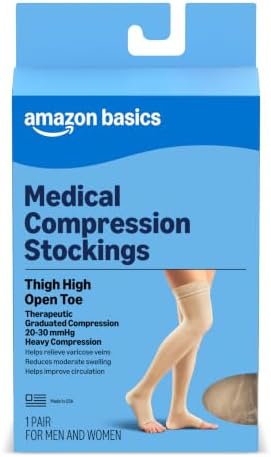
- 83% Nylon, 17% Spandex
- GRADUATED COMPRESSION: Heavy strength 20-30 mmHg hosiery with unisex opaque fabric that conceals while it heals
- BREATHABLE DESIGN: Toe-less design for breathability, easy patient inspection during recovery, and increased comfort
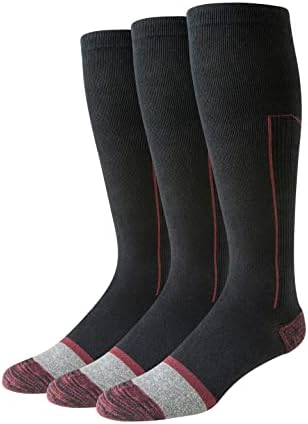
Quick Specs:
- Compression: Claims 15-20 mmHg (actual compression varies)
- Sizes: S/M, L/XL
- Length: Knee-high
- Materials: Nylon and spandex blend
- Colors/Patterns: Basic solids (black, white, nude, navy)
- Special Features: Prime shipping, extremely budget-friendly
- Warranty: Amazon return policy
Shift-Tested Performance:
I tested Amazon Basics compression socks during 5 shifts to see if ultra-budget options could deliver meaningful compression. At $9-13, I didn’t expect miracles—and I didn’t get them.
Full transparency: these are the compression socks I recommend only when someone has literally zero budget for better options or needs emergency replacements. They technically provide compression, but it’s barely noticeable compared to proper medical-grade socks.
Comfort (3/5): Basic comfort. The fabric feels thin and cheap compared to quality options. Some itchiness after several hours. Minimal moisture-wicking—my feet felt noticeably damper than in technical fabrics. However, they’re not uncomfortable enough to remove mid-shift.
Durability (2/5): Poor. After 5 wears, significant pilling on the calves, loose elastic at the top, and fading colors. I doubt these would last more than a month of regular use. The reinforced toe wore through faster than any other brand I tested.
Functionality (2.5/5): The compression is inconsistent. Sometimes I felt mild support; sometimes I felt nothing. The graduated compression isn’t obvious—more like general tightness. Stay-up ability is poor; I adjusted them frequently. They work better than no compression at all, but barely.
Professional Appearance (3/5): Basic and inoffensive. Solid colors work anywhere, but the cheap fabric is obvious up close. They look like what they are: budget socks.
Value for Money (3/5): Here’s the dilemma: at $9-13, they’re incredibly cheap. But they provide minimal compression and don’t last. Spending $20 on Physix Gear gets you dramatically better performance and 3-4x the lifespan. These seem economical but are actually false economy—you’ll replace them frequently, spending more long term.
Pros:
- Extremely cheap ($9-13)
- Amazon Prime fast shipping
- Better than nothing for emergency situations
- Widely available
- Easy returns through Amazon
- Multiple basic colors
Cons:
- Compression barely noticeable
- Poor durability (months or less of regular use)
- Stay-up ability is weak
- Fabric quality is obviously cheap
- Minimal moisture-wicking
- False economy (frequent replacement needed)
Best For:
- Absolute emergency situations (lost your socks, need a pair immediately)
- Testing whether you like compression before investing in quality
- Very occasional use (travel, single long shift)
- Those with literally zero budget for better options
Not Ideal For:
- Regular shift wear
- Anyone with existing venous issues
- Those wanting actual therapeutic compression
- Long-term value seekers (will cost more over time)
Comparison Table: All 10 Compression Socks {#comparison}
| Brand | Price | Compression | Sizes | Comfort | Durability | Stay-Up | Best For | Overall Score |
| VIM & VIGR | $35-42 | 15-20 or 20-30 mmHg | XS-3XL (6 sizes) | 5/5 | 5/5 | Excellent | Premium quality, HSA/FSA eligible | 4.9/5 |
| Physix Gear Sport | $17-20 | 20-30 mmHg | S/M, L/XL | 4.5/5 | 4/5 | Very Good | Best value, budget-friendly | 4.5/5 |
| Nurse Mates | $12-16 | 12-14 mmHg | S-2XL (5 sizes) | 4.5/5 | 4/5 | Good | Professional settings, gentle compression | 4.2/5 |
| Sockwell | $22-28 | 15-20 mmHg | S/M-XL/XXL (4 sizes) | 4.5/5 | 4.5/5 | Good | Natural fibers, eco-conscious | 4.4/5 |
| Pro Compression | $15-20 | 20-30 mmHg | S/M, L/XL, XXL | 4/5 | 4.5/5 | Excellent | Maximum compression, fun patterns | 4.4/5 |
| Comrad | $18-24 | 15-20 or 20-30 mmHg | XS-2XL (6 sizes) | 4.5/5 | 4/5 | Very Good | Sensitive skin, modern style | 4.3/5 |
| Wanderlust | $20-25 | 15-20 mmHg | Regular, Wide Calf | 4.5/5 | 4/5 | Good | Wide calves | 4.2/5 |
| CEP Progressive+ | $59.95 | 20-30 mmHg | 5 sizes | 4/5 | 5/5 | Excellent | Premium performance, diagnosed conditions | 4.3/5 |
| SockGuy | $16.99 | 15-20 mmHg | S/M, L/XL | 4/5 | 3.5/5 | Moderate | Fun patterns, pediatrics | 3.8/5 |
| Amazon Basics | $9-13 | 15-20 mmHg (claimed) | S/M, L/XL | 3/5 | 2/5 | Poor | Emergency backup only | 2.7/5 |
How to Choose the Right Compression Level {#section5}
Compression levels are measured in mmHg and range from mild (8-15 mmHg) to extra firm (30-40+ mmHg). Choosing the right level depends on your symptoms, activity level, and whether you have diagnosed venous conditions.
15-20 mmHg (Mild/Moderate): Prevention & Mild Symptoms
Choose this if:
- You’re young in your career with no symptoms
- You want basic prevention during standing
- You experience only mild leg tiredness
- You’re trying compression socks for the first time
- You work in lower-intensity settings (clinic, office-based)
My experience: This level feels like gentle support—noticeable but not restrictive. Perfect for days when I’m not expecting particularly demanding shifts or when I want compression comfort without the tightness of medical-grade levels.
20-30 mmHg (Moderate/Firm): Therapeutic & Active Prevention
Choose this if:
- You work regular 12-hour hospital shifts
- You’re experiencing noticeable leg fatigue or swelling
- You have visible spider veins
- You want serious prevention, not just mild support
- You stand for 4+ hours regularly
My experience: This is my daily driver. The compression is substantial—you feel supported, secure, and protected. By shift end, the difference is dramatic compared to non-compression days. This level is most commonly recommended for nurses and healthcare workers.
30-40 mmHg (Firm): Medical Treatment
Choose this if:
- You have been diagnosed with chronic venous insufficiency
- Your physician specifically recommends this level
- You have significant varicose veins
- You’ve tried 20-30 mmHg and need more support
My experience: Very tight, challenging to put on, but incredibly effective if you need this level of support. Most nurses don’t require 30-40 mmHg for routine shift work. If you think you need this level, consult your physician first.
General Recommendations by Career Stage
Nursing Students & New Grads (Years 0-2): Start with 15-20 mmHg. Get your body accustomed to compression while you’re still building tolerance to long shifts. If you notice fatigue or swelling, upgrade to 20-30 mmHg.
Experienced Nurses (Years 3-10): 20-30 mmHg should be your standard. You’re logging serious mileage on your legs—protect them with proper medical-grade compression.
Veteran Nurses (10+ years) or Those with Symptoms: 20-30 mmHg minimum, potentially 30-40 mmHg if advised by a physician. Prevention is past—you’re in active management mode. Take this seriously.
💰 Budget Truth: Don’t “save money” by buying lower compression than you need. Insufficient compression provides minimal benefit, while proper compression demonstrably improves circulation and reduces symptoms. If you’re unsure between 15-20 and 20-30, go with 20-30—you’ll get more benefit.
Specialty-Specific Recommendations {#section6}
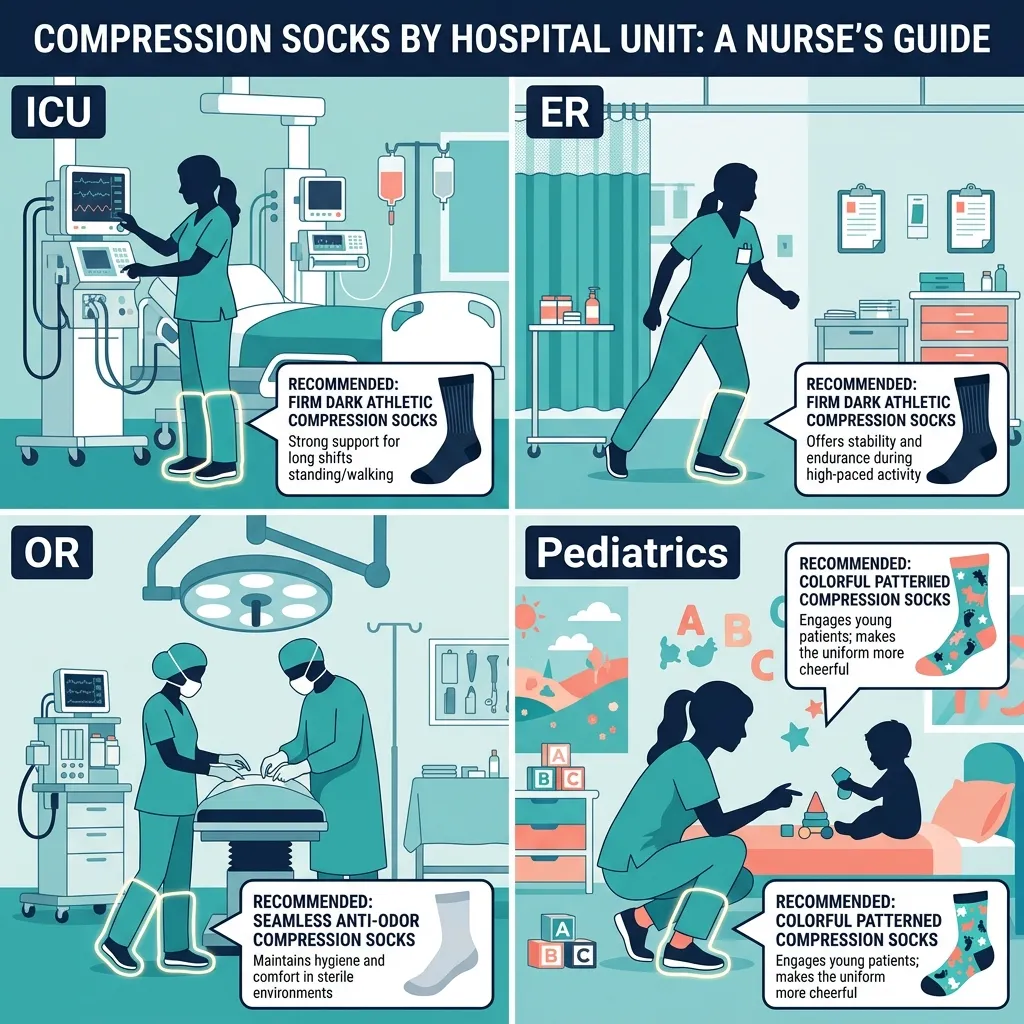
Different nursing specialties have different demands. Here’s what I recommend based on your work environment:
Emergency Department Nurses
Recommended Compression: 20-30 mmHg Top Pick: Pro Compression Marathon or VIM & VIGR
ER shifts are unpredictable. You might be standing for extended triage, then suddenly running to a trauma bay. The constant activity variability—standing, rushing, kneeling, climbing—demands compression that stays firmly in place. Choose socks with an excellent stay-up design and moisture-wicking for high-intensity codes.
ICU Nurses
Recommended Compression: 20-30 mmHg Top Pick: CEP Progressive+ or VIM & VIGR
ICU involves extended periods of standing at the bedside during procedures, turning patients, and managing complex cases. The combination of standing and heavy patient care demands maximum leg support. Prioritize comfort for 12-14-hour shifts and durability through frequent washing.
Operating Room Nurses
Recommended Compression: 20-30 mmHg Top Pick: VIM & VIGR or Sockwell (solid colors)
OR nurses stand nearly static during long surgeries—sometimes 4-6+ hours in one position. Static standing significantly increases varicose vein risk more than walking. PubMed Central Medical-grade compression is essential. Choose professional, solid colors appropriate for surgical settings.
Medical-Surgical Floor Nurses
Recommended Compression: 20-30 mmHg Top Pick: Physix Gear Sport or Pro Compression
Med-Surg involves constant movement between rooms, walking miles per shift. While less intense than ER, the sheer distance covered demands proper support. Budget-friendly options work great here since you’re replacing socks regularly anyway due to exposure to various contaminants.
Pediatric Nurses
Recommended Compression: 15-20 mmHg or 20-30 mmHg Top Pick: SockGuy (fun patterns) or Nurse Mates
Peds nursing involves lots of bending, floor play, and activity with patients. Fun patterns are therapeutic—kids love them, parents smile, and it enhances your rapport. Healthcare workers in pediatrics report that fun accessories help establish trust with anxious children.
Clinic & Office-Based Nurses
Recommended Compression: 15-20 mmHg Top Pick: Nurse Mates or Sockwell
Lower-intensity settings with more sitting, less constant standing. Gentle compression provides preventive support without the tightness of hospital-grade options. Prioritize comfort and professional appearance.
Labor & Delivery Nurses
Recommended Compression: 20-30 mmHg Top Pick: Comrad or VIM & VIGR
L&D combines extended standing during deliveries with constant movement. If you’re pregnant yourself, compression becomes even more critical. Pregnancy significantly increases varicose vein risk due to increased blood volume and venous pressure. Choose comfortable options with excellent stay-up design.
Care, Maintenance & Longevity {#section7}
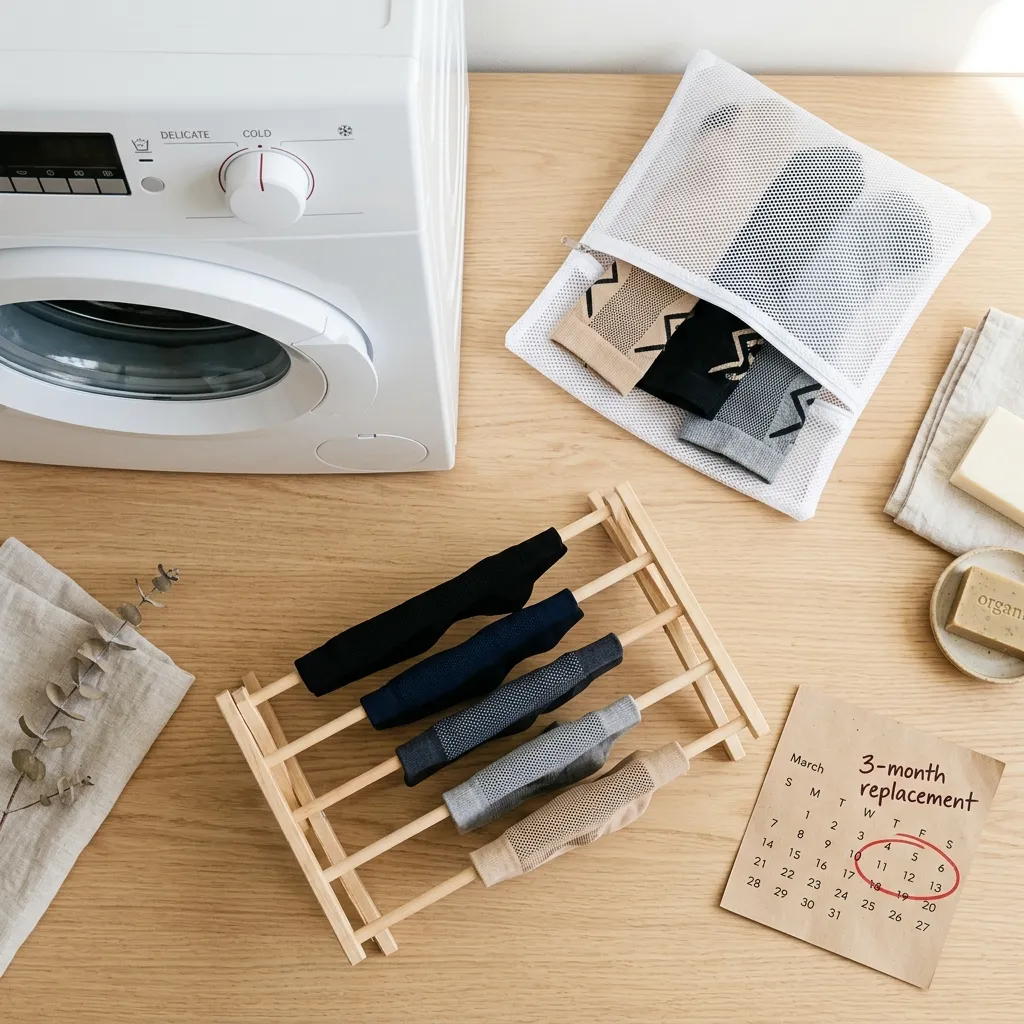
Proper care extends the life of compression socks and maintains their effectiveness. Here’s what actually works based on my experience washing dozens of pairs over months:
Washing Guidelines
Frequency: Wash after every wear. Healthcare settings expose you to countless contaminants—infection control demands fresh socks every shift. Medical professionals should follow strict hygiene protocols, including washing compression garments after each use.
Temperature: Cool or warm water, never hot. Hot water degrades elastic fibers, reducing compression effectiveness. I use warm water for heavily soiled socks, and cool water for routine cleaning.
Detergent: Mild detergent without fabric softener. Fabric softeners coat fibers, reducing compression and moisture-wicking properties. I use regular laundry detergent in normal amounts.
Machine Washing: Most compression socks tolerate machine washing, but use a mesh laundry bag to protect them from snags and aggressive agitation. I wash mine on a gentle cycle.
Hand Washing (Premium Socks): For expensive pairs like CEP or Sockwell merino wool, hand washing extends life. Fill sink with cool water, add mild detergent, gently agitate, rinse thoroughly. Takes 5 minutes and significantly extends durability.
Drying
Air Dry Recommended: Lay flat or hang to air dry. Heat from dryers degrades elastic fibers faster than any other factor. Air-drying compression garments maintains elasticity and compression effectiveness significantly longer. I hang mine over my shower rod overnight—dry by morning.
Low Heat (If Necessary): If you must machine dry (I understand—sometimes you need socks tomorrow), use the lowest heat setting and remove promptly. High heat is compression sock kryptonite.
Storage
Store flat or loosely rolled in drawers. Don’t ball them up tightly—it stresses elastic fibers. I keep mine in a dedicated drawer, organized by compression level and pattern (yes, I’m that organized about my socks now).
When to Replace
Compression Loss: If socks feel looser or less supportive, the elastic has degraded. Test by stretching—if they don’t snap back firmly, replace them.
Visible Wear: Holes, thinning fabric, worn heels/toes mean replacement time.
Loss of Stay-Up Ability: If they constantly slide down despite proper sizing, the grip band has failed.
Timeline: Budget socks (Amazon Basics, cheaper options): 1-3 months of regular use. Mid-range quality (Physix Gear, Nurse Mates): 3-6 months. Premium brands (VIM & VIGR, CEP): 6-12+ months with proper care.
I typically replace my regular rotation socks every 4-6 months, though my premium pairs have lasted over a year with excellent care.
🔑 Key Takeaway: Spending $30 on quality socks that last 10 months ($3/month) beats spending $10 on cheap socks that last 6 weeks ($6.67/month). Proper care makes expensive socks cheaper long-term.
Frequently Asked Questions {#section9}
Q: Do compression socks actually prevent varicose veins, or just treat symptoms?
A: This is nuanced. Research shows compression socks can’t permanently prevent varicose veins from developing or completely halt disease progression, but they provide significant temporary relief from symptoms and may slow progression. Metro Vein CentersYale MedicineThink of them like sunscreen—sunscreen doesn’t guarantee you’ll never get skin damage, but it dramatically reduces risk and slows damage progression. Similarly, compression socks reduce venous pressure, improve circulation, and minimize the conditions that cause varicose veins. They’re your best non-invasive prevention tool.
In my experience, colleagues who wore compression from early career have notably better leg health than those who didn’t. I started wearing compression seriously in year 7—I wish I’d started at year 1.
Q: What’s the difference between compression socks marketed to nurses vs. athletes?
A: Functionally, very little. Quality graduated compression works the same whether labeled for running or nursing. The main differences are styling (nurses prefer professional colors, athletes want performance aesthetics) and sometimes length (runners often prefer shorter calf sleeves). Pro Compression, CEP, and Sockwell all market to both audiences.
I’ve worn “running” compression socks during nursing shifts with excellent results. Focus on proper compression level (20-30 mmHg) and graduated design rather than marketing labels.
Q: Should I wear compression socks during my entire shift, or take breaks?
A: Wear them for your entire shift for maximum benefit. Compression works while you’re wearing it—removing it eliminates the supportive pressure. That said, if you’re new to compression, you might need adjustment time. Start with half-shifts, then progress to full shifts as your legs adapt.
I wear mine from the moment I put my scrubs on until I’m home and showering. The relief when I finally remove them is real—but so is the protection they provided all day.
Q: Can compression socks be too tight? How do I know if I have the right fit?
A: Yes, too-tight compression can restrict circulation rather than improve it. Signs of poor fit include numbness, tingling, discoloration, or extreme discomfort that doesn’t improve. Proper fit feels snug and supportive but not painful. Your toes should have normal color and sensation.
If socks leave deep indentations that don’t fade within 10-15 minutes of removal, they’re too tight. If they slide down constantly, they’re too loose. Proper fit stays in place comfortably all day and leaves minimal marking when removed.
Q: Do I need to size up or down if I’m between sizes?
A: Follow the manufacturer’s sizing chart exactly—measure your calf circumference and shoe size. If you’re exactly between sizes, general guidance: size up if you have muscular or larger calves, size down if you have slimmer calves. However, proper graduated compression requires accurate sizing to deliver correct pressure at each point. I’m right between sizes on some brands. I’ve learned that sizing up in VIM & VIGR works better for me, while true-to-size works for Physix Gear. When in doubt, check return policies and order both sizes to test.
Q: How many pairs of compression socks should I own?
A: Minimum 3 pairs for a sustainable rotation: one wearing, one in the wash, one backup. Ideally, 4-5 pairs, so you’re not washing constantly, and each pair lasts longer. Rotating compression socks extends their lifespan by reducing wear frequency on each pair. I currently own 6 pairs: 3 VIM & VIGR (my workhorses), 1 CEP (for brutal shifts), and 2 Physix Gear (backups and extra rotation). This rotation means each pair gets worn once weekly, lasting 10-12 months instead of 3-4 months.
Q: Can I wear compression socks if I have diabetes or circulation problems?
A: Consult your physician before wearing compression if you have been diagnosed with peripheral arterial disease, severe peripheral neuropathy, congestive heart failure, or dermatitis. Compression increases venous return, which can strain compromised cardiovascular systems. Most diabetics can safely wear mild to moderate compression (15-20 mmHg), but medical clearance is essential.
I’m not a physician—if you have medical conditions affecting circulation, please consult with your healthcare provider before purchasing compression wear.
Q: Will compression socks help with foot pain, or just leg/calf issues?
A: Compression socks primarily address venous circulation in calves and legs, not foot mechanics. They help with swelling-related foot discomfort but won’t fix plantar fasciitis, flat feet, or structural foot problems. For foot pain, invest in proper nursing shoes with arch support and consider custom orthotics.
That said, some compression socks (like Sockwell and Pro Compression) include arch support and cushioned footbeds that provide secondary foot comfort. But if foot pain is your primary issue, address it with appropriate footwear first.
Q: Are thigh-high compression stockings better than knee-high?
A: Not necessarily. Knee-high socks provide sufficient compression for most nurses’ needs. Thigh-highs offer more coverage but are harder to keep up, less comfortable under scrubs, and often unnecessary unless specifically treating upper thigh/hip venous issues. Thigh-highs are particularly recommended during pregnancy when venous pressure increases throughout the leg. I’ve tried thigh-highs—they constantly rolled down and felt restrictive. Knee-high works perfectly for shift work.
Q: Can men wear “women’s” compression socks and vice versa?
A: Absolutely. Compression socks work based on pressure and fit, not gender. Most brands offer unisex sizing based on calf circumference and shoe size. “Women’s” styles might have different colors/patterns, but the compression technology is identical. I’ve worn “women’s” patterned socks with no issues—fit and compression matter, not the label.
Focus on accurate sizing (calf measurement and shoe size), not gendered marketing.

References
American Nurses Association. (2023). Safe patient handling and mobility: Occupational health considerations.
Centers for Disease Control and Prevention. (2024). Varicose veins and chronic venous insufficiency.
Keenan, M. (2024). Best compression socks for varicose veins tested by health editors. Health.com.
Mayo Clinic. (2024). Varicose veins: Symptoms, causes, and treatment.
National Institute for Occupational Safety and Health. (2023). Musculoskeletal disorders in healthcare workers.
Sharif Nia, H., et al. (2023). The global prevalence of varicose veins among nurses: A systematic review and meta-analysis. SAGE Journals.
About Abdul-Muumin Wedraogo, RGN, BSN
Abdul-Muumin Wedraogo is a Registered General Nurse (RGN) with over 10 years of active clinical experience spanning Emergency Department, Intensive Care, Pediatrics, and General Ward settings with the Ghana Health Service. Unlike typical product reviewers, Abdul-Muumin doesn’t just research compression socks online—he wears and tests them during actual 12-hour hospital shifts in some of healthcare’s most demanding environments.
Education & Credentials:
- Bachelor of Science in Nursing (BSN) – Valley View University
- Registered General Nurse (RGN) – Premier Nurses’ Training College, Ghana
- Member: Nurses and Midwifery Council (NMC), Ghana
- Member: Ghana Registered Nurses and Midwives Association (GRNMA)
- Advanced Professional in System Engineering
Disclosure: This article contains affiliate links. As an Amazon Associate and affiliate partner of medical apparel retailers, this blog earns from qualifying purchases at no additional cost to you. This support enables the continued provision of honest, shift-tested product reviews for healthcare professionals. All recommendations are based on personal clinical experience and real-world testing. Editorial integrity is non-negotiable—only products that genuinely perform during actual shifts are recommended.
Professional Disclaimer: This article represents the personal opinions and experiences of Abdul-Muumin Wedraogo, RGN, based on 10 years of clinical nursing practice. Product recommendations are based on personal testing and professional experience but do not constitute official medical advice. Individual needs vary based on foot type, existing health conditions, work environment, personal budget, and facility requirements. Always consult facility dress code policies and seek medical advice for persistent pain or diagnosed conditions. Product performance may vary between individuals.
Health Disclaimer: Chronic leg pain, varicose veins, swelling, and other venous issues should be evaluated by qualified healthcare providers. This article discusses compression products for comfort and prevention, but does not replace medical diagnosis or treatment. If you experience persistent symptoms, consult your physician or vascular specialist.